Womic Stainless Steel Co., Ltd

Seawater desalination plants are essential infrastructure in regions where freshwater resources are limited. Countries across the Middle East, North Africa, Australia, and coastal industrial zones rely heavily on desalination technology to convert seawater into potable water and industrial process water.
However, desalination facilities operate under extremely corrosive conditions. Seawater contains high concentrations of chloride ions, dissolved oxygen, salts, and biological organisms that aggressively attack many conventional engineering materials. In addition, desalination systems operate under high pressure and continuous flow conditions, further increasing the risk of corrosion and material degradation.
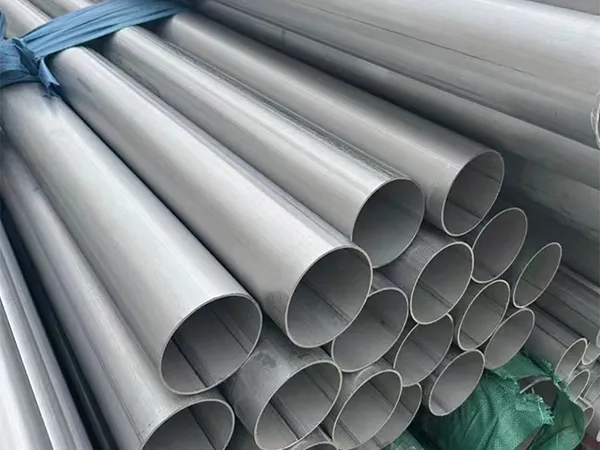
For this reason, stainless steel pipes have become a critical component in modern seawater desalination plants. Their corrosion resistance, mechanical strength, and long service life make them ideal for handling seawater, brine concentrates, and high-pressure desalination processes.
Many desalination piping systems are designed according to international engineering codes such as ASME B31.3 Process Piping and material standards developed by ASTM International and the International Organization for Standardization.
Choosing the correct stainless steel pipe material is essential to ensure long-term reliability, safety, and cost-effective plant operation.
Seawater desalination plants generally use two main technologies.
Reverse Osmosis is the most widely used desalination technology. It uses high pressure to force seawater through semi-permeable membranes that remove dissolved salts and minerals.
RO desalination systems require piping materials that can withstand:
l High pressure pump systems
l Continuous seawater flow
l High chloride concentration
l Chemical cleaning agents
l Concentrated brine discharge
Thermal desalination processes such as Multi-Stage Flash (MSF) and Multi-Effect Distillation (MED) evaporate seawater and condense the vapor to produce fresh water.
These systems expose piping materials to:
High temperatures
Salt deposition and scaling
Brine concentration
Long-term corrosion exposure
Because of these demanding operating conditions, desalination plants require stainless steel pipes with superior resistance to pitting corrosion, crevice corrosion, and chloride stress corrosion cracking.
Several stainless steel grades are commonly used in desalination plants depending on corrosion risk and system location.
|
Material Grade |
Standard |
Stainless Steel Type |
Typical Application |
|
316L |
ASTM A312 |
Austenitic Stainless Steel |
Low-chloride process lines |
|
904L |
ASTM B677 |
High Alloy Austenitic |
Acid cleaning systems |
|
Duplex 2205 |
ASTM A790 |
Duplex Stainless Steel |
Seawater pipelines |
|
Super Duplex 2507 |
ASTM A790 |
Super Duplex Stainless Steel |
High chloride systems |
|
254 SMO |
ASTM A312 |
Super Austenitic |
Severe marine environments |
Among these materials, duplex and super duplex stainless steels have become the preferred choices for seawater service because of their excellent corrosion resistance and high mechanical strength.
The corrosion resistance of stainless steel pipes used in desalination plants depends heavily on alloy composition.
Key alloying elements include chromium, molybdenum, nickel, and nitrogen, all of which enhance corrosion resistance in seawater environments.
|
Grade |
Cr (%) |
Ni (%) |
Mo (%) |
N (%) |
|
316L |
16–18 |
10–14 |
2–3 |
— |
|
904L |
19–23 |
23–28 |
4–5 |
— |
|
Duplex 2205 |
21–23 |
4.5–6.5 |
2.5–3.5 |
0.08–0.20 |
|
Super Duplex 2507 |
24–26 |
6–8 |
3–5 |
0.24–0.32 |
|
254 SMO |
19–21 |
17–18 |
6–6.5 |
0.18–0.22 |
Molybdenum is particularly important in desalination systems because it improves resistance to pitting corrosion caused by chloride ions in seawater.
Nitrogen enhances both mechanical strength and resistance to localized corrosion.
Super duplex and super austenitic stainless steels typically contain higher levels of these alloying elements, providing superior corrosion protection in seawater environments.
Mechanical strength is another critical factor for desalination piping systems because reverse osmosis plants operate under very high pressures.
Typical mechanical properties are shown below.
|
Grade |
Yield Strength (MPa) |
Tensile Strength (MPa) |
Elongation (%) |
|
316L |
≥170 |
≥485 |
≥35 |
|
904L |
≥220 |
≥490 |
≥35 |
|
Duplex 2205 |
≥450 |
≥620 |
≥25 |
|
Super Duplex 2507 |
≥550 |
≥795 |
≥25 |
|
254 SMO |
≥300 |
≥650 |
≥35 |
Duplex and super duplex stainless steels provide significantly higher yield strength compared with conventional austenitic stainless steels.
This allows engineers to design thinner wall pipes while maintaining high pressure resistance, reducing both weight and installation costs.
One of the most important indicators used when selecting materials for seawater desalination systems is thePitting Resistance Equivalent Number (PREN).
The formula used to estimate PREN is:
PREN = %Cr + 3.3 × %Mo + 16 × %N
Higher PREN values indicate greater resistance to pitting corrosion.
|
Material |
PREN Value |
|
316L |
~25 |
|
904L |
~35 |
|
Duplex 2205 |
~35 |
|
254 SMO |
~42 |
|
Super Duplex 2507 |
>40 |
Materials with PREN values above 40 are generally recommended for severe seawater environments.
Super duplex stainless steel and 254 SMO stainless steel therefore provide outstanding corrosion resistance in desalination plants.
Stainless steel pipes are used throughout desalination facilities in many different systems.
Typical applications include:
Seawater intake pipelines transporting raw seawater from the ocean to the treatment plant.
High-pressure reverse osmosis pipelines carrying pressurized seawater to RO membrane systems.
Brine discharge pipelines transporting concentrated saltwater back to the ocean.
Chemical dosing pipelines used for anti-scaling chemicals and membrane cleaning agents.
Thermal desalination piping systems operating under elevated temperatures.
Because these systems operate continuously in corrosive marine environments, stainless steel pipes must meet strict engineering and quality standards.
Pipes used in desalination plants must undergo rigorous quality control and testing procedures to ensure long-term reliability.
Typical inspection procedures include:
Chemical composition verification using spectrometers.
Mechanical property testing including tensile strength and hardness.
Hydrostatic pressure testing to verify leak tightness.
Non-destructive testing such as ultrasonic testing and radiographic inspection.
Positive Material Identification (PMI) to ensure correct alloy composition.
Third-party inspection is often required for major desalination projects. Inspection organizations may include Bureau Veritas, Lloyd's Register, and TÜV.
These inspections ensure that stainless steel pipes meet strict project specifications before delivery and installation.
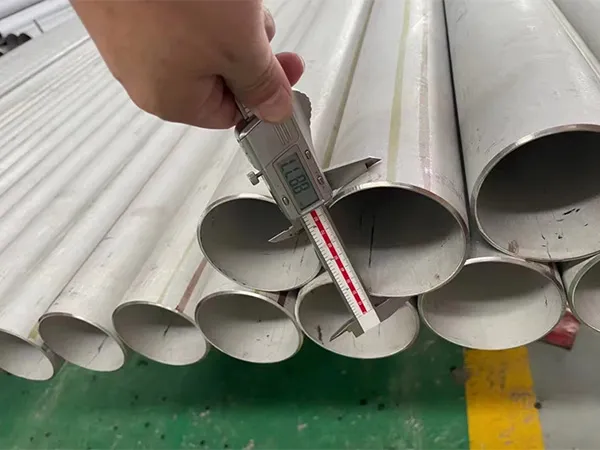
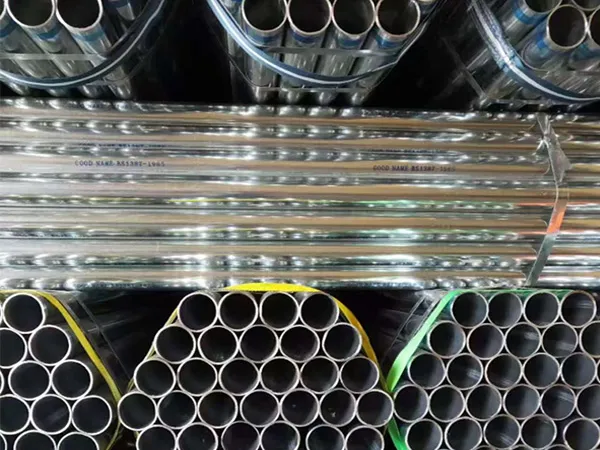
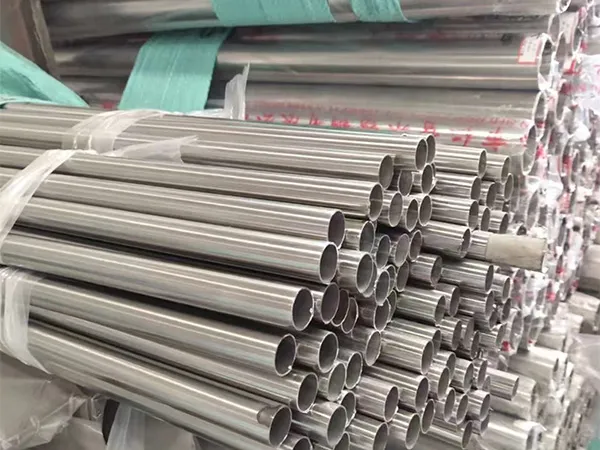
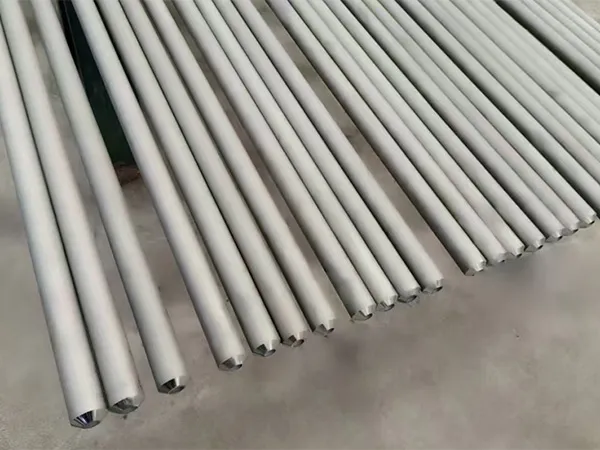
Womic Steel is a professional manufacturer specializing in stainless steel pipes designed for demanding industrial environments such as desalination plants, offshore engineering, petrochemical facilities, and marine infrastructure.
The company produces both seamless and welded stainless steel pipes in accordance with international standards including ASTM A312, ASTM A790, and ASTM A358.
Womic Steel supplies a wide range of desalination-grade stainless steel materials including:
304L stainless steel pipes
316L stainless steel pipes
904L stainless steel pipes
Duplex 2205 stainless steel pipes
Super Duplex 2507 stainless steel pipes
254 SMO stainless steel pipes
The company’s manufacturing facilities include advanced pipe forming equipment, cold drawing production lines, solution annealing heat treatment furnaces, and modern inspection laboratories.
Every pipe produced by Womic Steel undergoes strict quality control procedures including chemical analysis, mechanical testing, dimensional inspection, and non-destructive testing to ensure full compliance with international standards.
With strong production capacity and extensive export experience, Womic Steel supplies stainless steel piping products to desalination projects, offshore platforms, chemical plants, and energy infrastructure worldwide.
Customized services. Rapid production. Global reach. We ensure your specific needs are fulfilled with precision and top-tier quality.
Website: www.womicstainless.com
Email:info@womicstainless.com
Tel/WhatsApp/WeChat:Victor: +86-15575100681 or Jack: +86-18390957568