Womic Stainless Steel Co., Ltd

Offshore oil and gas platforms operate in one of the most aggressive industrial environments on earth. Constant exposure to seawater, high chloride concentrations, strong winds, humidity, and fluctuating temperatures creates extremely challenging conditions for structural materials and piping systems.
In offshore installations, pipelines are responsible for transporting crude oil, natural gas, seawater, chemical injection fluids, and produced water between process units. These pipelines must maintain long-term structural integrity while resisting corrosion, high pressure, vibration, and fatigue loads.
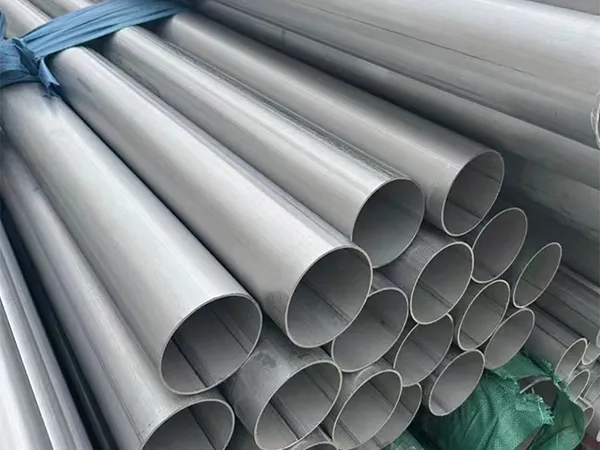
For this reason, stainless steel pipes have become one of the most important materials used in offshore platform piping systems. Their superior corrosion resistance, high mechanical strength, and long service life make them ideal for marine environments.
Many offshore piping systems are designed according to international standards such as ASME B31.3 Process Piping and offshore engineering requirements from DNV (Det Norske Veritas) and NORSOK standards used in the North Sea oil and gas industry.
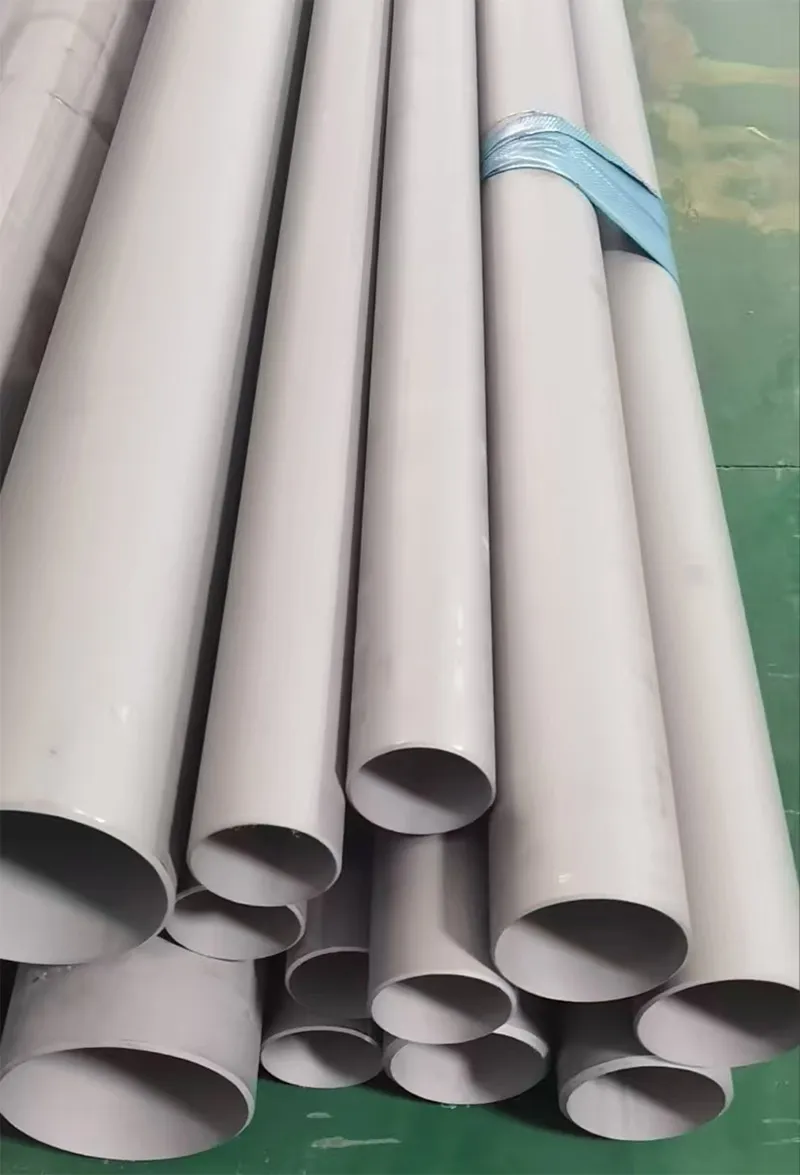
Seawater contains high levels of chloride ions, which are highly aggressive toward many metals. In offshore platforms, piping systems face several corrosion mechanisms simultaneously.
The most common corrosion problems include:
l Pitting corrosioncaused by chloride ions attacking localized areas of metal surfaces.
l Crevice corrosionoccurring in confined areas such as flange joints or gasket interfaces.
l Chloride stress corrosion cracking (SCC)under tensile stress and high chloride concentrations.
l Microbiologically influenced corrosion (MIC)caused by marine bacteria.
l Erosion-corrosionresulting from high velocity seawater flow.
Conventional carbon steel pipes require extensive coatings and corrosion protection systems to survive in offshore conditions. In contrast, stainless steel pipes naturally form a chromium oxide passive film that protects the metal surface from corrosion.
Because of this self-protecting mechanism, stainless steel piping systems are widely used in offshore structures where reliability and low maintenance are critical.
Not all stainless steel grades perform equally well in marine environments. Offshore projects typically require materials with high resistance to chloride corrosion and stress corrosion cracking.
The most commonly used stainless steel materials include:
|
Material Grade |
Standard |
Stainless Steel Type |
Typical Offshore Application |
|
316L |
ASTM A312 |
Austenitic Stainless Steel |
Seawater service and chemical lines |
|
317L |
ASTM A312 |
High Mo Austenitic |
Improved pitting resistance |
|
Duplex 2205 |
ASTM A790 |
Duplex Stainless Steel |
High pressure seawater systems |
|
Super Duplex 2507 |
ASTM A790 |
Super Duplex Stainless Steel |
Severe chloride environments |
|
904L |
ASTM B677 |
High Alloy Austenitic |
Acid and chemical injection systems |
The choice between these materials depends on factors such as chloride concentration, operating pressure, temperature, and corrosion risk.
Among them, duplex and super duplex stainless steels have become increasingly popular in offshore engineering due to their superior corrosion resistance and high mechanical strength.
The performance of stainless steel pipes in marine environments is strongly influenced by their chemical composition. Key alloying elements include chromium, molybdenum, nickel, and nitrogen.
These elements significantly improve corrosion resistance, particularly against chloride attack.
|
Grade |
Cr (%) |
Ni (%) |
Mo (%) |
N (%) |
|
316L |
16–18 |
10–14 |
2–3 |
— |
|
317L |
18–20 |
11–15 |
3–4 |
— |
|
Duplex 2205 |
21–23 |
4.5–6.5 |
2.5–3.5 |
0.08–0.20 |
|
Super Duplex 2507 |
24–26 |
6–8 |
3–5 |
0.24–0.32 |
|
904L |
19–23 |
23–28 |
4–5 |
— |
Chromium improves general corrosion resistance by forming a stable passive layer.
Molybdenum significantly increases resistance to pitting and crevice corrosion in chloride environments.
Nitrogen enhances mechanical strength and improves resistance to localized corrosion.
Super duplex stainless steel contains higher chromium, molybdenum, and nitrogen levels, giving it exceptional resistance to seawater corrosion.
Offshore piping systems must withstand not only corrosion but also mechanical loads caused by pressure, vibration, and wave-induced movement.
Typical mechanical properties of offshore stainless steel grades are shown below.
|
Grade |
Yield Strength (MPa) |
Tensile Strength (MPa) |
Elongation (%) |
|
316L |
≥170 |
≥485 |
≥35 |
|
317L |
≥205 |
≥515 |
≥35 |
|
Duplex 2205 |
≥450 |
≥620 |
≥25 |
|
Super Duplex 2507 |
≥550 |
≥795 |
≥25 |
|
904L |
≥220 |
≥490 |
≥35 |
Duplex and super duplex stainless steels provide more than double the yield strength of conventional austenitic stainless steels such as 316L.
This high strength allows engineers to reduce pipe wall thickness while maintaining pressure resistance, which significantly reduces weight in offshore structures where structural load is a critical factor.
One of the most important indicators for evaluating stainless steel performance in chloride environments is thePitting Resistance Equivalent Number (PREN).
PREN is calculated using the formula:
PREN = %Cr + 3.3 × %Mo + 16 × %N
Higher PREN values indicate better resistance to pitting corrosion.
Typical PREN values for offshore materials include:
|
Material |
PREN Value |
|
316L |
~25 |
|
317L |
~30 |
|
Duplex 2205 |
~35 |
|
Super Duplex 2507 |
>40 |
|
904L |
~35 |
Super duplex stainless steel typically has a PREN value above 40, which provides outstanding resistance to seawater corrosion.
For this reason, super duplex pipes are frequently used in seawater injection systems and subsea pipelines.
Stainless steel pipes are used in many systems throughout offshore oil and gas platforms.
Typical offshore applications include:
Seawater cooling pipelines used for platform equipment cooling.
Firewater systems that require corrosion-resistant piping for emergency fire protection.
Seawater injection pipelines used in enhanced oil recovery operations.
Chemical injection lines transporting corrosion inhibitors and treatment chemicals.
Produced water treatment systems handling highly corrosive fluids.
Hydraulic control systems for subsea equipment and offshore valves.
Because these systems operate continuously in highly corrosive marine environments, stainless steel piping materials must meet strict quality and reliability standards.
Offshore piping systems require extremely high manufacturing and inspection standards to ensure reliability and safety.
Typical quality requirements include:
l Strict control of chemical composition and alloy content.
l Solution annealing heat treatment for corrosion resistance.
l Hydrostatic pressure testing for leak integrity.
l Non-destructive testing such as ultrasonic testing and radiographic inspection.
l Positive Material Identification (PMI) to verify alloy composition.
Many offshore projects also require third-party inspection by internationally recognized organizations such as Bureau Veritas, Lloyd's Register, or TÜV.
These inspections ensure that stainless steel pipes meet strict offshore engineering specifications before installation.
Womic Steel is a professional manufacturer specializing in high-performance stainless steel piping products designed for demanding industrial environments including offshore oil and gas platforms.
The company produces seamless and welded stainless steel pipes in accordance with international standards such as ASTM A312, ASTM A790, and ASTM A358.
Womic Steel supplies a wide range of offshore-grade stainless steel materials including:
304L stainless steel pipes
316L stainless steel pipes
317L stainless steel pipes
Duplex 2205 stainless steel pipes
Super Duplex 2507 stainless steel pipes
904L high alloy stainless steel pipes
With advanced manufacturing equipment, precision forming technology, and strict quality control procedures, Womic Steel ensures that every stainless steel pipe meets international standards for corrosion resistance, dimensional accuracy, and mechanical strength.
The company’s production facilities include cold drawing lines, heat treatment furnaces, automated welding systems, and comprehensive testing laboratories capable of performing chemical analysis, mechanical testing, and non-destructive inspection.
Through reliable manufacturing capacity and strong global export experience, Womic Steel provides stainless steel piping solutions for offshore energy projects, petrochemical plants, desalination systems, and marine engineering infrastructure worldwide.
Customized services. Rapid production. Global reach. We
ensure your specific needs are fulfilled with precision and top-tier quality.
Website: www.womicstainless.com
Email:info@womicstainless.com
Tel/WhatsApp/WeChat:Victor: +86-15575100681 or Jack: +86-18390957568