Womic Stainless Steel Co., Ltd

Selecting the correct stainless steel pipe standard is one of the most important decisions in industrial piping system design and procurement. Stainless steel pipes are widely used in industries such as oil and gas, petrochemical processing, power generation, offshore engineering, water treatment, food processing, and pharmaceutical manufacturing. Each industry operates under different technical requirements, pressure conditions, corrosion environments, and regulatory frameworks.
To ensure safety, reliability, and long service life, stainless steel pipes must comply with recognized international standards. The most widely used standards are developed by organizations such as ASTM International, American Society of Mechanical Engineers, and the European Committee for Standardization.
However, engineers and procurement professionals often face a common question:Which stainless steel pipe standard should be used for a specific project?
The answer depends on multiple technical and regulatory factors including the project location, design codes, pressure conditions, corrosion environment, and industry-specific requirements. Understanding how to evaluate these factors allows project engineers to select the most appropriate stainless steel pipe standard for safe and efficient operation.
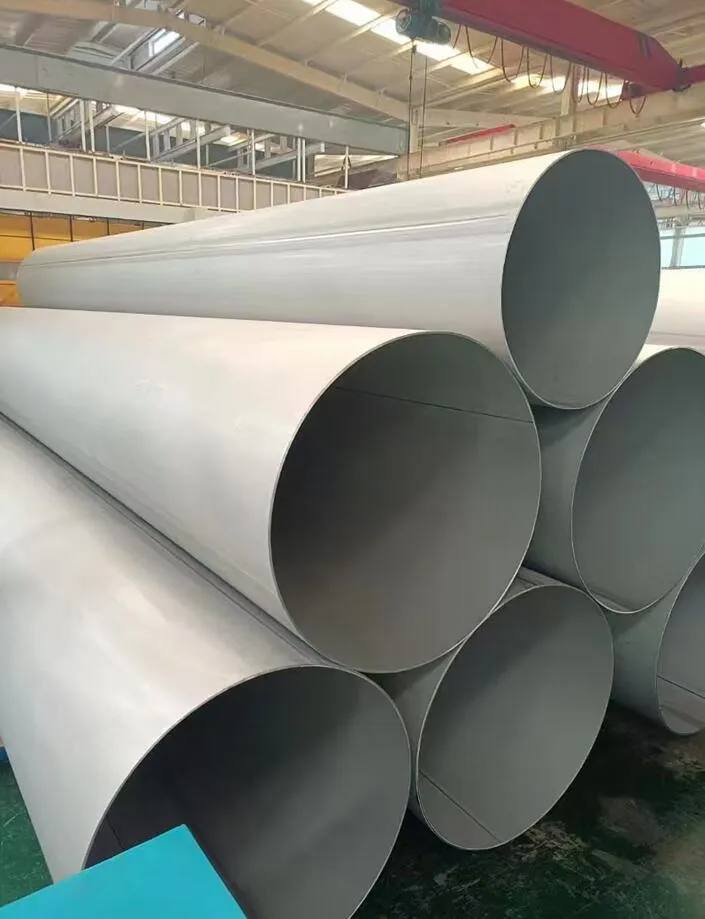
Globally, stainless steel pipe specifications are mainly defined under two major standard systems: the ASTM/ASME system used widely in North America and international EPC projects, and the EN system commonly used in Europe.
The most commonly referenced standards include:
|
Standard System |
Key Standards |
Typical Applications |
|
ASTM |
ASTM A312, ASTM A790, ASTM A358 |
Process piping and pressure systems |
|
ASME |
ASME B36.19M Stainless Steel Pipe, ASME B31.3 Process Piping |
Pressure piping design |
|
EN |
EN 10216-5, EN 10217-7 |
European industrial piping systems |
In most engineering specifications, stainless steel pipes are defined by combining material standards with dimensional standards and design codes.
For example:
ASTM A312 TP316L – ASME B36.19M – SCH 40S
This indicates the pipe material grade, pipe dimensions, and wall thickness schedule used in the piping system.
The first and most important factor when selecting a stainless steel pipe standard is the engineering design code used for the project.
Industrial piping systems are usually designed according to specific engineering codes that define safety rules and pressure design requirements.
Common design codes include:
ASME B31.3for process piping in petrochemical plants
ASME B31.1for power plant piping systems
EN pressure equipment codesfor European industrial systems
Projects designed according to ASME codes typically require ASTM material standards.
Projects designed according to European standards generally require EN material specifications.
Therefore, the design code usually determines the base standard system for the entire piping network.
The operating environment plays a critical role in selecting the correct stainless steel pipe material and standard.
Different environments may require specific corrosion resistance, temperature stability, or mechanical strength.
Typical environments include:
Corrosive chemical processing environments where molybdenum-containing stainless steels such as 316L are preferred.
Marine and offshore environments where chloride exposure requires high pitting resistance.
High-temperature industrial systems such as steam lines or heat exchangers.
Hygienic applications in food and pharmaceutical industries requiring corrosion-resistant and contamination-free piping.
For example, duplex stainless steels such as ASTM A790 UNS S32205 may be selected for offshore pipelines where higher strength and chloride corrosion resistance are required.
Pressure and temperature conditions significantly influence stainless steel pipe selection.
High-pressure systems require materials with adequate mechanical strength and structural integrity.
For pressure piping systems, ASTM A312 stainless steel pipes are commonly specified together with ASME piping codes.
Typical mechanical property requirements include:
|
Grade |
Yield Strength (MPa) |
Tensile Strength (MPa) |
|
304 |
≥205 |
≥515 |
|
304L |
≥170 |
≥485 |
|
316 |
≥205 |
≥515 |
|
316L |
≥170 |
≥485 |
Higher strength materials such as duplex stainless steel can allow thinner wall thickness while maintaining the same pressure rating.
This can reduce overall piping system weight and installation costs.
Stainless steel pipes can be manufactured using different processes depending on application requirements.
The two primary types are seamless pipes and welded pipes.
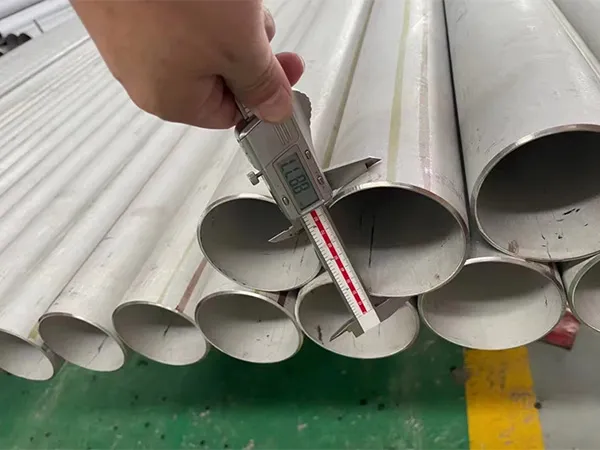
Seamless stainless steel pipes are typically used for critical pressure systems where maximum structural integrity is required.
These pipes are commonly manufactured according to standards such as ASTM A312 or EN 10216-5.
Welded stainless steel pipes are widely used in industrial pipelines where large diameters and cost efficiency are important.
Standards such as EN 10217-7 or ASTM A358 cover welded stainless steel pipes used in pressure systems.
Selecting between seamless and welded pipes depends on pressure rating, project budget, pipe size, and engineering specifications.
Different stainless steel grades offer different levels of corrosion resistance and mechanical performance.
Below is a comparison of several commonly used stainless steel pipe materials.
|
Grade |
Cr (%) |
Ni (%) |
Mo (%) |
Typical Use |
|
304 |
18–20 |
8–10.5 |
— |
General industrial use |
|
304L |
18–20 |
8–12 |
— |
Welded piping systems |
|
316 |
16–18 |
10–14 |
2–3 |
Chemical processing |
|
316L |
16–18 |
10–14 |
2–3 |
Marine environments |
|
Duplex 2205 |
21–23 |
4.5–6.5 |
2.5–3.5 |
Offshore and high-strength applications |
Selecting the correct grade ensures that the piping system will maintain corrosion resistance and mechanical integrity throughout its service life.
Different regions have regulatory requirements that influence stainless steel pipe selection.
For example, European pressure equipment often requires compliance with the Pressure Equipment Directive (PED). This may require materials produced according to EN standards with specific certification and traceability documentation.
In contrast, many international EPC projects follow ASME piping codes and ASTM material standards.
Understanding these regulatory requirements helps ensure compliance with local engineering regulations and project specifications.
Different industries often use different stainless steel pipe standards based on operating conditions and engineering codes.
|
Industry |
Common Pipe Standard |
Typical Materials |
|
Oil and Gas |
ASTM A312 / ASTM A790 |
316L, Duplex 2205 |
|
Petrochemical |
ASTM A312 / ASME B31.3 |
304L, 316L |
|
Power Generation |
ASME B31.1 |
304, 321 |
|
European Industrial Plants |
EN 10216-5 / EN 10217-7 |
1.4301, 1.4404 |
|
Food Processing |
ASTM A269 / A312 |
304L |
Selecting the correct standard ensures compatibility with the industry’s engineering practices and safety regulations.
Womic Steel is a professional manufacturer and global supplier of stainless steel pipes designed for demanding industrial applications. The company provides stainless steel piping solutions that comply with major international standards including ASTM, ASME, and EN specifications.
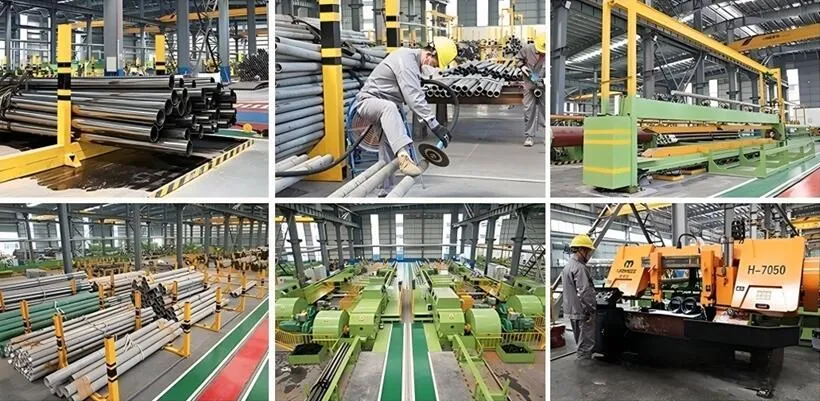
Womic Steel manufactures both seamless and welded stainless steel pipes using advanced production equipment and strict quality control systems. The manufacturing facilities include modern forming lines, cold drawing equipment, heat treatment furnaces, and comprehensive inspection laboratories.
The company supplies a wide range of stainless steel grades including 304, 304L, 316, 316L, 321, 347, and duplex stainless steel 2205. These materials are widely used in petrochemical plants, energy infrastructure projects, offshore platforms, and industrial processing facilities.
Each pipe produced by Womic Steel undergoes comprehensive testing including chemical composition analysis, mechanical property verification, non-destructive testing, and dimensional inspection. This ensures that every product meets international quality standards and project specifications.
With strong production capacity, advanced manufacturing technology, and extensive export experience, Womic Steel provides reliable stainless steel piping solutions for global engineering projects.
Customized services. Rapid production. Global reach. We ensure your specific needs are fulfilled with precision and top-tier quality.
Website: www.womicstainless.com
Email:info@womicstainless.com
Tel/WhatsApp/WeChat:Victor: +86-15575100681 or Jack: +86-18390957568