Womic Stainless Steel Co., Ltd

In global industrial projects, stainless steel pipes must comply with internationally recognized standards to ensure reliability, safety, and compatibility within piping systems. Two of the most widely used standard systems are developed by ASTM International and the European Committee for Standardization.
ASTM standards are widely used in North America, the Middle East, and many international EPC projects, while EN standards dominate across Europe and in projects designed according to European engineering practices.
Although both systems govern stainless steel pipes used in pressure systems, chemical plants, offshore platforms, and energy infrastructure, they differ in several key aspects including material designation, chemical composition limits, testing requirements, dimensional standards, and documentation methods.
Understanding the difference between ASTM and EN stainless steel pipe standards is essential for engineers, procurement specialists, EPC contractors, and international suppliers involved in global pipeline projects.
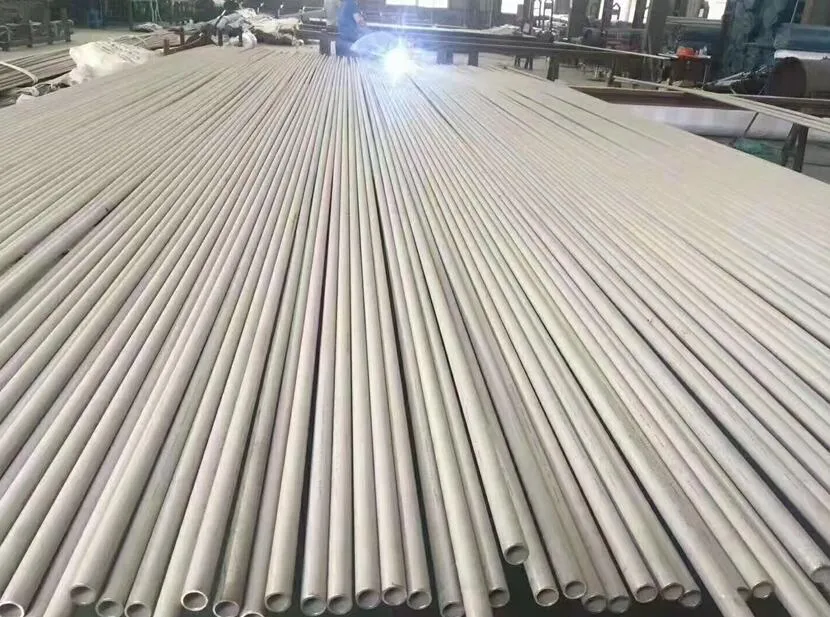
ASTM stainless steel pipe standards define the material requirements, chemical composition, mechanical properties, and manufacturing processes for stainless steel pipes. These standards are widely used in ASME pressure piping systems and global engineering projects.
Some of the most common ASTM stainless steel pipe standards include:
|
ASTM Standard |
Pipe Type |
Typical Application |
|
ASTM A312 |
Seamless and welded austenitic stainless steel pipe |
Process piping |
|
ASTM A358 |
Electric-fusion welded stainless steel pipe |
High temperature service |
|
ASTM A790 |
Duplex stainless steel pipe |
Offshore and corrosive environments |
|
ASTM A269 |
Stainless steel tubing |
Heat exchangers and instrumentation |
ASTM material specifications are usually combined with dimensional standards such asASME B36.19Mwhen defining stainless steel pipes for pressure systems.
For example, a typical pipe specification may appear as:
ASTM A312 TP316L – ASME B36.19M – SCH 40S
This indicates the pipe material, dimensional standard, and wall thickness schedule required for the piping system.
EN standards are the European equivalent of ASTM material specifications and are issued by the European standardization system.
Several EN standards cover stainless steel pipes used in industrial piping systems.
The most common EN standards include:
|
EN Standard |
Pipe Type |
Application |
|
EN 10216-5 |
Seamless stainless steel pipe |
Pressure purposes |
|
EN 10217-7 |
Welded stainless steel pipe |
Pressure systems |
|
EN 10296-2 |
Welded stainless steel pipe |
Mechanical applications |
EN standards often use a European steel designation system based on chemical composition and material numbers. For example, stainless steel grade1.4301corresponds roughly to304 stainless steel, while1.4404corresponds to316L stainless steel.
These standards are commonly specified in European industrial projects, including petrochemical plants, offshore facilities, and energy infrastructure.
One of the most noticeable differences between ASTM and EN standards is the material designation system. ASTM uses grade names such as 304 or 316L, while EN standards use chemical composition names and numerical material numbers.
Below is a comparison of commonly used stainless steel grades.
|
ASTM Grade |
EN Grade |
Material Number |
Typical Application |
|
304 |
X5CrNi18-10 |
1.4301 |
General corrosion resistance |
|
304L |
X2CrNi19-11 |
1.4306 |
Welded piping systems |
|
316 |
X5CrNiMo17-12-2 |
1.4401 |
Chemical processing |
|
316L |
X2CrNiMo17-12-2 |
1.4404 |
Chloride environments |
|
321 |
X6CrNiTi18-10 |
1.4541 |
High temperature applications |
Although these materials are similar in performance, their chemical composition limits and testing requirements may vary slightly between ASTM and EN specifications.
Understanding these equivalencies is important when sourcing materials for international projects where standards may differ.
ASTM and EN stainless steel grades often have similar alloying elements but may specify different composition ranges.
Below is a simplified comparison of typical compositions.
|
Grade |
Cr (%) |
Ni (%) |
Mo (%) |
C (%) |
|
ASTM 304 |
18–20 |
8–10.5 |
— |
≤0.08 |
|
EN 1.4301 |
17.5–19.5 |
8–10.5 |
— |
≤0.07 |
|
ASTM 316L |
16–18 |
10–14 |
2–3 |
≤0.03 |
|
EN 1.4404 |
16.5–18.5 |
10–13 |
2–2.5 |
≤0.03 |
The differences are generally small but may affect corrosion performance in certain environments. EN grades sometimes specify slightly tighter composition ranges.
Mechanical properties of stainless steel pipes also vary slightly between ASTM and EN standards.
Typical mechanical property requirements include:
|
Grade |
Yield Strength (MPa) |
Tensile Strength (MPa) |
Elongation (%) |
|
ASTM 304 |
≥205 |
≥515 |
≥35 |
|
EN 1.4301 |
≥190 |
500–700 |
≥40 |
|
ASTM 316L |
≥170 |
≥485 |
≥35 |
|
EN 1.4404 |
≥170 |
485–680 |
≥40 |
These differences arise from different testing methodologies and specification frameworks used by each standard system.
However, in practical engineering applications, the materials often perform similarly.
Another major difference between ASTM and EN pipe systems is the dimensional standard used for pipe sizing.
ASTM pipes typically followASME pipe dimensions, which define nominal pipe size (NPS) and schedule thickness.
Examples include:
SCH 10S
SCH 40S
SCH 80S
EN pipe standards, on the other hand, often specify dimensions using outside diameter and wall thickness rather than schedule numbers.
For example:
114.3 × 6 mm
168.3 × 8 mm
This difference means that engineers must carefully convert pipe sizes when switching between ASTM and EN systems.
ASTM and EN standards also differ in inspection and testing requirements.
ASTM specifications generally focus on material testing such as:
Chemical composition analysis
Tensile testing
Hydrostatic testing
Non-destructive testing
EN standards often include additional documentation and traceability requirements, particularly for pressure equipment used in Europe.
EN materials used in pressure equipment may require compliance with the European Pressure Equipment Directive (PED), which includes strict documentation and quality certification procedures.
Both ASTM and EN stainless steel pipe standards are widely used across multiple industries.
Typical applications include:
Oil and gas pipelines transporting hydrocarbons under pressure.
Petrochemical processing plants handling aggressive chemical environments.
Power generation facilities requiring heat-resistant piping systems.
Offshore platforms exposed to corrosive marine environments.
Water treatment plants and industrial processing systems.
The choice between ASTM and EN standards usually depends on the geographic location of the project, engineering specifications, and EPC contractor requirements.
Selecting the correct stainless steel pipe standard depends on several project factors.
Key considerations include:
Engineering design codes used in the project
Geographic location of the installation
Client or EPC contractor specifications
Pressure and temperature requirements
Corrosion environment conditions
For projects designed according to ASME piping codes, ASTM pipe materials are typically specified.
For projects designed according to European engineering practices, EN standards are usually required.
Understanding the relationship between these standards helps ensure compatibility and compliance in international pipeline projects.
Womic Steel is a professional manufacturer specializing in stainless steel pipes supplied to international industrial projects. The company produces high-quality seamless and welded stainless steel pipes that comply with both ASTM and EN standard systems.
With advanced manufacturing facilities and strict quality control procedures, Womic Steel provides stainless steel pipes that meet the requirements of global engineering projects in energy, petrochemical, offshore, and industrial processing industries.
The production lines are equipped with modern forming equipment, cold drawing machines, heat treatment furnaces, and precision testing laboratories. These capabilities allow Womic Steel to manufacture stainless steel pipes with excellent dimensional accuracy and reliable mechanical performance.
Womic Steel supplies a wide range of stainless steel materials including 304, 304L, 316, 316L, 321, 347, and duplex stainless steel 2205, which are commonly used in ASTM and EN piping systems worldwide.
Each product undergoes comprehensive inspection procedures including chemical composition testing, mechanical property verification, non-destructive testing, and dimensional inspection to ensure consistent quality and full compliance with international standards.
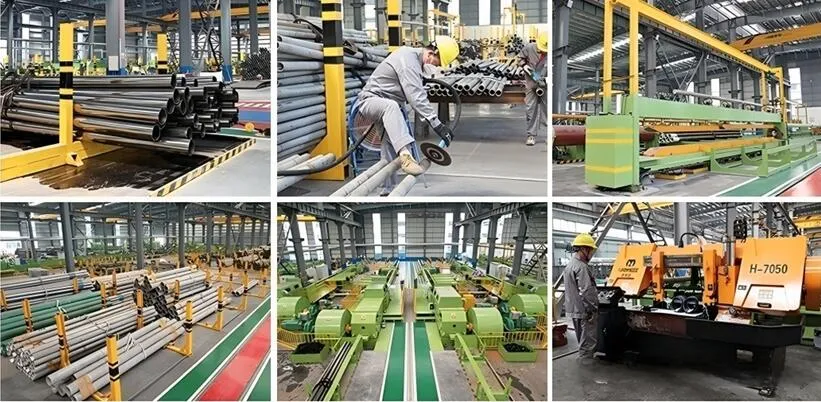
Customized services. Rapid production. Global reach. We ensure your specific needs are fulfilled with precision and top-tier quality.
Website: www.womicstainless.com
Email:info@womicstainless.com
Tel/WhatsApp/WeChat:Victor: +86-15575100681 or Jack: +86-18390957568