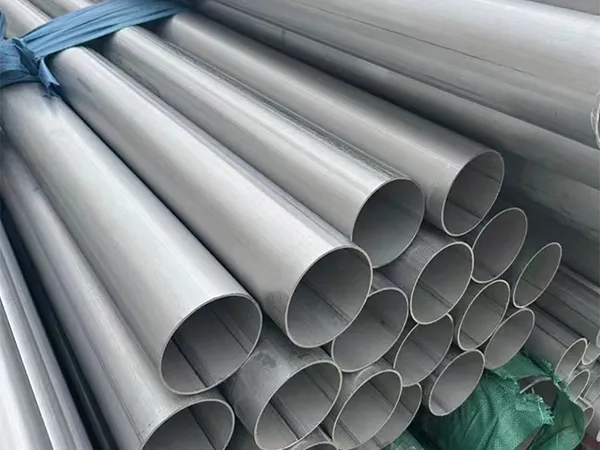
Womic Stainless Steel Co., Ltd

In industrial piping systems, stainless steel pipes used for pressure applications must comply with strict engineering standards to ensure safety, durability, and reliability. One of the most influential standard systems governing pressure equipment worldwide is developed by the American Society of Mechanical Engineers.
ASME standards provide engineering guidelines for pressure vessels, boilers, piping systems, and high-pressure industrial infrastructure. When stainless steel pipes are used in pressure systems such as petrochemical plants, refineries, power plants, and offshore platforms, they are often required to comply with multiple ASME codes and related ASTM material specifications.
ASME stainless steel pipe standards are widely adopted in North America, the Middle East, Southeast Asia, and international EPC projects. These standards define dimensional requirements, pressure design criteria, and piping system engineering rules, ensuring that stainless steel pipes can safely operate under demanding temperature, pressure, and corrosion conditions.
Understanding ASME stainless steel pipe standards is therefore essential for engineers, procurement managers, EPC contractors, and global piping suppliers involved in pressure system design and construction.
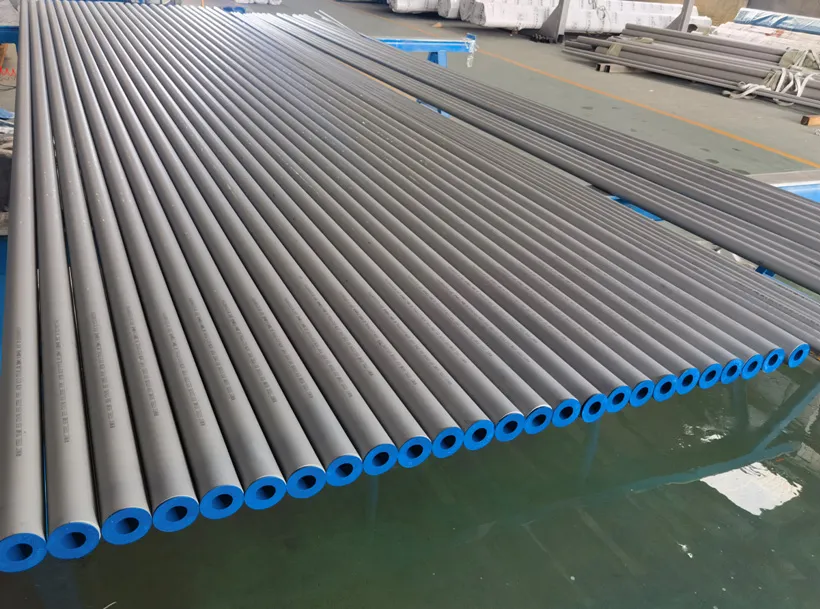
ASME piping systems rely on several core standards that define pipe dimensions, design rules, and engineering practices. Stainless steel pipes used in pressure systems often reference multiple ASME documents simultaneously.
The most important ASME standards include:
ASME B36.19M Stainless Steel Pipe – Stainless Steel Pipe Dimensions
ASME B31.3 Process Piping – Piping Design for Chemical and Petrochemical Plants
ASME Boiler and Pressure Vessel Code – Pressure Equipment Construction Rules
ASME B31.1 Power Piping – Piping Systems for Power Plants
These standards work together to ensure that stainless steel pipes used in pressure systems meet strict engineering and safety requirements.
For example, ASME B36.19M specifies the dimensional standards for stainless steel pipes, including nominal pipe sizes and schedule thicknesses, while ASME B31.3 defines the design rules for process piping systems used in refineries and chemical plants.
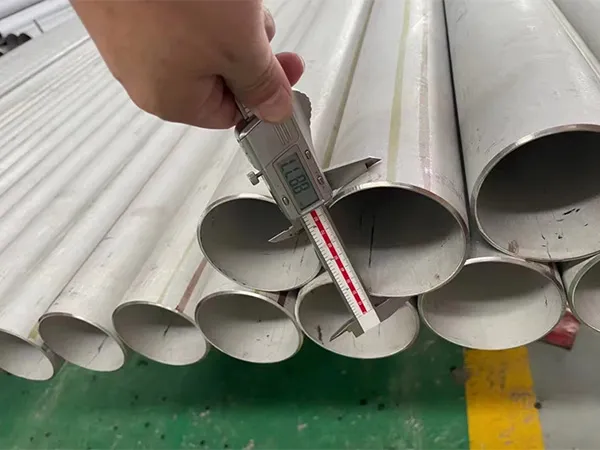
One of the most widely referenced standards for stainless steel pipe dimensions is ASME B36.19M. This specification defines standardized pipe sizes, outside diameters, wall thickness schedules, and weight calculations for stainless steel piping systems.
The standard ensures compatibility between pipes, fittings, and flanges used in pressure systems.
Typical nominal pipe size (NPS) ranges include:
|
NPS |
Outside Diameter (mm) |
Common Schedules |
|
1/2 |
21.3 |
SCH 10S / SCH 40S |
|
1 |
33.4 |
SCH 10S / SCH 40S |
|
4 |
114.3 |
SCH 10S / SCH 40S |
|
8 |
219.1 |
SCH 10S / SCH 40S |
|
12 |
323.9 |
SCH 10S / SCH 40S |
The “S” designation in schedules such as SCH 10S and SCH 40S indicates that these pipe thicknesses are specifically designed for stainless steel piping systems.
ASME B36.19M is commonly used together with ASTM material standards when specifying stainless steel pipes for pressure systems.
While ASME defines piping design and dimensional standards, the material properties of stainless steel pipes are typically governed by ASTM specifications developed by ASTM International.
Common ASTM stainless steel pipe standards include:
|
ASTM Standard |
Pipe Type |
Typical Application |
|
ASTM A312 |
Seamless & Welded Austenitic Stainless Pipe |
Process piping |
|
ASTM A358 |
Electric-Fusion Welded Stainless Pipe |
High temperature service |
|
ASTM A790 |
Duplex Stainless Steel Pipe |
Offshore and corrosive environments |
|
ASTM A269 |
Instrumentation tubing |
Heat exchangers and instrumentation |
In practical engineering specifications, stainless steel pipes are usually described using both standards.
For example:
ASTM A312 TP316L – ASME B36.19M – SCH 40S
This indicates the pipe material grade, manufacturing standard, and dimensional schedule required for the piping system.
Stainless steel pipes used in ASME pressure systems typically belong to the austenitic stainless steel family. These alloys offer excellent corrosion resistance, high ductility, and reliable performance under high temperature conditions.
Below is a comparison of several commonly used stainless steel materials.
|
Grade |
Cr (%) |
Ni (%) |
Mo (%) |
C (%) |
|
304 |
18–20 |
8–10.5 |
— |
≤0.08 |
|
304L |
18–20 |
8–12 |
— |
≤0.03 |
|
316 |
16–18 |
10–14 |
2–3 |
≤0.08 |
|
316L |
16–18 |
10–14 |
2–3 |
≤0.03 |
|
321 |
17–19 |
9–12 |
— |
≤0.08 |
Chromium improves oxidation resistance and corrosion protection.
Nickel stabilizes the austenitic structure and improves ductility.
Molybdenum increases resistance to pitting corrosion in chloride environments.
Low carbon grades such as 304L and 316L are commonly used in welded piping systems because they reduce the risk of intergranular corrosion.
Mechanical strength is essential for pipes used in pressure systems. ASTM stainless steel pipes used in ASME piping systems must meet specific mechanical property requirements.
Typical values include:
|
Grade |
Yield Strength (MPa) |
Tensile Strength (MPa) |
Elongation (%) |
|
304 |
≥205 |
≥515 |
≥35 |
|
304L |
≥170 |
≥485 |
≥35 |
|
316 |
≥205 |
≥515 |
≥35 |
|
316L |
≥170 |
≥485 |
≥35 |
|
321 |
≥205 |
≥515 |
≥35 |
These mechanical properties ensure that stainless steel pipes can withstand internal pressure, thermal expansion, and mechanical loads encountered in industrial piping systems.
ASME standards not only define pipe dimensions but also provide detailed engineering rules for designing piping systems operating under pressure.
The most important design code isASME B31.3, which covers process piping used in industries such as:
Petrochemical processing plants
Oil refineries
Chemical manufacturing facilities
Pharmaceutical production plants
Gas processing units
ASME B31.3 establishes requirements for:
Pipe wall thickness calculations
Stress analysis and allowable stresses
Welding procedures and welder qualifications
Pressure testing procedures
Inspection and documentation requirements
These engineering rules ensure that stainless steel piping systems operate safely throughout their service life.
ASME-compliant stainless steel pipes are widely used in industrial pressure systems across many sectors.
Typical applications include:
Oil and gas pipelines transporting high-pressure fluids.
Petrochemical plants handling corrosive chemicals and hydrocarbons.
Power generation facilities requiring heat-resistant piping.
Pharmaceutical production systems requiring corrosion-resistant piping.
Food and beverage processing plants requiring hygienic stainless steel piping systems.
Because of their reliability and global recognition, ASME piping standards are widely adopted in international engineering projects.
Womic Steel is a professional manufacturer and global supplier of stainless steel pipes designed for industrial piping systems and pressure equipment applications.
The company produces seamless and welded stainless steel pipes that comply with international standards including ASTM, ASME, and European EN specifications. Womic Steel stainless steel pipes are widely used in energy infrastructure, petrochemical facilities, offshore engineering projects, and industrial processing plants.
The production facilities are equipped with advanced pipe forming equipment, cold drawing lines, heat treatment furnaces, and precision testing laboratories. These capabilities allow Womic Steel to manufacture stainless steel pipes with excellent dimensional accuracy, reliable mechanical properties, and superior corrosion resistance.
Womic Steel supplies a wide range of stainless steel grades including 304, 304L, 316, 316L, 321, 347, and duplex stainless steel 2205. Each pipe undergoes comprehensive inspection including chemical composition verification, mechanical testing, non-destructive testing, and dimensional inspection.
With strong manufacturing capacity and extensive export experience, Womic Steel provides reliable stainless steel piping solutions for global pressure system projects.
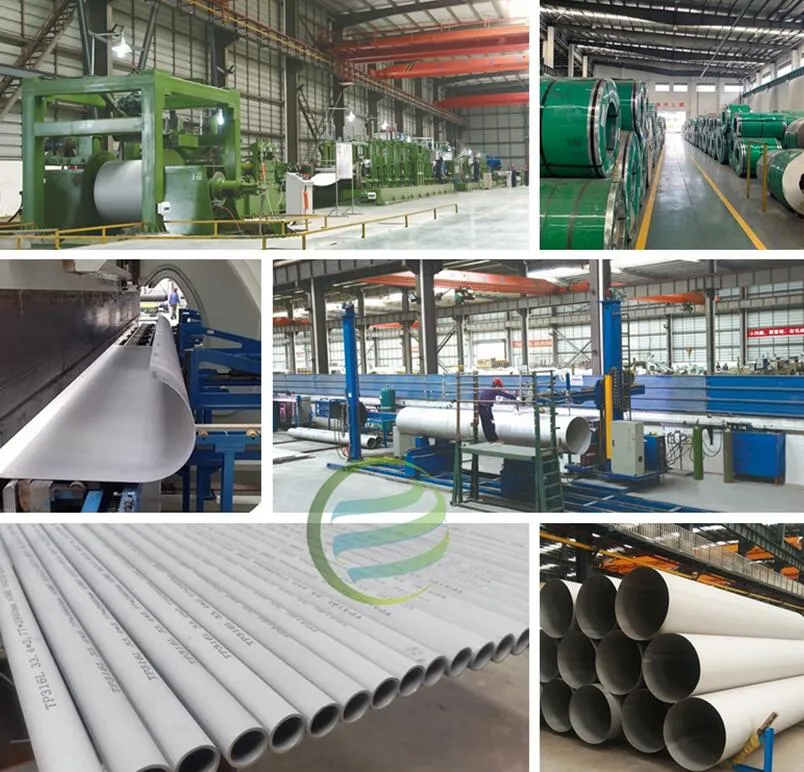
Customized services. Rapid production. Global reach. We ensure your specific needs are fulfilled with precision and top-tier quality.
Website: www.womicstainless.com
Email:info@womicstainless.com
Tel/WhatsApp/WeChat:Victor: +86-15575100681 or Jack: +86-18390957568