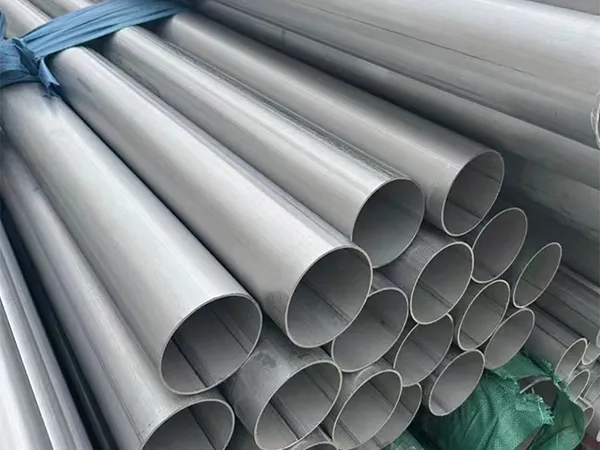
Womic Stainless Steel Co., Ltd

The chemical processing industry involves extremely aggressive operating environments. Process pipelines are often exposed to corrosive chemicals, acidic fluids, high temperatures, and fluctuating pressures. In such conditions, the selection of piping materials becomes critical to ensure long-term operational safety, process efficiency, and reduced maintenance costs.
Stainless steel pipes are widely used in chemical plants due to their outstanding corrosion resistance, mechanical strength, and structural stability. Compared with carbon steel piping, stainless steel materials offer superior resistance to oxidation, acid attack, and chloride-induced corrosion.
Industrial stainless steel pipes for chemical applications are typically manufactured according to international standards such as ASTM A312 for austenitic stainless steel pipes and ASTM A790 for duplex stainless steel pipes. These standards define strict requirements for chemical composition, mechanical properties, heat treatment processes, dimensional tolerances, and inspection procedures.
In chemical plants, stainless steel piping systems are commonly used for the transportation of corrosive liquids, process gases, high-purity chemicals, and reaction intermediates.
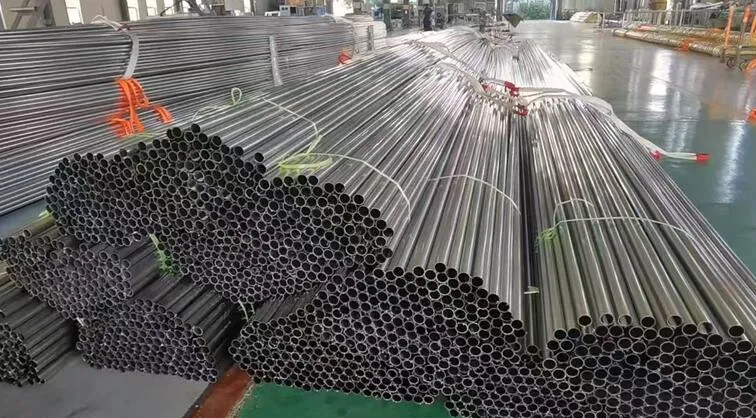
Chemical processing facilities contain complex piping networks that connect reactors, storage tanks, heat exchangers, distillation columns, and pumping systems. Each process unit requires piping materials capable of resisting different forms of corrosion.
Common applications include:
l Acid transfer pipelinesused for sulfuric acid, nitric acid, and phosphoric acid transportation.
l Chemical reactor piping systemsexposed to high temperature and aggressive chemical reactions.
l Heat exchanger tubingused for cooling and heating chemical fluids.
l Solvent transport pipelinesfor organic chemical production.
l High-purity fluid pipingused in fine chemical and pharmaceutical production.
Because these environments involve both chemical corrosion and thermal stress, material selection must consider not only corrosion resistance but also mechanical reliability and weldability.
Different chemical environments require different stainless steel grades. The following materials are commonly selected for chemical industry piping systems.
|
Material Grade |
Standard |
Stainless Steel Type |
Main Feature |
Typical Application |
|
304L |
ASTM A312 |
Austenitic |
General corrosion resistance |
Mild chemical environments |
|
316L |
ASTM A312 |
Mo-alloyed Austenitic |
Chloride corrosion resistance |
Chemical transport lines |
|
904L |
ASTM A312 |
High alloy Austenitic |
Strong acid resistance |
Sulfuric acid systems |
|
2205 |
ASTM A790 |
Duplex Stainless Steel |
High strength and corrosion resistance |
Chloride-rich environments |
|
2507 |
ASTM A790 |
Super Duplex |
Excellent pitting resistance |
Offshore chemical processing |
Among these materials,316L, 904L, and Duplex 2205are widely used in chemical plants because they provide strong resistance to both uniform corrosion and localized corrosion such as pitting and crevice corrosion.
The corrosion resistance of stainless steel pipes is mainly determined by their alloy composition, especially chromium, nickel, and molybdenum content.
|
Grade |
C (%) |
Cr (%) |
Ni (%) |
Mo (%) |
Other Elements |
|
304L |
≤0.03 |
18–20 |
8–12 |
— |
— |
|
316L |
≤0.03 |
16–18 |
10–14 |
2–3 |
— |
|
904L |
≤0.02 |
19–23 |
23–28 |
4–5 |
Cu |
|
2205 |
≤0.03 |
21–23 |
4.5–6.5 |
2.5–3.5 |
N |
|
2507 |
≤0.03 |
24–26 |
6–8 |
3–5 |
N |
Important metallurgical characteristics include:
l Chromium (Cr)improves resistance to oxidation and general corrosion.
l Nickel (Ni)stabilizes the austenitic structure and enhances toughness.
l Molybdenum (Mo)significantly increases resistance to pitting corrosion.
l Nitrogen (N)strengthens duplex stainless steels and improves corrosion resistance.
l Copper (Cu)improves resistance to sulfuric acid environments.
Because of these alloying elements, high-alloy stainless steels such as904L and Super Duplex 2507perform exceptionally well in aggressive chemical environments.
In addition to corrosion resistance, stainless steel pipes used in chemical plants must also withstand internal pressure, vibration, and temperature fluctuations.
Typical mechanical properties include:
|
Grade |
Yield Strength (MPa) |
Tensile Strength (MPa) |
Elongation (%) |
|
304L |
≥170 |
≥485 |
≥35 |
|
316L |
≥170 |
≥485 |
≥35 |
|
904L |
≥220 |
≥490 |
≥35 |
|
2205 |
≥450 |
≥620 |
≥25 |
|
2507 |
≥550 |
≥795 |
≥25 |
Duplex stainless steels such as2205 and 2507provide nearlydouble the yield strengthof standard austenitic stainless steels, allowing thinner wall pipes to be used while maintaining the same pressure rating.
Different stainless steel materials demonstrate varying resistance to corrosive chemicals.
|
Environment |
Recommended Material |
|
Mild organic chemicals |
304L |
|
Chloride solutions |
316L |
|
Sulfuric acid |
904L |
|
Seawater chemical plants |
Duplex 2205 |
|
Strong chloride + high pressure |
Super Duplex 2507 |
For example:
l 316L stainless steel pipesare commonly used for chemical transport pipelines because molybdenum improves resistance to chloride corrosion.
l 904L stainless steel pipesare often selected for sulfuric acid production equipment.
l Duplex 2205 pipesare widely used in chemical plants located in coastal regions where chloride exposure is significant.
This comparison demonstrates that selecting the appropriate stainless steel grade is essential for ensuring long-term reliability in chemical processing facilities.
High-quality stainless steel pipes for chemical industry applications are produced through carefully controlled manufacturing processes.
Typical production steps include:
l Raw material billet inspection
l Hot piercing to create hollow tubes
l Hot rolling or extrusion forming
l Cold drawing to achieve precise dimensions
l Solution annealing heat treatment
l Pickling and surface finishing
l Non-destructive testing
l Hydrostatic pressure testing
l Final dimensional inspection and marking
Manufacturers must strictly follow the technical requirements specified in ASTM A312 and ASTM A790.
Stainless steel pipes used in chemical processing plants must undergo rigorous inspection to guarantee reliability and corrosion resistance.
Typical quality inspection procedures include:
l Chemical composition analysis using spectrometers
l Mechanical property testing
l Hydrostatic pressure testing
l Ultrasonic inspection
l Eddy current testing
l Surface defect inspection
l Dimensional tolerance verification
l Intergranular corrosion testing
These inspections ensure that each pipe meets international quality standards and can safely operate in demanding chemical environments.
Stainless steel pipes provide several key benefits for chemical processing systems.
Excellent corrosion resistance against acids and chemicals
High mechanical strength and pressure resistance
Long service life and reduced maintenance costs
Smooth internal surfaces that reduce fluid contamination
Reliable welding performance for complex piping systems
These advantages make stainless steel piping systems the preferred choice for modern chemical plants and process facilities.
Womic Steel is a specialized manufacturer and exporter of high-quality stainless steel pipes designed for demanding industrial environments, including chemical processing plants.
The company supplies stainless steel pipes manufactured according to international standards such as ASTM A312 and ASTM A790.
Available materials include:
304L stainless steel pipes
316L corrosion-resistant stainless steel pipes
904L high-alloy stainless steel pipes
Duplex 2205 stainless steel pipes
Super Duplex 2507 high-strength pipes
With advanced cold drawing production lines, modern heat treatment furnaces, and strict quality inspection systems, Womic Steel ensures that every pipe meets international quality and performance requirements.
The company provides reliable stainless steel piping solutions for chemical plants, petrochemical facilities, pharmaceutical production systems, and industrial processing pipelines worldwide.
Customized services. Rapid production. Global reach. We ensure your specific needs are fulfilled with precision and top-tier quality.
Website: www.womicstainless.com
Email: info@womicstainless.com
Tel/WhatsApp/WeChat: Victor: +86-15575100681 or Jack: +86-18390957568