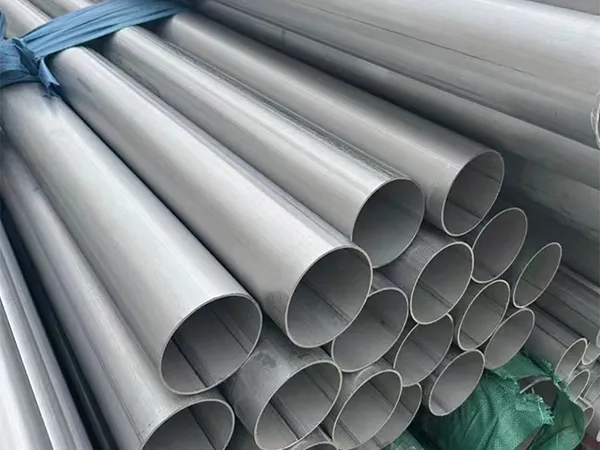
Womic Stainless Steel Co., Ltd

Boiler systems operate under some of the most demanding industrial conditions. High-pressure steam, elevated temperatures, cyclic thermal loading, and long-term oxidation exposure require piping materials with exceptional mechanical stability and heat resistance. Stainless steel pipes are widely used in industrial boilers because they provide superior high-temperature strength, oxidation resistance, and long service life compared with conventional carbon steel tubes.
In power generation plants, petrochemical processing facilities, and industrial steam systems, stainless steel boiler tubes are commonly manufactured in accordance with internationally recognized standards such as ASTM A213 and ASME SA213. These standards specify seamless ferritic and austenitic alloy-steel tubes designed for high-temperature service in boilers, superheaters, and heat exchangers.
Stainless steel materials used in boiler applications are typically selected for their ability to maintain mechanical strength at elevated temperatures while resisting oxidation and creep deformation during prolonged operation.
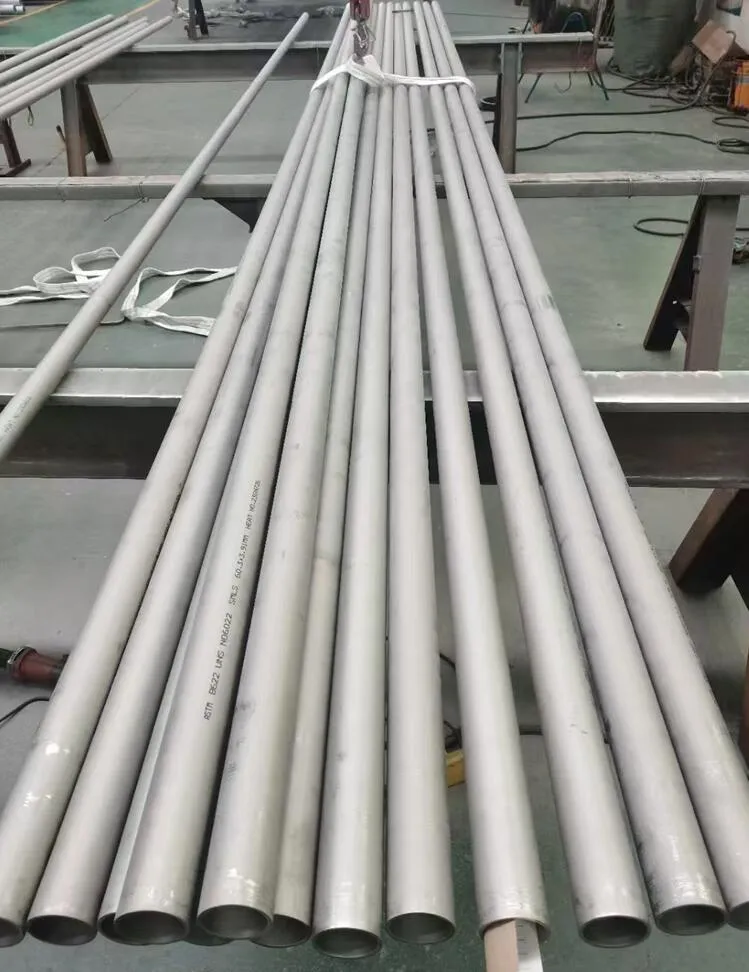
Modern boiler systems contain several critical heat transfer components where stainless steel tubing is required. Each component operates under different thermal and pressure conditions, which affects the selection of material grade.
Typical boiler system components include:
1. Economizer Tubes– Recover waste heat from flue gases to improve boiler efficiency.
2. Evaporator Tubes– Convert water into saturated steam within the boiler drum.
3. Superheater Tubes– Increase steam temperature beyond saturation levels.
4. Reheater Tubes– Reheat partially expanded steam in power plant turbines.
5. Boiler Header Connections– Distribute high-temperature steam within the system.
Among these components,superheater and reheater tubesare exposed to the highest temperatures and therefore require specialized stainless steel grades with excellent creep resistance.
Several stainless steel grades are specifically designed for high-temperature boiler applications. These materials provide improved creep strength, oxidation resistance, and microstructural stability during long-term service.
Typical grades include:
|
Grade |
|
Standard |
Stainless Type |
Key Feature |
Typical Application |
|
TP304 |
|
ASTM A213 |
Austenitic |
General corrosion resistance |
Economizers |
|
TP304H |
|
ASTM A213 |
High Carbon Austenitic |
Improved high-temperature strength |
Superheaters |
|
TP316L |
|
ASTM A213 |
Mo-Alloyed Austenitic |
Chloride corrosion resistance |
Chemical boilers |
|
TP321 |
|
ASTM A213 |
Titanium Stabilized |
High temperature stability |
Steam piping |
|
TP347 |
|
ASTM A213 |
Niobium Stabilized |
Creep resistance |
Power plant boilers |
|
TP347H |
|
ASTM A213 |
High Carbon Stabilized |
Superior creep strength |
High pressure superheaters |
Among these materials,TP304H, TP321H, and TP347Hare widely used in high-temperature steam systems due to their improved creep resistance and microstructural stability.
The alloy composition of stainless steel determines its high-temperature performance and resistance to oxidation and creep.
|
Grade |
C (%) |
Cr (%) |
Ni (%) |
Mo (%) |
Stabilizer |
|
TP304 |
≤0.08 |
18–20 |
8–11 |
— |
— |
|
TP304H |
0.04–0.10 |
18–20 |
8–11 |
— |
— |
|
TP316L |
≤0.03 |
16–18 |
10–14 |
2–3 |
— |
|
TP321 |
≤0.08 |
17–19 |
9–12 |
— |
Ti |
|
TP347 |
≤0.08 |
17–19 |
9–13 |
— |
Nb |
|
TP347H |
0.04–0.10 |
17–19 |
9–13 |
— |
Nb |
Key metallurgical characteristics include:
1. Chromium (Cr)forms a protective oxide film that prevents oxidation at high temperature.
2. Nickel (Ni)stabilizes the austenitic structure and improves ductility.
3. Molybdenum (Mo)enhances corrosion resistance in aggressive environments.
4. Titanium and Niobiumstabilize carbon to prevent carbide precipitation at grain boundaries.
5. Higher carbon levels in “H grades”improve creep strength at elevated temperatures.
These compositional differences significantly influence the long-term reliability of boiler tubing.
Boiler tubes must withstand both internal pressure and thermal stresses caused by rapid temperature fluctuations. Mechanical properties therefore play a critical role in material selection.
Typical room temperature mechanical properties include:
|
Grade |
Yield Strength (MPa) |
Tensile Strength (MPa) |
Elongation (%) |
|
TP304 |
≥205 |
≥515 |
≥35 |
|
TP304H |
≥205 |
≥515 |
≥35 |
|
TP316L |
≥170 |
≥485 |
≥35 |
|
TP321 |
≥205 |
≥515 |
≥35 |
|
TP347 |
≥205 |
≥515 |
≥35 |
|
TP347H |
≥205 |
≥515 |
≥35 |
However, the key factor for boiler tubes iscreep strength at high temperatures, not just room temperature mechanical properties.
Creep is the slow deformation of materials under stress at high temperatures. In boiler systems operating for tens of thousands of hours, creep resistance becomes critical.
Approximate maximum continuous service temperatures:
|
Grade |
Max Continuous Temperature |
|
TP304 |
~870°C |
|
TP304H |
~900°C |
|
TP316L |
~870°C |
|
TP321 |
~900°C |
|
TP347 |
~900°C |
|
TP347H |
~950°C |
Among these materials:
1. TP304Hprovides improved creep strength compared with standard 304.
2. TP321offers better resistance to intergranular corrosion due to titanium stabilization.
3. TP347Hprovides the best long-term creep resistance for high-pressure boilers.
Because of these characteristics,TP347H is widely used in ultra-supercritical power plants.
Manufacturing Process of Stainless Steel Boiler Tubes
The production of stainless steel boiler pipes requires strict metallurgical control to ensure reliability under high temperature and pressure conditions.
Typical production steps include:
l Stainless steel billet preparation and inspection
l Hot piercing to produce hollow tubes
l Hot rolling or extrusion to form tube dimensions
l Cold drawing for precise tolerance control
l Solution annealing heat treatment
l Straightening and dimensional calibration
l Non-destructive testing
l Hydrostatic pressure testing
l Final inspection and marking
Manufacturers must ensure strict compliance with the requirements defined in ASTM A213 and ASME SA213.
Because boiler systems operate under high pressure and temperature conditions, stainless steel pipes must undergo rigorous inspection procedures.
Typical quality control procedures include:
1. Chemical composition analysis
2. Mechanical property testing
3. Hydrostatic pressure testing
4. Eddy current testing
5. Ultrasonic inspection
6. Grain size examination
7. Intergranular corrosion testing
8. Dimensional inspection and surface evaluation
These tests ensure that the tubes can operate safely in critical boiler systems.
Stainless steel boiler pipes offer several significant advantages over conventional carbon steel tubes.
l Superior high-temperature oxidation resistance
l Excellent creep strength under long-term thermal stress
l Resistance to intergranular corrosion
l Long service life in high-pressure steam systems
l Reduced maintenance and replacement costs
Because of these benefits, stainless steel tubes are widely used in modern high-efficiency power plant boilers and industrial steam systems.
Womic Steel is a professional manufacturer and exporter of high-performance stainless steel pipes designed for high-temperature and high-pressure applications.
The company produces boiler tubes in accordance with international standards such as ASTM A213 and ASME SA213.
Available materials include:
TP304 stainless steel boiler tubes
TP304H high-temperature boiler pipes
TP316L corrosion resistant boiler tubing
TP321 stabilized stainless steel pipes
TP347 and TP347H high creep strength tubes
Womic Steel utilizes advanced cold drawing production lines, modern heat treatment furnaces, and precision inspection equipment to ensure that every pipe meets strict international quality requirements.
With extensive export experience and strong production capacity, Womic Steel supplies stainless steel boiler tubing for power plants, petrochemical facilities, refinery heating systems, and industrial steam generation equipment worldwide.
Customized services. Rapid production. Global reach. We
ensure your specific needs are fulfilled with precision and top-tier quality.
Website: www.womicstainless.com
Email: info@womicstainless.com
Tel/WhatsApp/WeChat: Victor: +86-15575100681 or Jack: +86-18390957568