Womic Stainless Steel Co., Ltd

In industrial piping systems, dimensional precision is essential for ensuring proper installation, reliable system performance, and long-term operational safety. Stainless steel pipes are widely used in sectors such as oil and gas, chemical processing, desalination plants, marine engineering, food processing facilities, pharmaceutical production lines, and power generation infrastructure. In these demanding environments, even minor dimensional deviations can lead to alignment problems, welding defects, leakage risks, or mechanical stress during operation.
Dimensional tolerances define the allowable variations in pipe measurements during manufacturing. These tolerances apply to parameters such as outer diameter, wall thickness, length, straightness, and roundness. By controlling these tolerances within strict limits, stainless steel pipe manufacturers ensure that their products meet international engineering standards and remain compatible with flanges, valves, fittings, and other piping components used in industrial pipeline systems.
International standards including ASTM, ASME, and EN specifications provide detailed tolerance requirements for stainless steel pipe production. Manufacturers must carefully monitor these requirements throughout the manufacturing process to maintain consistent product quality and ensure compliance with global project specifications.
For companies operating in high-demand sectors such as offshore pipelines, chemical plants, or pressure systems, dimensional accuracy is not only a quality factor but also a safety requirement.
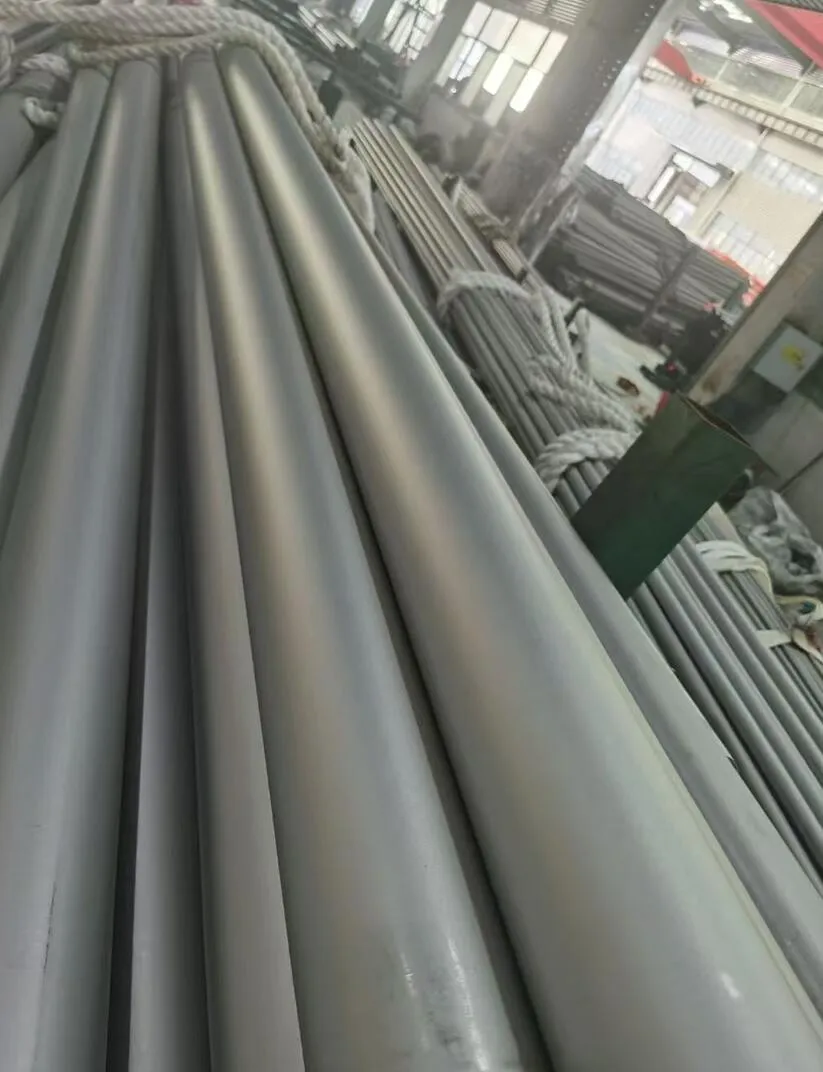
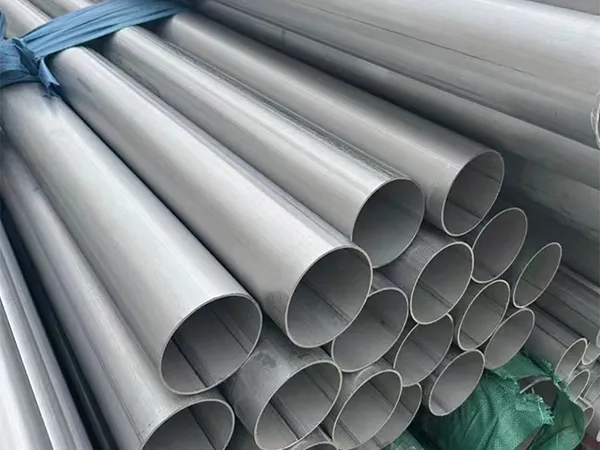
Dimensional tolerances in stainless steel pipe production typically focus on several critical measurements that determine the functionality and compatibility of the pipe.
Outer diameter is one of the most important dimensions because it directly affects the connection between pipes and fittings. Standardized outer diameters allow pipes to be welded or connected to flanges and valves without dimensional mismatches.
Wall thickness determines the strength and pressure resistance of the stainless steel pipe. Accurate wall thickness control is essential to ensure that the pipe can withstand the internal pressure, temperature conditions, and mechanical loads encountered in industrial piping systems.
Pipe length is another critical parameter. Stainless steel pipes are typically manufactured in standard lengths, but tolerances must be controlled to maintain consistency during installation.
Straightness and roundness are also important dimensional characteristics. Pipes that deviate excessively from straightness or circular shape may create difficulties during welding or alignment in piping networks.
By maintaining strict control over these parameters, manufacturers can ensure that stainless steel pipes perform reliably in complex engineering environments.
Several international standards define dimensional tolerances for stainless steel pipes. These standards ensure that pipes manufactured in different countries remain interchangeable and compatible with global industrial systems.
ASTM standards such as ASTM A312 define tolerance requirements for seamless and welded stainless steel pipes used in high temperature and corrosive service conditions. These specifications outline permissible variations for outer diameter, wall thickness, and pipe length.
European standards such as EN 10216 and EN 10217 also provide dimensional tolerance requirements for stainless steel pipes used in pressure equipment and structural piping systems.
ASME piping standards further define tolerances for pipes used in pressure vessels and power plant systems.
By adhering to these internationally recognized specifications, manufacturers ensure that their products meet the expectations of engineering companies, contractors, and project owners worldwide.
Outer diameter tolerance refers to the allowable variation between the nominal pipe diameter and the actual measured diameter of the pipe.
Maintaining accurate outer diameter dimensions is essential for ensuring compatibility with fittings and flanges. If the outer diameter deviates beyond specified limits, the pipe may not fit properly during welding or assembly.
For most stainless steel pipe standards, the allowable tolerance for outer diameter is typically expressed as a percentage of the nominal dimension or as a fixed measurement limit.
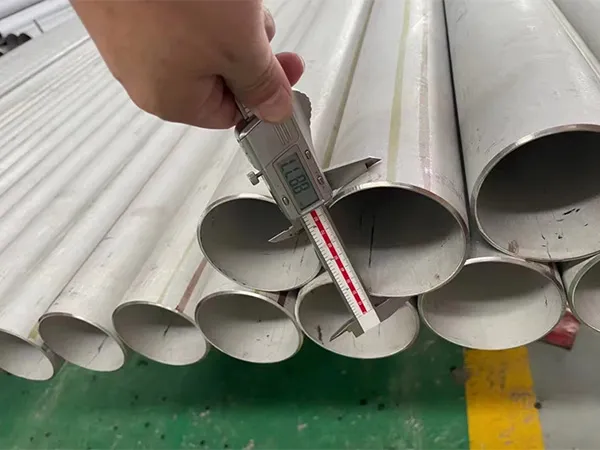
During production, manufacturers use precision measuring equipment such as laser diameter gauges and digital calipers to verify that the pipe outer diameter remains within acceptable tolerance limits.
Consistent outer diameter control ensures reliable connections in industrial piping systems and reduces the risk of installation problems.
Wall thickness tolerance is another critical factor in stainless steel pipe manufacturing because it directly affects the pipe’s pressure resistance and mechanical strength.
If the wall thickness is lower than the specified value, the pipe may not be capable of withstanding the operating pressure of the system. Conversely, excessive wall thickness may increase material costs and create welding challenges.
Standards typically define allowable wall thickness variations as a percentage of the nominal thickness.
During production, advanced ultrasonic thickness measurement equipment is used to monitor wall thickness along the entire pipe length. This technology allows manufacturers to detect variations and ensure consistent pipe strength.
Strict control of wall thickness tolerances ensures that stainless steel pipes meet design pressure requirements and maintain structural reliability throughout their service life.
Pipe length tolerances are also defined in most stainless steel pipe standards. Pipes are typically supplied in fixed lengths or random lengths depending on project requirements.
Length tolerance ensures that pipes can be installed efficiently without excessive cutting or adjustment during field installation.
Straightness is another important parameter because curved or bent pipes can cause alignment problems during pipeline construction. Excessive bending may also introduce stress points that could weaken the piping system.
Manufacturers use straightening machines and inspection tools to verify that pipes meet straightness requirements before shipment.
Maintaining proper length and straightness ensures that stainless steel pipes integrate smoothly into complex piping networks.
The manufacturing method used to produce stainless steel pipes plays a significant role in determining dimensional tolerances.
Seamless stainless steel pipes are produced by piercing solid billets followed by hot rolling or cold drawing processes. Cold drawing operations in particular allow manufacturers to achieve very precise dimensional control and smooth surface finishes.
Welded stainless steel pipes are produced by forming stainless steel strip or plate into cylindrical shapes and joining the edges using advanced welding processes such as TIG or laser welding. After welding, pipes may undergo sizing and straightening operations to ensure dimensional accuracy.
Heat treatment processes may also influence pipe dimensions, so manufacturers must carefully control temperature and cooling conditions to maintain dimensional stability.
By optimizing these production processes, stainless steel pipe manufacturers can achieve high levels of dimensional precision and product consistency.
Quality inspection is essential for verifying that stainless steel pipes meet specified dimensional tolerances.
Modern manufacturing facilities use advanced measurement technologies to perform dimensional inspections throughout the production process.
Laser measurement systems can continuously monitor pipe diameter during production. Ultrasonic testing equipment is used to measure wall thickness with high accuracy.
Coordinate measuring machines and digital gauges are also used to verify length, straightness, and roundness.
These inspection systems allow manufacturers to detect deviations early and maintain strict quality control.
Comprehensive dimensional inspection ensures that every stainless steel pipe delivered to customers meets international quality standards.
Certain industrial applications require particularly strict dimensional tolerances due to the demanding operating conditions involved.
In chemical processing plants, stainless steel pipes must maintain precise dimensions to ensure reliable fluid flow and safe transport of corrosive chemicals.
In power plants and pressure systems, accurate pipe dimensions are necessary to maintain structural integrity under high pressure and temperature conditions.
Offshore oil and gas platforms require stainless steel pipes that meet strict dimensional standards to ensure reliable performance in harsh marine environments.
Food processing and pharmaceutical industries also require stainless steel pipes with precise dimensions to maintain hygienic production conditions.
Meeting these strict requirements requires advanced manufacturing technology and rigorous quality control procedures.
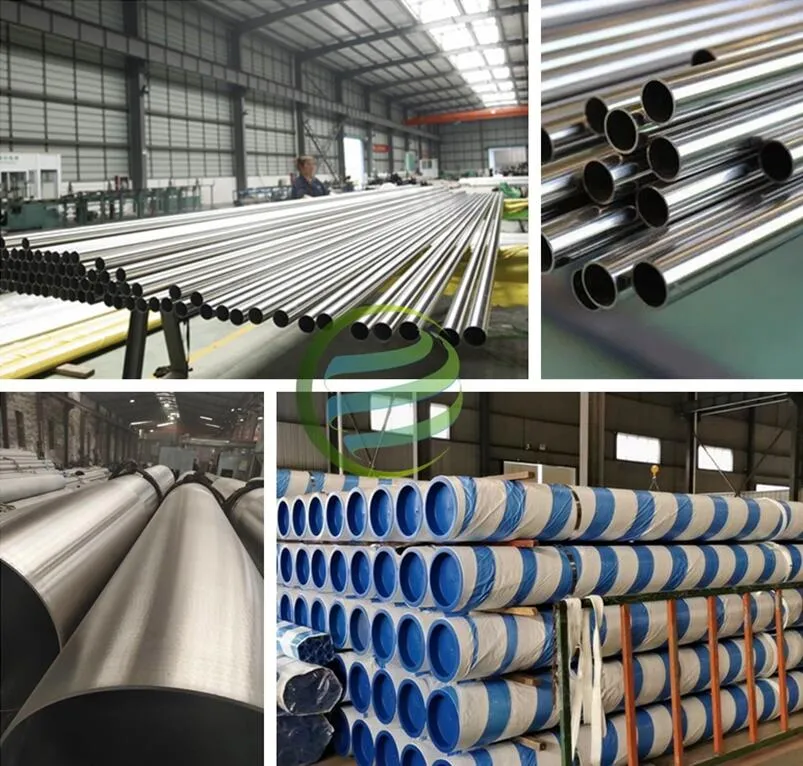
Womic Steel is a professional stainless steel pipe manufacturer with extensive experience in producing high-quality industrial piping solutions for global markets.
The company manufactures stainless steel pipes in accordance with major international standards including ASTM, ASME, and EN specifications. These pipes are widely used in industries such as oil and gas, chemical processing, power generation, marine engineering, and infrastructure construction.
Womic Steel offers a wide production range covering both seamless and welded stainless steel pipes. The manufacturing facilities are equipped with advanced production equipment, heat treatment furnaces, and precision finishing machinery that ensure consistent product quality and dimensional accuracy.
The company’s stainless steel pipe production covers a broad range of sizes and materials, including austenitic stainless steels, duplex stainless steels, and high-performance corrosion-resistant alloys designed for demanding industrial environments.
Strict quality management procedures are implemented throughout the manufacturing process. Each stainless steel pipe undergoes comprehensive inspection and testing procedures including chemical composition analysis, mechanical property testing, dimensional verification, and non-destructive inspection.
Through continuous technological improvement and strong manufacturing expertise, Womic Steel delivers stainless steel pipes that meet the strict dimensional tolerance requirements of international engineering projects.
Dimensional tolerances are a critical aspect of stainless steel pipe manufacturing. Accurate control of pipe dimensions ensures compatibility with piping components, reliable system performance, and safe operation under demanding industrial conditions.
By adhering to internationally recognized standards and implementing advanced manufacturing technologies, stainless steel pipe producers can maintain strict dimensional control throughout the production process.
For engineers, contractors, and procurement specialists, selecting stainless steel pipes manufactured with precise tolerances is essential for achieving long-term system reliability.
With advanced production facilities, comprehensive quality inspection systems, and strong engineering expertise, Womic Steel provides stainless steel pipe solutions that meet the highest standards of dimensional precision and industrial performance.
Customized services. Rapid production. Global reach. We ensure your specific needs are fulfilled with precision and top-tier quality.
Website: www.womicstainless.com
Email:info@womicstainless.com
Tel/WhatsApp/WeChat:Victor: +86-15575100681 or Jack: +86-18390957568