Womic Stainless Steel Co., Ltd

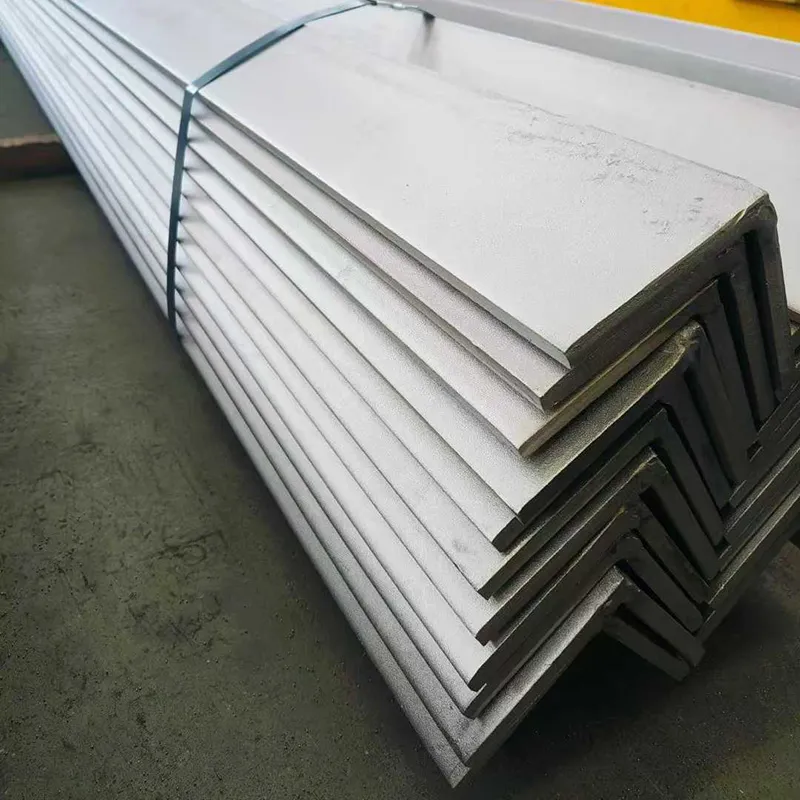
Exceptional Pitting and Crevice Corrosion Resistance: PRE ≥ 42 (typically 42–45) due to high chromium (24–26%), high molybdenum (3.0–5.0%), and nitrogen (0.24–0.32%) content.
Ultra-High Mechanical Strength: Minimum yield strength ≥ 550 MPa (approximately 3.2 times that of 316L and 1.2 times that of Duplex 2205).
Superior Chloride SCC Resistance: Excellent resistance to chloride-induced stress corrosion cracking, significantly outperforming both austenitic grades and standard duplex 2205.
NACE MR0175 / ISO 15156 Compliant: Fully qualified for sour service with highest allowable H₂S partial pressures and lowest pH values.
Excellent Low-Temperature Toughness: Maintains excellent impact toughness down to -50°C, suitable for Arctic, deepwater subsea, and cold climate applications (Charpy V-Notch ≥ 70J typical at -46°C).
Low Thermal Expansion: Coefficient of thermal expansion (13.0 μm/m·K) – lowest among all duplex and austenitic grades, reducing thermal stress in structural connections.
Good Weldability: Maintains balanced ferrite/austenite ratio in the weld zone when using proper welding procedures and matching filler metals (ER2594).
High Resistance to Erosion and Corrosion Fatigue: Outstanding resistance to high-velocity seawater and slurry applications.
International Certifications: Structural angles can be certified by ABS, BV, DNV, LR, GL, RINA, CCS, KR, and NK, and comply with NORSOK M-630, NACE MR0175, and ISO 13628-4 standards.
|
Standard |
Description |
Corresponding Super Duplex Grade |
|
ASTM A276 / A479 |
Standard specification for stainless steel bars and shapes |
S32750 |
|
ASTM A484 |
General requirements for stainless steel bars and shapes |
S32750 |
|
EN 10088-2 / EN 10088-4 |
European standard for stainless steel structural sections |
1.4410 (X2CrNiMoN25-7-4) |
|
JIS G4303 |
Japanese standard for stainless steel bars and shapes |
SUS329J4L |
|
GB/T 4226 |
Chinese standard for stainless steel cold-formed sections |
022Cr25Ni7Mo4N |
|
ISO 2766 |
International standard for stainless steel sections |
1.4410 |
|
NORSOK M-630 |
Offshore material standard |
Grade 2507 |
|
API 6A |
Wellhead and Christmas tree equipment (structural) |
F53 (S32750) |
|
NACE MR0175 / ISO 15156 |
Sour service compliance |
S32750 |
These standards ensure that our Super Duplex 2507 stainless steel equal angles meet global requirements for chemical composition, dual-phase microstructure, mechanical performance, dimensional tolerances, and testing methods for deepwater and sour service applications.
|
Element |
C |
Mn |
P |
S |
Si |
Cr |
Ni |
Mo |
N |
Cu |
|
S32750 |
≤0.030 |
≤1.20 |
≤0.035 |
≤0.020 |
≤0.80 |
24.0–26.0 |
6.0–8.0 |
3.0–5.0 |
0.24–0.32 |
≤0.50 |
Super Duplex 2507 (S32750) contains higher chromium, molybdenum, and nitrogen compared to Duplex 2205, resulting in a PRE value of ≥42 (compared to ≤35 for 2205). The high nitrogen content promotes austenite stability, significantly increases pitting resistance, and enhances mechanical strength. PREN = %Cr + 3.3 × %Mo + 16 × %N ≥ 42 (typically 42–45).
Comparison of PREN (Pitting Resistance Equivalent) Values:
|
Grade |
PRE |
Seawater Suitability |
Sour Gas Suitability |
|
304/304L |
18-19 |
Poor |
Poor |
|
316/316L |
24-26 |
Limited |
Poor |
|
Duplex 2205 |
34-35 |
Good |
Good |
|
Super Duplex 2507 |
42-45 |
Excellent |
Excellent |
|
Property |
Unit |
S32750 (Solution Annealed + Water Quenched) |
|
Tensile Strength |
MPa |
≥800 |
|
Yield Strength (0.2% offset) |
MPa |
≥550 |
|
Elongation |
% |
≥25 |
|
Hardness (Brinell) |
HBW |
≤310 |
|
Hardness (Rockwell C) |
HRC |
≤32 |
|
Modulus of Elasticity |
GPa |
200 |
|
Density |
g/cm³ |
7.80 |
|
Melting Range |
°C |
1350–1400 |
|
Thermal Conductivity (20°C) |
W/m·K |
19.5 |
|
Coefficient of Thermal Expansion (20–100°C) |
μm/m·K |
13.0 |
|
Coefficient of Thermal Expansion (20–250°C) |
μm/m·K |
13.5 |
Impact Toughness (Charpy V-Notch, typical at -46°C):
l Longitudinal: ≥ 70 J (typical)
l Transverse: ≥ 50 J (typical)
Comparison of Strength (Super Duplex 2507 vs Other Grades):
|
Grade |
Yield Strength (MPa) |
Relative Strength |
Weight Reduction vs 316L |
|
304/304L |
170-205 |
1.0x |
— |
|
316/316L |
170-205 |
1.0x |
— |
|
Duplex 2205 |
≥450 |
2.2-2.6x |
55-60% |
|
Super Duplex 2507 |
≥550 |
2.7-3.2x |
65-70% |
Maximum Recommended Service Temperatures:
|
Service Type |
Maximum Temperature |
|
Continuous Service (Seawater/Chloride Environment) |
250°C (482°F) |
|
Continuous Service (Non-Chloride Environment) |
300°C (572°F) |
|
Sour Service (NACE MR0175) |
232°C (450°F) |
|
Minimum Service Temperature (Impact Tested) |
-50°C (-58°F) |
Critical Note: Super Duplex 2507 is not recommended for prolonged service above 300°C due to the risk of embrittling intermetallic phase precipitation (sigma phase). For structural applications above 300°C, austenitic grades (321/347/310S) should be considered.
Heat
Treatment Condition:
Super Duplex 2507 stainless steel equal angles are solution annealed at 1050–1120°C followed
by immediate water
quenching (delay must be kept under 30 seconds). This heat
treatment restores the balanced 40–60% ferrite / 40–60% austenite
microstructure, dissolves unwanted intermetallic phases (sigma, chi) that form
readily in super duplex grades, relieves internal stresses from rolling, and
ensures maximum corrosion resistance.
Critical Note:
Super Duplex 2507 requires immediate water quenching after solution annealing. Air cooling is completely unacceptable and will result in intermetallic phase precipitation, severely reducing corrosion resistance and toughness. The quenching delay must be kept under 30 seconds after opening the furnace.
Delivery
Condition:
Angles are normally supplied in solution annealed and pickled condition, providing a
clean, smooth surface and excellent corrosion resistance. Pickling removes the
oxide scale formed during heat treatment and restores the passive surface. Upon
request, grit blasted finish
can be provided for applications requiring enhanced paint adhesion (e.g.,
topside offshore structures). Bright annealing is not recommended for super
duplex grades due to the water quenching requirement.
|
Leg Length (A x B) |
Thickness (t) |
Weight (kg/m) – 2507 |
Section Modulus (cm³) |
Moment of Inertia (cm⁴) |
|
40 x 40 mm |
4 mm |
2.43 |
4.6 |
9.4 |
|
40 x 40 mm |
5 mm |
3.00 |
5.6 |
11.3 |
|
50 x 50 mm |
4 mm |
3.08 |
7.1 |
18.0 |
|
50 x 50 mm |
5 mm |
3.81 |
8.7 |
21.9 |
|
50 x 50 mm |
6 mm |
4.57 |
10.2 |
25.6 |
|
60 x 60 mm |
5 mm |
4.61 |
13.7 |
42.7 |
|
60 x 60 mm |
6 mm |
5.48 |
16.2 |
50.3 |
|
65 x 65 mm |
5 mm |
5.01 |
16.5 |
55.1 |
|
65 x 65 mm |
6 mm |
5.98 |
19.5 |
65.0 |
|
65 x 65 mm |
8 mm |
7.82 |
25.0 |
83.0 |
|
75 x 75 mm |
6 mm |
6.95 |
26.0 |
100.0 |
|
75 x 75 mm |
8 mm |
9.13 |
34.0 |
130.0 |
|
75 x 75 mm |
10 mm |
11.16 |
41.0 |
158.0 |
|
100 x 100 mm |
6 mm |
9.39 |
45.0 |
227.0 |
|
100 x 100 mm |
8 mm |
12.37 |
59.0 |
297.0 |
|
100 x 100 mm |
10 mm |
15.31 |
72.0 |
363.0 |
|
120 x 120 mm |
8 mm |
15.01 |
88.0 |
530.0 |
|
120 x 120 mm |
10 mm |
18.56 |
108.0 |
650.0 |
|
120 x 120 mm |
12 mm |
22.11 |
127.0 |
764.0 |
|
150 x 150 mm |
10 mm |
23.43 |
180.0 |
1350.0 |
|
150 x 150 mm |
12 mm |
27.91 |
213.0 |
1600.0 |
|
150 x 150 mm |
15 mm |
34.50 |
260.0 |
1950.0 |
|
200 x 200 mm |
10 mm |
31.25 |
320.0 |
3230.0 |
|
200 x 200 mm |
12 mm |
38.05 |
380.0 |
3830.0 |
|
200 x 200 mm |
15 mm |
46.85 |
470.0 |
4710.0 |
|
200 x 200 mm |
20 mm |
61.68 |
610.0 |
6140.0 |
Note: Super Duplex 2507 provides significantly higher strength than austenitic and standard duplex grades, allowing the use of thinner sections for equivalent load capacity. Custom sizes, unequal angles, and longer lengths up to 12m available upon request.
|
Parameter |
Size Range |
Permitted Tolerance |
|
Leg Length (A) |
≤50 mm |
±0.8 mm |
|
Leg Length (A) |
51-100 mm |
±1.2 mm |
|
Leg Length (A) |
101-150 mm |
±1.6 mm |
|
Leg Length (A) |
151-200 mm |
±2.0 mm |
|
Thickness (t) |
≤5 mm |
±0.3 mm |
|
Thickness (t) |
6-10 mm |
±0.5 mm |
|
Thickness (t) |
>10 mm |
±0.8 mm |
|
Squareness (90° angle) |
All sizes |
±1.0° |
|
Straightness |
All sizes |
2 mm per meter |
|
Length |
Standard 6m |
+50 mm / -0 mm |
Raw Material Selection: High-quality S32750 super duplex billets from certified premium mills (Outokumpu, Sandvik) with certified chemical composition and ferrite/austenite balance. Raw material is VIM-VAR (Vacuum Induction Melted – Vacuum Arc Remelted) for optimal cleanliness and is NORSOK M-630 qualified and NACE MR0175 compliant.
Heating: Billets heated to a carefully controlled, narrow temperature range (lower than duplex 2205 to prevent ferrite coarsening and intermetallic formation). Temperature monitoring is continuous.
Hot Rolling: Billets passed through roughing and finishing stands to form angle shape with strict temperature control and reduced reduction rates to prevent cracking.
Cooling: Controlled cooling to prevent intermetallic phase formation.
Straightening: Roller straightening to ensure straightness tolerance within 2 mm per meter. Care must be taken to avoid introducing excessive residual stress.
Solution Annealing: Critical heat treatment at 1050–1120°C to restore balanced duplex microstructure and dissolve intermetallic phases.
Water Quenching: Immediate water quenching after annealing (<30 seconds delay). This is the most critical step in super duplex angle manufacturing. Air cooling is unacceptable.
Pickling & Passivation: Removal of oxides using specialized pickling acids optimized for super duplex grades; extended pickling time and thorough rinsing required. Special care to avoid hydrogen pickup.
Ferrite Content Measurement: Verification of phase balance using magnetic induction or metallographic methods – requirement: 35–65% ferrite (minimum 40% for sour service).
Microstructure Examination: Verification of balanced dual-phase structure, absence of intermetallic phases (sigma, chi, etc.).
Cutting: Cut to standard 6-meter lengths (or custom lengths per order) using cold sawing to prevent heat-affected zone issues.
Inspection & Marking: Each bundle inspected, marked with grade (S32750/F53), heat number, dimensions, standard, ferrite content reference, and NACE MR0175 compliance (if applicable).
|
Surface Type |
Description |
Typical Deepwater/Offshore Applications |
|
Annealed & Pickled (AP Finish) |
Standard industrial finish – matte, oxide-free after acid treatment. Mandatory for super duplex service. |
Deepwater subsea structures, HP/HT sour gas facilities |
|
Passivated Finish |
Surface chemically treated to enhance the protective passive film – strongly recommended for extreme service. |
Deepwater subsea, HP/HT, high-chloride environments |
|
Grit Blasted / Bead Blasted |
Matte, uniform surface texture; improves paint adhesion for topside applications. |
Topside offshore structures requiring coating |
|
Mill Finish (MF) |
As-rolled surface with scale. Not recommended for super duplex – pickled finish is required. |
Not applicable for super duplex |
Each Super Duplex 2507 angle surface is inspected for uniform appearance, absence of pits, and consistent finish quality.
Chemical Analysis: Positive Material Identification (PMI) 100% verification using handheld XRF spectrometer for Cr (24-26%), Ni (6-8%), Mo (3-5%), N (0.24-0.32%) – high alloy content verification critical.
Ferrite Content Measurement: Magnetic induction (ferritoscope) or metallographic method – requirement: 35–65% ferrite (minimum 40% for sour service), documented on test report.
Microstructure Examination: Verification of balanced dual-phase structure, absence of intermetallic phases (sigma, chi, etc.) – per NORSOK M-630.
Mechanical Testing: Tensile strength (≥800 MPa), yield strength (≥550 MPa), elongation (≥25%), hardness (≤310 HBW / ≤32 HRC).
Charpy Impact Testing: Per NORSOK M-630 at -46°C – ≥70J typical for longitudinal, documented.
Dimensional Inspection: Leg length, thickness, squareness, straightness, length using calibrated gauges.
Surface Inspection: Visual check for surface defects, cracks, laps, and consistency.
Pitting Corrosion Test: ASTM G48 Method A – 24 hours in 6% FeCl₃ at 40°C (or 50°C for NORSOK) – no pitting allowed. Mandatory for NORSOK compliance.
Critical Pitting Temperature (CPT): ASTM G48 Method C – optional upon request. Typical CPT ≥ 80°C.
Intergranular Corrosion Test (IGC): ASTM A262 Practice E – validates resistance to sensitization.
Sour Service Qualification (upon request): HIC per NACE TM0284, SSC per NACE TM0177 – full documentation available.
NACE MR0175 / ISO 15156 Compliance: Full documentation with hardness verification.
NORSOK M-650 Qualification: Complete documentation package available upon request.
Third-Party Inspection: SGS, BV, DNV, TUV, LR, or ABS on customer request.
Deepwater Subsea Oil & Gas: Subsea manifold structural supports, pipeline end termination (PLET) frameworks, jumper support structures, subsea distribution unit frames, umbilical termination structural steel (ISO 13628-4 compliant, ABS/BV/DNV certified for deepwater to 3000m).
HP/HT Sour Gas Facilities: Wellhead platform structures, sour gas processing skid frameworks, amine unit structural supports, gas dehydration unit platforms (NACE MR0175 compliant, highest H₂S limits).
Offshore Platforms (Critical Service): Topsides HP/HT module skids, riser support structures, flare tower structural members, crane pedestal supports, equipment module frameworks (NORSOK M-630 certified).
Desalination Plants (High Temperature): High-pressure brine system structural supports, energy recovery device frames, evaporator platform structures, zero liquid discharge (ZLD) skids.
Flue Gas Desulfurization (FGD): Absorber tower support structures, slurry line pipe racks, quench nozzle platforms, reheat duct structural supports – for high-chloride, low-pH zones.
Chemical Processing (Aggressive Acids): HP/HT heat exchanger supports, reactor platform structures, acid storage tank support frames, high-chloride organic compound process structures.
Hydrometallurgy: Pressure acid leaching (PAL) plant structural frameworks, high-temperature solvent extraction supports, electrowinning cell structures.
Geothermal Energy: High-temperature, high-chlorine, high-H₂S brine pipeline supports, steam condensate structural frames, reinjection well head platforms.
Military/Naval (Critical Systems): Naval vessel structural components (non-magnetic requirement), submarine framework supports (classification society certified).
Packaging:
Steel-strapped bundles with woven fabric wrapping
Plastic edge protection for cut ends
Wooden pallets or crates for export sea-worthy transport
Moisture barrier wrapping for sea freight
Individual bundle labeling with grade (S32750/F53), heat number, dimensions, quantity, standard, ferrite content, NACE compliance (if applicable)
Womic Steel's Shipping Strengths:
Direct cooperation with global shipowners ensures the most competitive freight rates.
Professional loading and securing teams using non-metallic slings and padded supports prevent bending and surface damage.
Efficient document preparation (EN 10204 3.1/3.2 MTR, NORSOK M-630 documentation, NACE compliance certificates, ferrite measurement records, PMI reports, corrosion test reports, Charpy impact test reports) minimizes customs delays.
Rapid delivery time – standard sizes kept in ready stock.
Continuous cargo tracking and after-sales follow-up with destination agent support.
1. What is
the difference between Super Duplex 2507 and Duplex 2205 structural angles?
Super Duplex 2507 has higher chromium (24-26% vs 22-23%), higher molybdenum
(3-5% vs 3-3.5%), and higher nitrogen (0.24-0.32% vs 0.14-0.20%), giving PRE
≥42 (vs ≥35) and higher strength (YS ≥550 MPa vs ≥450 MPa). For deepwater
subsea, HP/HT sour gas, and extreme chloride environments, 2507 is the
preferred material.
2. What is
the maximum water depth for Super Duplex 2507 structural angles?
With proper design, Super Duplex 2507 structural sections are suitable for
water depths up to 3000 meters (10,000 feet) for subsea applications. External
pressure collapse rating verified per API 17D.
3. Can
Super Duplex 2507 angles be welded to Duplex 2205 structures?
Yes, but requires careful procedure with appropriate filler metal (typically
ER2594 for super-to-super and super-to-2205 transitions). Welding procedures
must be qualified (PQR/WPQ), and heat input must be controlled.
4. What is
the maximum service temperature for Super Duplex 2507 angles?
250°C (482°F) for chloride service; 300°C (572°F) for non-chloride service.
Above 300°C, risk of sigma phase embrittlement increases significantly.
5. Are
Super Duplex 2507 angles suitable for sour service (H₂S environments)?
Yes. Super
Duplex 2507 is fully NACE MR0175 / ISO 15156 compliant for sour service up to
232°C (450°F) with the highest allowable H₂S partial pressure limits for duplex
stainless steels. We can supply documented HIC (NACE TM0284) and SSC (NACE
TM0177) test reports upon request. A typical sour service order will include
HIC/SSC testing documentation.
6. Do
Super Duplex 2507 angles require special surface preparation for painting?
Grit blasting is recommended to create a uniform surface profile for paint
adhesion on topside offshore structures. The annealed and pickled finish is
suitable for most subsea and immersion applications without painting.
7. What is
the minimum design temperature for Super Duplex 2507 angles?
-50°C (-58°F) based on Charpy impact testing at -46°C (-50°F) with ≥70J
typical. For lower temperatures, consider austenitic stainless steel grades
(304L, 316L) which maintain toughness at cryogenic temperatures.
Highest Strength Available: 2.7-3.2x stronger than 316L – significant weight reduction for offshore structures.
Deepwater Subsea Certified: ABS, BV, DNV, LR certified for water depths up to 3000m.
NACE MR0175 / ISO 15156 Compliant: Highest H₂S partial pressure tolerance for sour service, with HIC/SSC test reports.
NORSOK M-630 Qualified: Complete documentation packages for offshore and subsea projects.
Ferrite Controlled: 35-65% ferrite documented on each heat (minimum 40% for sour service).
Charpy Impact Tested: -46°C (-50°F) documented as standard for offshore projects.
ASTM G48 Corrosion Tested: Pitting resistance verified; copies of test reports available.
Full Traceability: Heat number on each bundle – traceable to raw mill certificate.
Complete Size Range: From 40x40mm to 200x200mm – standard and custom sizes.
Flexible Customization: Special lengths, surface finishes (pickled, grit blasted), and non-standard sizes available.
Global Delivery: Exported to major deepwater subsea, HP/HT sour gas, and extreme offshore projects worldwide including Gulf of Mexico, North Sea, Brazil Santos Basin, West Africa, and SE Asia.
Tel / WhatsApp:
Victor: +86 15575100681
Jack: +86 18390957568
E-mail: info@womicstainless.com
Website: www.womicsteel.com
Stock Examples (6m length – Solution Annealed & Pickled – Subsea/Offshore Grade):
|
Thickness |
Weight |
Primary Deepwater/HP/HT Application |
|
|
50x50mm |
5mm |
3.81 kg/m |
Subsea instrumentation supports, light framing |
|
65x65mm |
6mm |
5.98 kg/m |
Subsea control module framing, equipment supports |
|
75x75mm |
8mm |
9.13 kg/m |
Subsea manifold supports, HP/HT skid framing |
|
100x100mm |
10mm |
15.31 kg/m |
PLET structural framing, riser support structures |
|
120x120mm |
12mm |
22.11 kg/m |
Heavy subsea structures, wellhead platforms |
|
150x150mm |
12mm |
27.91 kg/m |
Offshore module skids, topside HP/HT modules |
|
200x200mm |
15mm |
46.85 kg/m |
Heavy offshore structures, flare towers |
Related Keywords:
Super Duplex 2507 stainless steel equal angle, S32750 structural angle, 1.4410 high strength angle bar, deepwater subsea structural angle, NORSOK M-630 super duplex angle, HP/HT sour gas structural support, PRE 42 duplex angle, alloy 2507 seawater resistant angle, NACE MR0175 super duplex angle, ABS certified super duplex angle bar, DNV approved 2507 angle, ferrite controlled super duplex angle, water quenched 2507 section, subsea manifold support angle, PLET structural framing, deepwater skid angle, HP/HT wellhead platform structure, 2507 angle weight chart, 2507 vs 2205 angle comparison, sour gas processing skid angle, FGD absorber platform support, geothermal brine pipeline angle, ASTM G48 tested super duplex angle, Charpy impact tested -46°C super duplex, API 6A F53 structural angle, ISO 13628-4 subsea structural angle, super duplex angle for HP/HT chemical plant, 2507 angle for desalination high pressure brine, super duplex stainless steel angle section modulus, heavy duty super duplex angle 200x200x15mm.