Womic Stainless Steel Co., Ltd

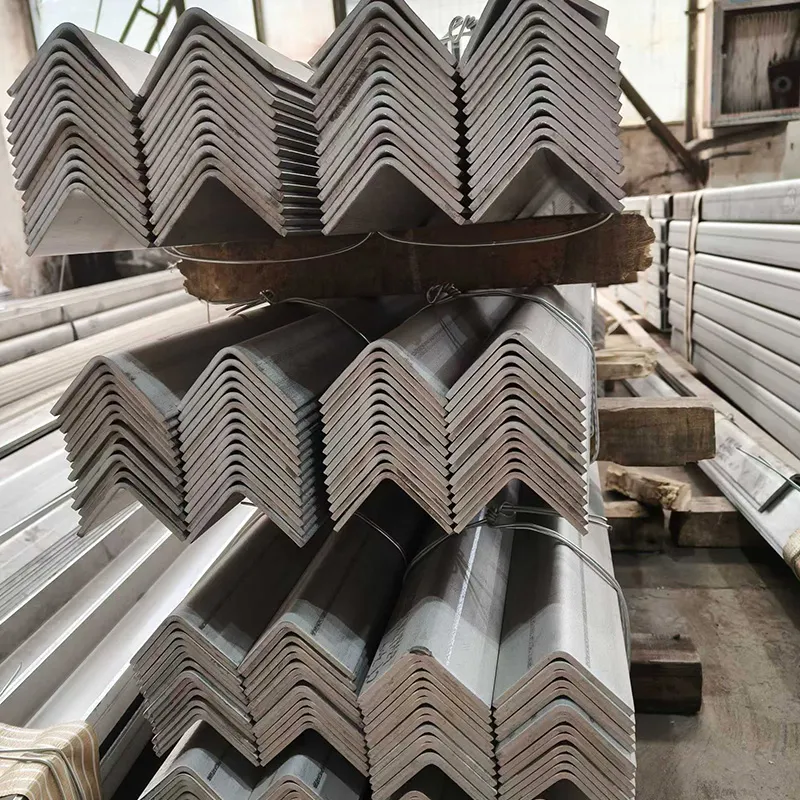
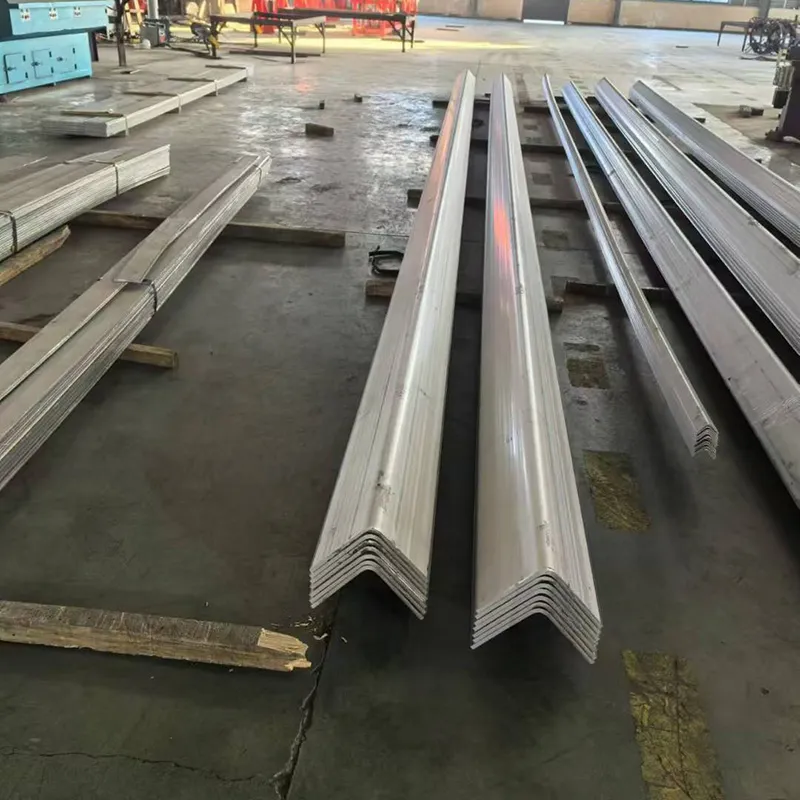
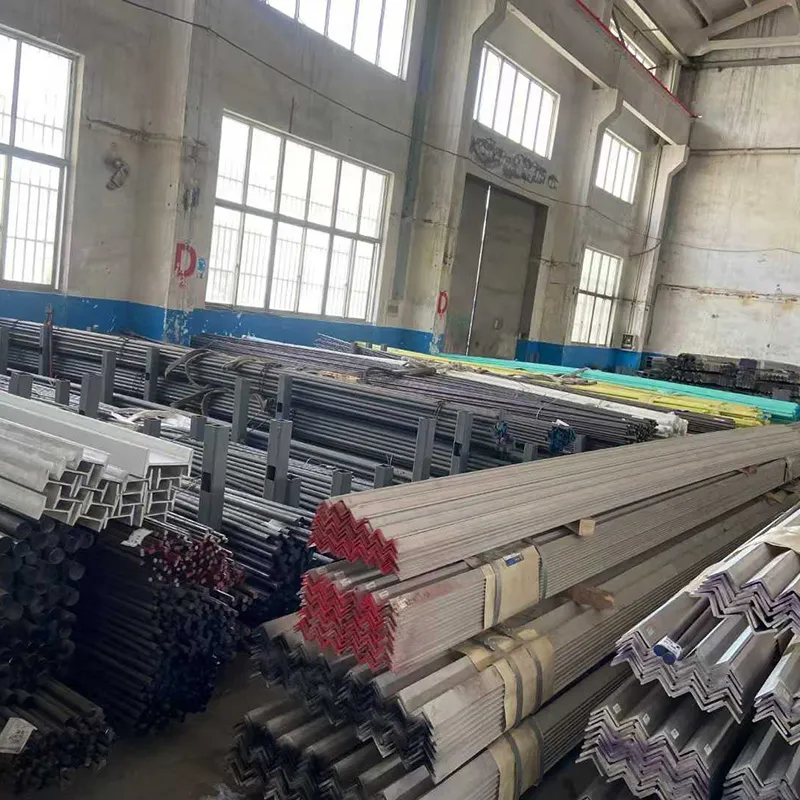
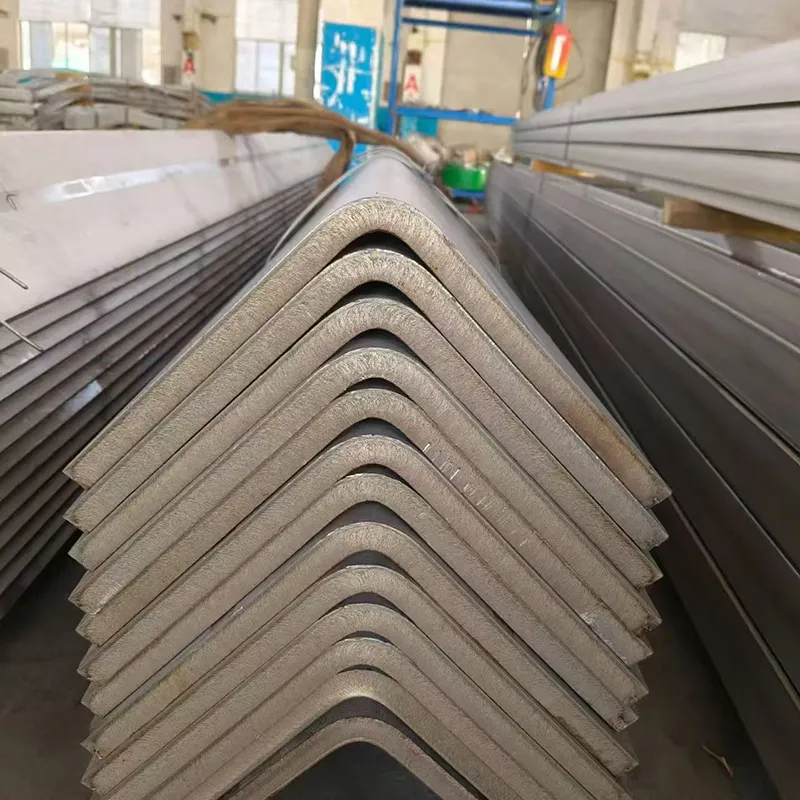
Superior Sulfuric and Phosphoric Acid Resistance: Outstanding performance in H₂SO₄ (all concentrations up to moderate temperature), H₃PO₄, and mixed acids, making Alloy 825 the premier structural angle material for fertilizer and chemical processing facilities.
NACE MR0175 / ISO 15156 Compliant: Fully qualified for sour service (H₂S) up to 232°C (450°F), with documented HIC and SSC test reports available for oil and gas structural applications.
Excellent Chloride Stress Corrosion Cracking Resistance: High nickel content (38-46%) provides outstanding resistance to chloride-induced SCC, outperforming all austenitic and duplex stainless steel grades.
Good Pitting and Crevice Corrosion Resistance: Molybdenum (2.5-3.5%) and chromium (19.5-23.5%) provide enhanced resistance to localized corrosion in chloride-containing environments.
Titanium Stabilization: Titanium addition (0.6-1.2%) stabilizes the alloy against intergranular corrosion after welding or high-temperature exposure, eliminating the need for post-weld heat treatment.
Good Weldability: Nickel-iron-chromium alloy offers good weldability with matching filler metals (ERNiCrMo-3 or ERNiCrMo-10). No preheat required for most applications.
Excellent Resistance to Reducing and Oxidizing Acids: Performs well in both reducing acids (sulfuric, hydrochloric) and oxidizing acids (nitric, chromic), as well as mixed acid environments.
Good High-Temperature Strength: Maintains excellent mechanical properties up to 540°C (1000°F) in non-oxidizing environments.
International Certifications: Structural angles can be certified by ABS, BV, DNV, LR, and comply with NORSOK M-650, NACE MR0175, and ASME standards.
|
Standard |
Description |
Corresponding Alloy 825 Grade |
|
ASTM B424 |
Standard specification for nickel-iron-chromium alloy plate, sheet, and strip |
UNS N08825 |
|
ASTM B425 |
Standard specification for nickel-iron-chromium alloy bar and wire |
UNS N08825 |
|
ASTM A484 |
General requirements for stainless steel bars and shapes |
UNS N08825 |
|
EN 10088-2 / EN 10088-4 |
European standard for stainless steel structural sections |
2.4858 (NiCr21Mo) |
|
JIS G4303 |
Japanese standard for stainless steel bars and shapes |
NW4825 |
|
GB/T 4226 |
Chinese standard for stainless steel cold-formed sections |
NS825 |
|
NORSOK M-650 |
Offshore material qualification |
Alloy 825 |
|
NACE MR0175 / ISO 15156 |
Sour service compliance |
Alloy 825 (annealed) |
|
Element |
Ni |
Cr |
Fe |
Mo |
Cu |
Ti |
C |
Mn |
P |
S |
Si |
Al |
|
Alloy 825 |
38.0–46.0 |
19.5–23.5 |
≥22.0 |
2.5–3.5 |
1.5–3.0 |
0.6–1.2 |
≤0.05 |
≤1.0 |
≤0.03 |
≤0.03 |
≤0.5 |
≤0.2 |
Alloy 825 is a nickel-iron-chromium alloy with controlled additions of molybdenum and copper for enhanced corrosion resistance in reducing acid environments. The copper content (1.5-3.0%) provides exceptional resistance to sulfuric acid, while molybdenum (2.5-3.5%) enhances pitting resistance. Titanium stabilization (0.6-1.2%) prevents sensitization and intergranular corrosion after welding, making Alloy 825 suitable for structural applications without post-weld heat treatment.
Comparison of PREN (Pitting Resistance Equivalent) Values:
|
Grade |
Nickel (%) |
PRE |
Sulfuric Acid (H₂SO₄) |
Sour Gas (H₂S) |
|
316/316L |
10-14 |
24-26 |
Poor |
Poor |
|
Duplex 2205 |
4.5-6.5 |
34-35 |
Good |
Good |
|
Super Duplex 2507 |
6-8 |
42-45 |
Good |
Excellent |
|
Alloy 825 |
38-46 |
38-42 |
Excellent |
Excellent |
|
Property |
Unit |
Alloy 825 (Annealed) |
|
Tensile Strength |
MPa |
≥585 |
|
Yield Strength (0.2% offset) |
MPa |
≥240 |
|
Elongation |
% |
≥30 |
|
Hardness (Brinell) |
HBW |
≤200 |
|
Density |
g/cm³ |
8.14 |
|
Melting Range |
°C |
1370–1400 |
|
Thermal Conductivity (20°C) |
W/m·K |
11.1 |
|
Coefficient of Thermal Expansion (20–100°C) |
μm/m·K |
14.0 |
|
Modulus of Elasticity |
GPa |
195 |
Heat Treatment Condition:
All Alloy 825 angles are solution annealed at 925–1040°C followed
by rapid cooling (water quenching or rapid air cooling). This heat treatment
dissolves precipitated carbides and intermetallic phases, relieves internal
stresses from rolling, restores optimum corrosion resistance and ductility, and
ensures titanium stabilization is effective.
Critical Note: Alloy 825 is titanium-stabilized, which prevents sensitization and intergranular corrosion after welding. Unlike many stainless steels, Alloy 825 can be used in the as-welded condition without post-weld heat treatment for most corrosive environments. This is a significant advantage for welded structural assemblies in chemical plants.
Delivery Condition: Angles are normally supplied in annealed and pickled condition, providing a clean, smooth surface and excellent corrosion resistance.
|
Leg Length (A x B) |
Thickness (t) |
Weight (kg/m) – 825 |
Leg Length (A x B) |
Thickness (t) |
Weight (kg/m) – 825 |
|
40 x 40 mm |
4 mm |
2.49 |
75 x 75 mm |
6 mm |
6.97 |
|
40 x 40 mm |
5 mm |
3.07 |
75 x 75 mm |
8 mm |
9.16 |
|
50 x 50 mm |
4 mm |
3.15 |
75 x 75 mm |
10 mm |
11.20 |
|
50 x 50 mm |
5 mm |
3.90 |
100 x 100 mm |
8 mm |
12.42 |
|
50 x 50 mm |
6 mm |
4.68 |
100 x 100 mm |
10 mm |
15.37 |
|
65 x 65 mm |
6 mm |
6.13 |
150 x 150 mm |
12 mm |
28.02 |
|
65 x 65 mm |
8 mm |
8.01 |
200 x 200 mm |
15 mm |
47.04 |
Note: Custom sizes, unequal angles, and longer lengths up to 12m available upon request.
|
Parameter |
Size Range |
Permitted Tolerance |
|
Leg Length (A) |
≤50 mm |
±0.8 mm |
|
Leg Length (A) |
51-100 mm |
±1.2 mm |
|
Leg Length (A) |
101-200 mm |
±1.6-2.0 mm |
|
Thickness (t) |
≤5 mm |
±0.3 mm |
|
Thickness (t) |
6-10 mm |
±0.5 mm |
|
Thickness (t) |
>10 mm |
±0.8 mm |
|
Squareness (90° angle) |
All sizes |
±1.0° |
|
Straightness |
All sizes |
2 mm per meter |
|
Length |
Standard 6m |
+50 mm / -0 mm |
Raw Material Selection: High-quality Alloy 825 (UNS N08825) nickel-iron-chromium billets from certified premium mills (Special Metals, VDM Metals) with certified chemical composition (Ni 38-46%, Cr 19.5-23.5%, Mo 2.5-3.5%, Cu 1.5-3.0%, Ti 0.6-1.2% verification) and traceability.
Heating: Billets heated to forging temperature (1150–1200°C). Temperature control is critical for nickel alloys.
Hot Rolling: Billets passed through roughing and finishing stands to form angle shape.
Cooling: Controlled cooling to prevent distortion.
Straightening: Roller straightening to ensure straightness tolerance within 2 mm per meter.
Solution Annealing: Heat treatment at 925–1040°C followed by rapid cooling to restore corrosion resistance and ductility.
Pickling & Passivation: Removal of oxides using specialized pickling acids optimized for nickel alloys; thorough rinsing required.
Cutting: Cut to standard 6-meter lengths (or custom lengths per order).
Inspection & Marking: Each bundle inspected, marked with grade (Alloy 825/N08825), heat number, dimensions, and standard.
|
Surface Type |
Description |
Typical Chemical/Offshore Applications |
|
Annealed & Pickled (AP Finish) |
Standard industrial finish – matte, oxide-free after acid treatment. |
Acid plants, chemical processing structures |
|
Passivated Finish |
Surface chemically treated to enhance corrosion protection. |
Critical acid service, sour gas facilities |
|
Grit Blasted |
Matte, uniform surface texture; improves paint adhesion. |
Offshore topside structures requiring coating |
|
Mechanically Polished |
Smooth mechanical finish. |
Pharmaceutical, cleanroom applications |
Chemical Analysis: PMI 100% verification using handheld XRF spectrometer for Ni (38-46%), Cr (19.5-23.5%), Mo (2.5-3.5%), Cu (1.5-3.0%), Ti (0.6-1.2%).
Intergranular Corrosion Test: ASTM G28 – validates resistance to intergranular corrosion (mandatory for stabilized grades).
Mechanical Testing: Tensile strength (≥585 MPa), yield strength (≥240 MPa), elongation (≥30%), hardness (≤200 HBW).
Dimensional Inspection: Leg length, thickness, squareness, straightness, length.
Surface Inspection: Visual check for surface defects, cracks, and consistency.
Sour Service Qualification (upon request): HIC per NACE TM0284, SSC per NACE TM0177.
Third-Party Inspection: SGS, BV, DNV, TUV, LR available upon customer request.
Sulfuric Acid Plants: Structural supports for acid coolers, heat exchanger platforms, acid storage tank support frames, piping rack structures in acid handling areas.
Phosphoric Acid Production: Evaporator structural frameworks, reaction vessel supports, agitator platforms, fertilizer storage building structures.
Pickling Plants (Stainless Steel): Pickling tank support structures, acid recovery system platforms, rinse tank framing, steel mill pickling line structures.
Oil & Gas Sour Service: Amine unit structural supports, sour water stripper platforms, glycol regeneration skid frames (NACE MR0175 compliant).
Offshore Chemical Injection: Methanol injection skid frames, glycol unit structural supports, chemical storage platform structures (ABS/BV/DNV/LR certified).
Chemical Processing (Aggressive): Reactor support structures, distillation column platforms, agitator framing, catalyst handling system supports.
Pharmaceutical (High-Purity): Cleanroom structural framing, stainless steel equipment platforms, process line supports, sterile area structures.
Fertilizer Production: DAP/MAP production plant structures, granulation unit supports, conveyor structural framing.
Hydrometallurgy: Solvent extraction plant structural frames, electrowinning cell supports, pregnant leach solution tank structures.
Packaging: Steel-strapped bundles with woven fabric wrapping, plastic edge protection, wooden pallets for export. Moisture barrier wrapping for sea freight.
Womic Steel's Shipping Strengths:
Direct cooperation with global shipowners – competitive freight rates.
Professional loading teams prevent bending and surface damage.
Full documentation: MTR, PMI reports, ASTM G28 test reports, NACE certificates (if required).
Ready stock for common sizes.
Continuous cargo tracking.
1. How does Alloy 825 compare to
316L for structural angles in acid service?
Alloy 825 offers significantly better resistance to sulfuric acid (H₂SO₄),
phosphoric acid (H₃PO₄), and sour gas (H₂S). For acid plant structural
applications where 316L would corrode rapidly, Alloy 825 is required.
2. Is Alloy 825 resistant to
hydrochloric acid (HCl)?
Limited. Alloy 825 has fair resistance to dilute HCl but is not recommended for
concentrated or aerated HCl. For hydrochloric acid service, consider Hastelloy
C276.
3. Can Alloy 825 angles be welded
without post-weld heat treatment?
Yes. Titanium stabilization prevents sensitization, and PWHT is not required
for most corrosive environments. This is a significant advantage for field
fabrication.
4. Are Alloy 825 angles suitable for
sour service (H₂S)?
Yes, with proper hardness control. Alloy 825 can be NACE MR0175 / ISO 15156
compliant for sour service. Full documentation including HIC/SSC test reports
available upon request.
5. What is the maximum service temperature
for Alloy 825 angles?
400°C (752°F) for general corrosive service. For sulfuric acid service
specifically, limit to 150°C (302°F) depending on acid concentration.
Premier Acid Service Material: Excellent resistance to H₂SO₄, H₃PO₄, and sour gas.
NACE MR0175 / ISO 15156 Compliant: Full documentation for sour service applications.
Titanium Stabilized: ASTM G28 intergranular corrosion tested.
Full Traceability: Heat number on each bundle – traceable to raw material.
Complete Size Range: From 40x40mm to 200x200mm available.
Global Delivery: Exported to major chemical plants, acid facilities, and offshore projects worldwide.
Tel / WhatsApp:
Victor: +86 15575100681
Jack: +86 18390957568
E-mail: info@womicstainless.com
Website: www.womicsteel.com
Stock Examples (6m length – Annealed & Pickled – Acid Service Grade):
|
Thickness |
Weight |
Primary Application |
|
|
50x50mm |
5mm |
3.90 kg/m |
Light structural, platforms |
|
65x65mm |
6mm |
6.13 kg/m |
Equipment supports |
|
75x75mm |
8mm |
9.16 kg/m |
Acid plant frameworks |
|
100x100mm |
10mm |
15.37 kg/m |
Reactor platforms |
|
150x150mm |
12mm |
28.02 kg/m |
Heavy acid plant structures |
Related Keywords:
Alloy 825 stainless steel equal angle, Incoloy 825 structural angle, N08825 angle bar, sulfuric acid resistant structural angle, phosphoric acid plant support angle, NACE MR0175 alloy 825 angle, pickling plant structural angle, titanium stabilized alloy 825 angle, ASTM G28 tested angle, sour gas facility structural support, chemical reactor platform angle, offshore chemical injection skid frame, fertilizer plant structural angle, Alloy 825 vs 316L acid resistance, nickel alloy structural section, corrosion resistant angle for chemical plant.