Womic Stainless Steel Co., Ltd

When purchasing industrial pipeline materials, ensuring product quality is essential for project safety and long-term operational reliability. Stainless steel pipes are widely used in critical systems such as oil and gas pipelines, chemical processing plants, marine engineering, power generation facilities, and food processing equipment. Because these pipes often operate under high pressure, corrosive environments, and demanding service conditions, any quality defect can lead to severe operational risks.
For industrial buyers, conducting a proper inspection before shipment is a crucial step in the procurement process. A systematic inspection procedure helps verify that the stainless steel pipes meet the required specifications, standards, and performance requirements. It also ensures that the selectedstainless steel pipe supplierdelivers products that comply with the agreed contract conditions.
Many international buyers implement structured inspection checklists to evaluate stainless steel pipe quality. These inspections may be performed by the buyer’s own technical team, independent third-party inspection agencies, or jointly with the manufacturer during factory visits.
This guide provides a comprehensivestainless steel pipe inspection checklist for buyers, explaining how to verify product quality, manufacturing compliance, and supplier reliability before shipment.
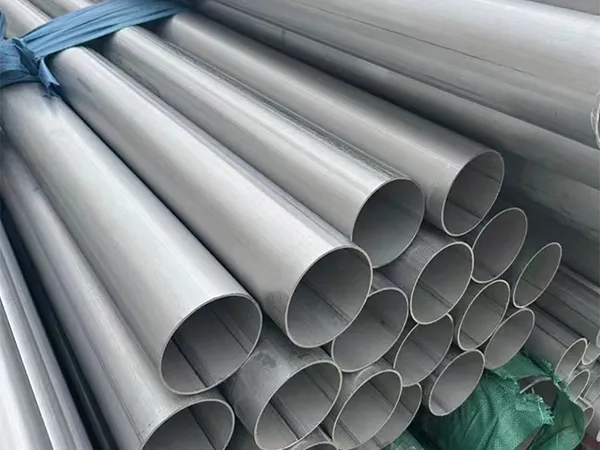
Before conducting any inspection, buyers must first verify that the stainless steel pipes being produced match the original purchase order and technical specifications.
Key parameters to confirm include:
Material grade
Pipe manufacturing method (seamless or welded)
Outer diameter and wall thickness
Pipe length
Applicable standards and specifications
Surface finish requirements
For example, if the purchase order specifiesASTM A312 TP316L seamless stainless steel pipes, the inspection team must confirm that the material grade, production method, and standard markings match the order requirements.
Clear specification verification ensures that the supplier produces the correct materials for the project.
High-quality stainless steel pipes start with certified raw materials. During inspection, it is important to confirm that the manufacturer uses appropriate stainless steel billets, plates, or coils that meet international standards.
Inspection personnel should verify:
Material heat number
Chemical composition reports
Supplier mill certificates
Traceability documentation
Each pipe should be traceable to its original raw material batch through heat numbers or production records. Proper traceability is essential for quality control and project documentation.
Chemical composition determines the corrosion resistance and mechanical performance of stainless steel pipes.
Inspection teams should confirm that the chemical composition meets the requirements defined by relevant standards such as ASTM, ASME, or EN specifications.
Typical elements analyzed include:
Carbon
Chromium
Nickel
Molybdenum
Manganese
Silicon
Nitrogen
Portable spectrometers are often used during factory inspections to quickly verify material composition.
If the alloy content does not meet specification limits, the stainless steel pipe may not provide the required corrosion resistance.
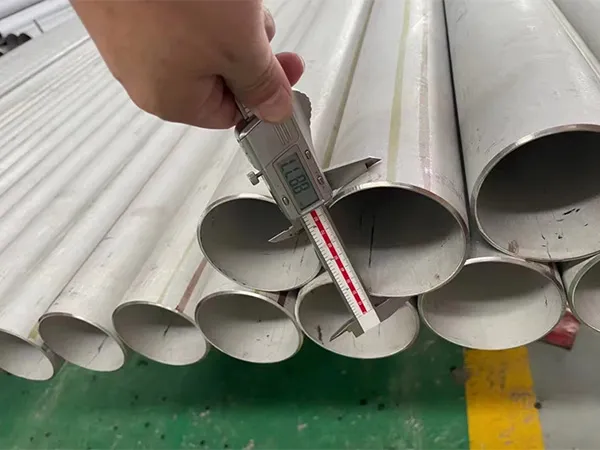
Dimensional accuracy is critical for proper pipeline installation. Inspection teams should verify that pipe dimensions fall within the allowable tolerance ranges.
Important dimensions to inspect include:
Outer diameter (OD)
Wall thickness (WT)
Pipe length
Straightness
Ovality
Measurement tools such as calipers, ultrasonic thickness gauges, and measuring tapes are commonly used during dimensional inspection.
Pipes that exceed tolerance limits may cause installation difficulties or structural issues in pipeline systems
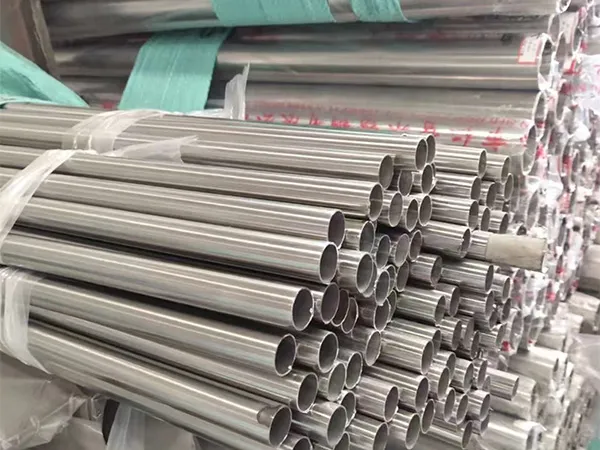
Visual inspection of pipe surfaces helps identify manufacturing defects that may affect performance or corrosion resistance.
Inspectors should check for defects such as:
Cracks
Pits
Laminations
Surface scratches
Welding defects
Mechanical damage
High-quality stainless steel pipes should have smooth surfaces with no significant imperfections.
Surface quality is especially important for corrosion-resistant applications because surface defects may accelerate corrosion in aggressive environments.
Mechanical properties determine the ability of stainless steel pipes to withstand pressure and mechanical loads.
Inspection teams should review mechanical test reports confirming:
Yield strength
Tensile strength
Elongation
Hardness
These properties must meet the requirements defined in applicable standards such as ASTM A312 or EN 10216-5.
Proper mechanical performance ensures that stainless steel pipes can safely operate in demanding industrial conditions.
Non-destructive testing is an essential part of stainless steel pipe quality control. NDT methods help detect internal defects that cannot be identified through visual inspection.
Common NDT methods include:
Ultrasonic testing (UT)
Eddy current testing (ET)
Radiographic testing (RT)
Hydrostatic pressure testing
These inspections help ensure that the pipes are free from cracks, voids, inclusions, or other structural defects.
Many industrial projects require 100% NDT inspection for critical pipeline materials.
8 Marking and Traceability Verification
Each stainless steel pipe should include clear and permanent markings indicating key product information.
Typical pipe markings include:
Manufacturer name or logo
Material grade
Standard specification
Pipe size
Heat number
Production batch
These markings allow buyers to trace each pipe back to its production records and material certificates.
Traceability is essential for quality assurance and regulatory compliance.
Before shipment, buyers should carefully review all quality documentation provided by the supplier.
Typical documents include:
Mill Test Certificate (MTC)
Chemical composition reports
Mechanical property reports
Heat treatment records
Non-destructive testing reports
Most international projects require certification according toEN 10204 3.1, which verifies that the material has been tested and inspected by the manufacturer.
These documents provide evidence that the stainless steel pipes meet the required specifications.
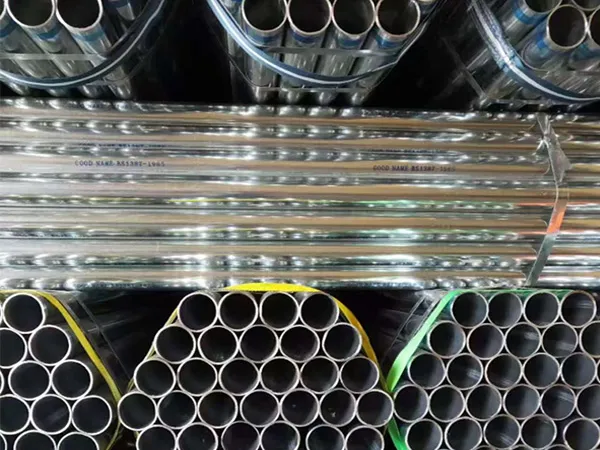
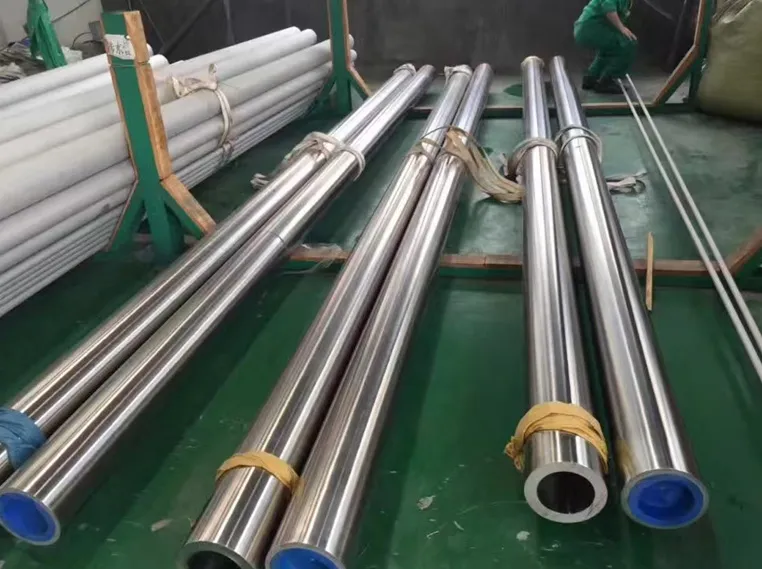
Packaging inspection ensures that stainless steel pipes are properly protected during transportation.
Inspectors should verify that:
Pipe ends are protected with caps
Pipes are securely bundled
Protective wrapping is applied when necessary
Markings remain visible
Proper packaging prevents damage during shipping and ensures that the pipes arrive in good condition at the project site.
Many international buyers prefer to appoint independent inspection agencies to verify product quality.
Third-party inspection organizations typically conduct:
Production monitoring
Material verification
Pre-shipment inspection
Documentation review
These inspections provide an additional level of assurance for project stakeholders.
Professional stainless steel pipe suppliers should be fully prepared to cooperate with third-party inspectors and provide access to manufacturing records and testing facilities.
n addition to product inspection, visiting the manufacturing facility can help buyers evaluate the capabilities of astainless steel pipe supplier.
During a factory visit, buyers can observe:
Production equipment
Quality control laboratories
Heat treatment facilities
Inspection procedures
A transparent and well-organized manufacturing environment indicates a reliable supplier with strong production management.
AtWomic Steel, we warmly welcome customers from around the world to visit our factory and inspect our stainless steel pipe production lines. Buyers are invited to observe manufacturing processes, review inspection procedures, and discuss technical requirements with our engineering team.
We also fully supportthird-party inspections, factory audits, and on-site quality control checksto ensure that every shipment meets customer expectations.
Selecting a trustworthystainless steel pipe supplierensures that buyers receive products that meet both technical specifications and project timelines.
Reliable suppliers typically offer:
Stable stainless steel pipe prices
Strict quality control systems
Complete inspection documentation
Professional export logistics services
Technical support during procurement
These capabilities help reduce procurement risks and improve long-term project reliabilit
Womic Steel is committed to providing high-quality stainless steel pipes for industrial applications worldwide.
Our manufacturing capabilities include:
Seamless stainless steel pipes (OD 1/4" – 36")
Welded stainless steel pipes (OD up to 80")
Duplex stainless steel pipes
Super duplex stainless steel pipes
Super austenitic stainless steel pipes
Our quality assurance system includes:
Advanced inspection equipment
Comprehensive non-destructive testing
Strict raw material control
Full traceability documentation
We welcome customers to conductfactory inspections, third-party inspections, and pre-shipment quality checksat our facilities to ensure complete transparency and confidence in our products.
Customized services. Rapid production. Global reach. We ensure your specific needs are fulfilled with precision and top-tier quality.
Website: www.womicstainless.com
Email:info@womicstainless.com
Tel/WhatsApp/WeChat:Victor: +86-15575100681 or Jack: +86-18390957568