Womic Stainless Steel Co., Ltd

Stainless steel pipes are essential components in modern industrial systems. They are widely used in industries such as oil and gas, petrochemical processing, marine engineering, power plants, pharmaceutical production, and food processing facilities. In these demanding environments, pipeline reliability is critical because material failure can lead to safety risks, production downtime, and significant economic losses.
For this reason, identifyinghigh quality stainless steel pipesis one of the most important tasks for engineers, procurement managers, and project contractors. However, in today’s global market, stainless steel pipes are produced by thousands of manufacturers with varying levels of production capability and quality control. Some products may appear visually similar but differ significantly in chemical composition, mechanical performance, and long-term corrosion resistance.
Industrial buyers must therefore understand how to evaluate stainless steel pipe quality before placing large orders. Careful inspection of materials, manufacturing processes, certifications, and testing results helps ensure that the pipes meet the required standards and perform reliably in service.
This guide explains how to identifyhigh quality stainless steel pipes, covering material verification, dimensional inspection, mechanical testing, manufacturing processes, and supplier evaluation.
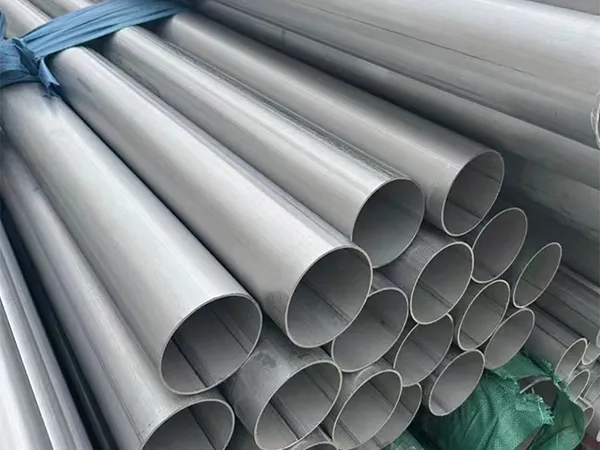
The first step in identifying high quality stainless steel pipes is confirming the correct material grade. Stainless steel pipes are manufactured from a variety of alloys, and each grade provides different mechanical properties and corrosion resistance characteristics.
Common industrial stainless steel pipe grades include:
304 stainless steel pipe
304L stainless steel pipe
316 stainless steel pipe
316L stainless steel pipe
321 stainless steel pipe
347 stainless steel pipe
Duplex stainless steel 2205 pipe
Super duplex stainless steel 2507 pipe
Each material contains different proportions of alloying elements such as chromium, nickel, molybdenum, and nitrogen.
For example:
304 stainless steel typically contains about 18% chromium
and 8% nickel.
316 stainless steel includes molybdenum, which significantly improves corrosion
resistance in chloride environments.
If the chemical composition does not meet the specified requirements, the pipe may not provide the expected corrosion resistance or mechanical strength.
Therefore, buyers should always requestmaterial test reportsconfirming the chemical composition.
Chemical composition plays a fundamental role in determining stainless steel pipe quality. High-quality stainless steel pipes must comply with the chemical composition limits defined by international standards.
Typical elements tested include:
Carbon
Chromium
Nickel
Molybdenum
Manganese
Silicon
Nitrogen
Material testing is usually performed using spectrometers or laboratory chemical analysis equipment.
If the chromium or nickel content falls below the required level, the corrosion resistance of the stainless steel pipe may be significantly reduced. This can result in premature corrosion failure when the pipe is exposed to aggressive environments.
Therefore, verifying chemical composition is one of the most important steps when evaluating astainless steel pipe supplier.
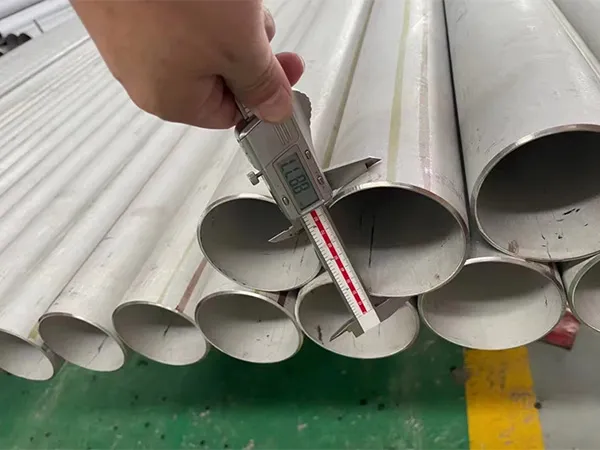
Dimensional accuracy is another important indicator of stainless steel pipe quality. Pipes that do not meet dimensional tolerances may cause installation problems or performance issues in pipeline systems.
Key dimensions to inspect include:
Outer diameter (OD)
Wall thickness (WT)
Pipe length
Straightness
Ovality
International standards such as ASTM and EN specifications define allowable dimensional tolerances for stainless steel pipes.
For example:
Outer diameter tolerances typically range from ±0.5% to
±1%.
Wall thickness tolerance requirements vary depending on manufacturing methods.
High-quality stainless steel pipes should maintain consistent dimensions throughout the entire length of the pipe.
Surface quality is an important visual indicator of stainless steel pipe manufacturing quality.
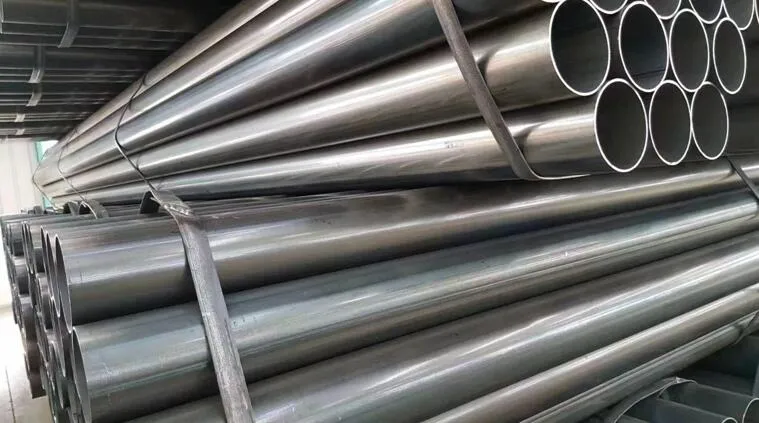
High-quality stainless steel pipes should have smooth and uniform surfaces without visible defects such as:
Cracks
Pits
Surface folds
Scratches
Laminations
Welding defects
Surface imperfections may indicate poor manufacturing processes or inadequate quality control during production.
For welded stainless steel pipes, the weld seam should be smooth and uniform without excessive reinforcement or undercutting.
A good surface finish not only improves appearance but also helps maintain corrosion resistance by preserving the integrity of the protective oxide layer.
Mechanical properties determine the ability of stainless steel pipes to withstand pressure, stress, and mechanical loads.
Important mechanical properties include:
Yield strength
Tensile strength
Elongation
Hardness
These properties must meet the requirements specified in the relevant standards.
For example, typical minimum mechanical properties for 316L stainless steel pipes include:
Yield strength: approximately 170 MPa
Tensile strength: approximately 485 MPa
Mechanical property testing ensures that the pipes have sufficient strength for industrial applications.
Heat treatment is essential for achieving the correct microstructure and corrosion resistance in stainless steel pipes.
Many stainless steel grades requiresolution annealing, which involves heating the material to high temperatures and then rapidly cooling it.
This process helps:
Dissolve carbide precipitation
Restore corrosion resistance
Improve mechanical properties
If stainless steel pipes are not properly heat treated, they may suffer from reduced corrosion resistance or mechanical performance.
Therefore, buyers should confirm that the supplier follows proper heat treatment procedures.
For welded stainless steel pipes, the welding process must be carefully controlled to ensure structural integrity.
High-quality welded pipes should have:
Uniform weld seams
No internal welding defects
Consistent penetration
Manufacturers typically perform non-destructive testing on welded pipes to verify weld quality.
Common testing methods include:
Ultrasonic testing
Radiographic testing
Eddy current inspection
These tests help detect internal defects that are not visible on the surface
Non-destructive testing (NDT) is an important part of stainless steel pipe quality assurance.
Typical NDT methods include:
Ultrasonic testing (UT)
Eddy current testing (ET)
Radiographic testing (RT)
Magnetic particle testing
These inspections help identify internal defects such as cracks, inclusions, or voids that could compromise pipe performance.
High-quality manufacturers implement strict NDT procedures for every production batch.
Reliable stainless steel pipe suppliers provide detailed inspection documentation with each shipment.
Typical documents include:
Mill Test Certificate (MTC)
Chemical composition reports
Mechanical property reports
Heat treatment records
Dimensional inspection reports
Most industrial projects requireEN 10204 3.1 certification, which verifies that the material has been inspected and tested according to specified standards.
These documents provide traceability and assurance of product quality.
Choosing a reliablestainless steel pipe supplieris equally important when evaluating product quality.
Experienced manufacturers typically offer:
Stable production processes
Advanced manufacturing equipment
Strict quality management systems
Professional technical support
Suppliers with strong manufacturing capabilities are more likely to produce consistent and high-quality stainless steel pipes.
Although price is an important factor in procurement decisions, buyers should avoid selecting suppliers based solely on the loweststainless steel pipe price.
Extremely low prices may indicate:
Lower quality raw materials
Reduced inspection procedures
Poor manufacturing processes
A balanced evaluation should consider both price and product quality.
Working with a reputable stainless steel pipe supplier ensures long-term reliability and cost efficiency.
Womic Steel is a professional manufacturer specializing in high-quality stainless steel pipes for global industrial markets.
Our product range includes:
Seamless stainless steel pipes (OD 1/4" – 36")
Welded stainless steel pipes (OD up to 80")
Duplex stainless steel pipes
Super duplex stainless steel pipes
Super austenitic stainless steel pipes
Our manufacturing advantages include:
Advanced pipe production equipment
Strict quality control systems
Comprehensive non-destructive testing
Certified raw material suppliers
Competitive stainless steel pipe prices
These strengths allow us to deliver reliable stainless steel piping solutions for demanding industrial applications worldwide.
Customized services. Rapid production. Global reach. We ensure your specific needs are fulfilled with precision and top-tier quality.
Website: www.womicstainless.com
Email:info@womicstainless.com
Tel/WhatsApp/WeChat:Victor: +86-15575100681 or Jack: +86-18390957568