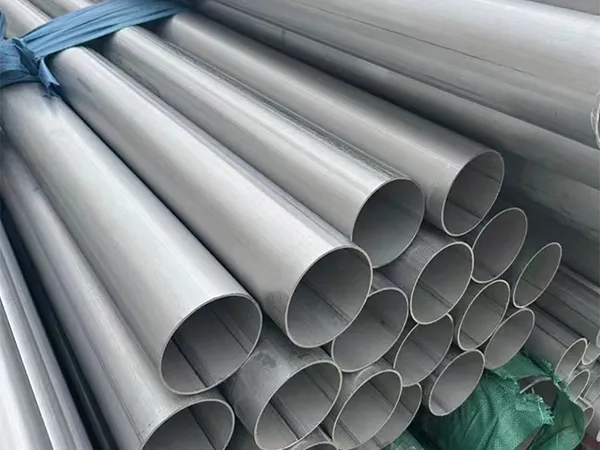
Womic Stainless Steel Co., Ltd

In industrial engineering, the termsstainless steel pipeandstainless steel tubeare often used interchangeably. However, in technical and manufacturing contexts, these two products have distinct differences in design standards, dimensional systems, manufacturing tolerances, and application fields.
Understanding the difference between stainless steel pipes and stainless steel tubes is essential for engineers, procurement managers, and project contractors. Selecting the correct product type ensures that the material meets the structural, mechanical, and operational requirements of the intended application.
Stainless steel pipes are primarily used forfluid transportation systems, such as pipelines carrying liquids, gases, or steam. Stainless steel tubes, on the other hand, are commonly used instructural or mechanical applicationswhere precise dimensions and tighter tolerances are required.
Both products are widely manufactured by professionalstainless steel pipe suppliers, and their prices, standards, and manufacturing processes may differ depending on the application.
This guide explains the key differences between stainless steel pipes and stainless steel tubes, including dimensional standards, manufacturing processes, material specifications, and industrial applications.
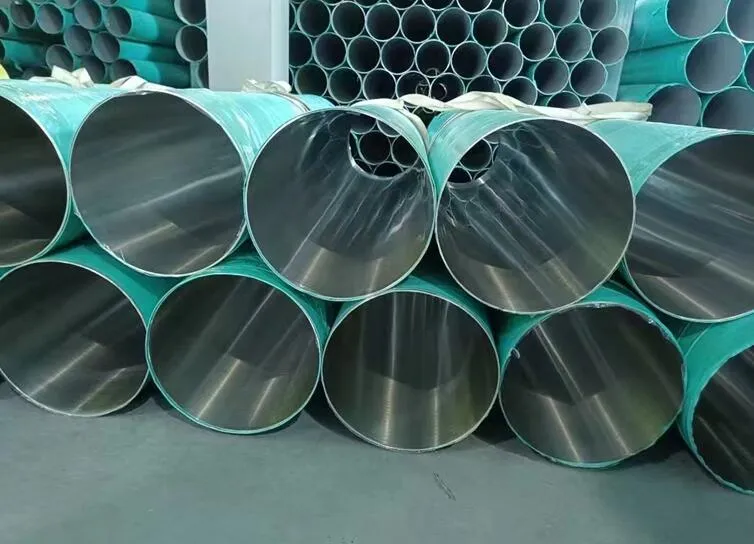
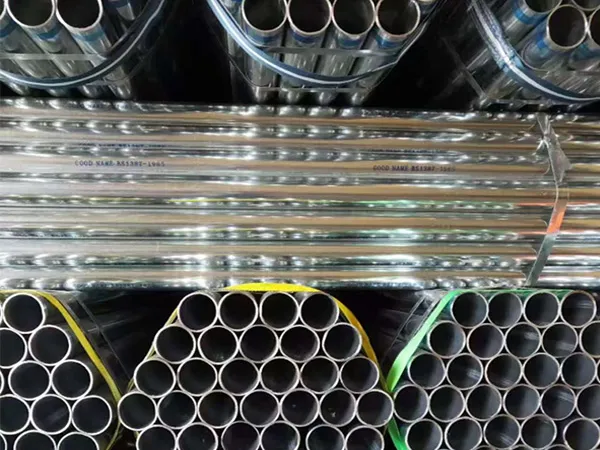
Astainless steel pipeis a hollow cylindrical product primarily designed for transporting fluids or gases in industrial piping systems.
Pipes are commonly used in:
Oil and gas pipelines
Chemical processing plants
Water supply systems
Steam pipelines
Power plant piping systems
The dimensions of stainless steel pipes are typically defined byNominal Pipe Size (NPS)andschedule numbers, which represent the wall thickness.
For example:
NPS 4 SCH 40
NPS 6 SCH 80
NPS 10 SCH 160
Because pipes are designed for fluid transport, their internal diameter and pressure capacity are the most important design considerations.
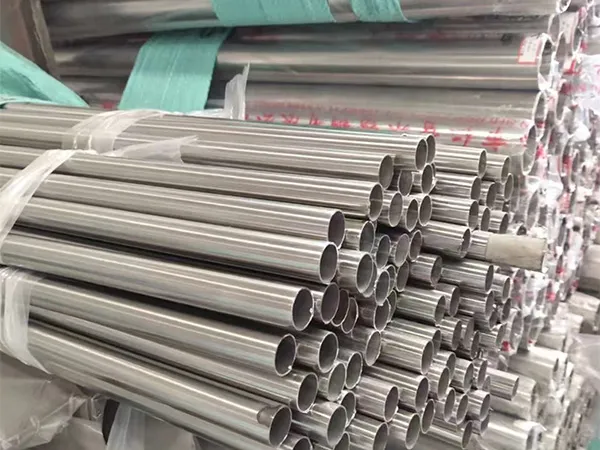
Astainless steel tubeis a hollow product used primarily for structural, mechanical, or precision engineering applications.
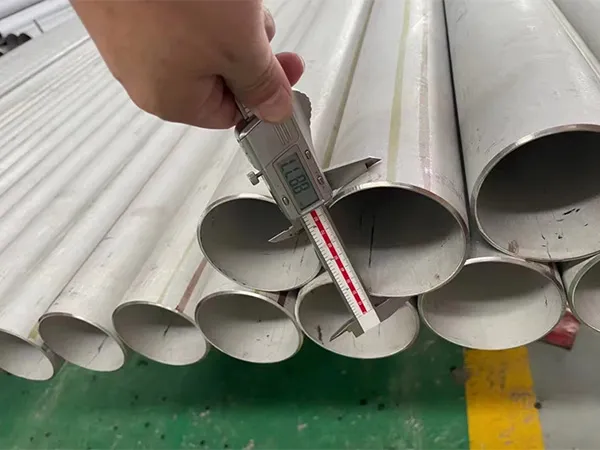
Unlike pipes, tubes are defined by theirexact outer diameter (OD) and wall thickness, rather than nominal size.
Typical tube applications include:
Mechanical engineering
components
Heat exchanger systems
Hydraulic cylinders
Automotive parts
Architectural structures
Stainless steel tubes usually require tighter dimensional tolerances and higher surface quality compared with pipes.
One of the most important differences between pipes and tubes is the way their dimensions are specified.
Pipe sizes are based onNominal Pipe Size (NPS), which is a standardized designation rather than an exact measurement.
For example:
NPS 4 pipe has an actual outer diameter of 114.3 mm.
Wall thickness is defined usingschedule numbers, such as:
SCH 10
SCH 40
SCH 80
SCH 160
This system simplifies pipeline design for fluid transportation systems.
Stainless steel tubes are measured by:
Exact outer diameter (OD)
Exact wall thickness (WT)
For example:
50 mm OD × 3 mm WT
76.2 mm OD × 2 mm WT
Because tubes are often used in mechanical structures, precise dimensions are critical for assembly and fabrication.
Stainless steel tubes generally require tighter manufacturing tolerances than stainless steel pipes.
Typical tolerance characteristics include:
Pipes: moderate tolerance
levels suitable for fluid transport
Tubes: tighter tolerances required for precision engineering
For example, stainless steel tubes used in hydraulic cylinders or mechanical components must maintain very accurate dimensions to ensure proper fit and performance.
This difference in tolerance requirements often affects thestainless steel pipe pricecompared with tube products.
Both stainless steel pipes and tubes can be produced using similar manufacturing processes.
The two primary production methods include:
Seamless manufacturing
Welded manufacturing
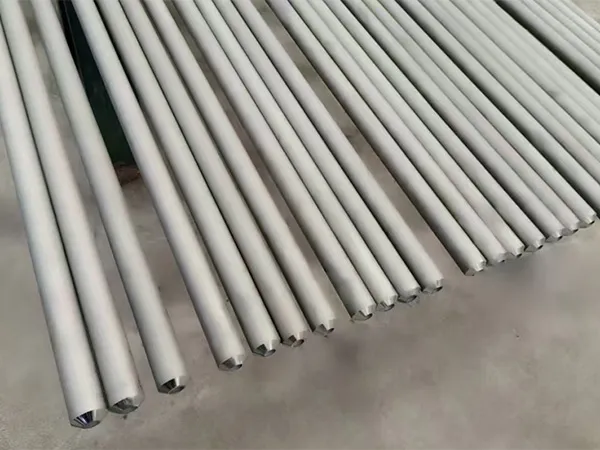
Seamless stainless steel pipes and tubes are manufactured from solid billets through hot piercing and rolling processes.
Advantages include:
High structural strength
Uniform mechanical properties
No welded seam
Seamless products are commonly used in high-pressure systems such as boilers and chemical pipelines.
Welded stainless steel pipes and tubes are produced by forming stainless steel plates or coils into cylindrical shapes and welding the edges together.
Advantages include:
Lower production cost
Large diameter capability
Good dimensional consistency
Welded products are widely used in structural applications and low-pressure piping systems.
Surface finish requirements also differ between stainless steel pipes and tubes.
Pipes typically have standard industrial finishes suitable for pipeline installation.
Common pipe surface finishes include:
Pickled finish
Mill finish
Industrial polished finish
Tubes often require higher surface quality, especially for applications such as:
Food processing equipment
Pharmaceutical systems
Architectural structures
These applications may require polished surfaces with low roughness values.
The mechanical property requirements for pipes and tubes may also vary depending on the application.
Stainless steel pipes used in pressure systems must meet strict requirements for:
Yield strength
Tensile strength
Pressure resistance
Stainless steel tubes used in structural applications must often meet requirements related to:
Dimensional stability
Bending performance
Fabrication capability
Because of these different requirements, pipes and tubes may be produced according to different standards.
Stainless steel pipes and tubes are manufactured according to various international standards.
Common pipe standards include:
ASTM A312 – Austenitic
stainless steel pipe
ASTM A790 – Duplex stainless steel pipe
EN 10216-5 – Seamless stainless steel pipe
EN 10217-7 – Welded stainless steel pipe
These standards focus primarily on pressure performance and corrosion resistance.
Common tube standards include:
ASTM A213 – Boiler and heat
exchanger tubes
ASTM A269 – General service stainless steel tubes
ASTM A554 – Mechanical stainless steel tubing
EN 10305 – Precision steel tubes
Tube standards generally emphasize dimensional accuracy and surface quality.
The intended application is one of the clearest distinctions between pipes and tubes.
Oil and gas transportation
pipelines
Chemical processing pipelines
Water supply systems
Power plant steam pipelines
Industrial process piping
These systems require strong pressure resistance and corrosion protection.
Heat exchanger systems
Mechanical engineering components
Automotive parts
Hydraulic cylinders
Architectural structures
These applications prioritize dimensional precision and fabrication capability.
In many cases, stainless steel tubes are more expensive than pipes of similar size because they require:
Tighter dimensional tolerances
More precise manufacturing processes
Higher surface finish quality
However, the final price depends on several factors including:
Material grade
Pipe or tube dimensions
Production method
Inspection requirements
Order quantity
Working with an experiencedstainless steel pipe suppliercan help buyers obtain competitive pricing while ensuring product quality.
When selecting between stainless steel pipes and tubes, buyers should consider several factors.
1 Intended application
2 Pressure and temperature requirements
3 Dimensional accuracy requirements
4 Fabrication and installation conditions
5 Budget and project timeline
Understanding these factors helps ensure that the selected material meets both performance and cost requirements.
Womic Steel is a professional manufacturer and globalstainless steel pipe supplierproviding both pipes and tubes for industrial applications.
Our product range includes:
Seamless stainless steel pipes
(OD 1/4" – 36")
Welded stainless steel pipes (OD up to 80")
Precision stainless steel tubes
Duplex stainless steel pipes
Super duplex stainless steel pipes
Our products are manufactured according to international standards including:
ASTM standards
ASME standards
EN standards
With advanced manufacturing equipment and strict quality control systems, Womic Steel delivers reliable stainless steel pipe and tube solutions for global industrial markets at competitivestainless steel pipe prices.
Customers are also welcome to visit our manufacturing facilities, conduct factory audits, and arrange third-party inspections to verify product quality before shipment.
Customized services. Rapid production. Global reach. We ensure your specific needs are fulfilled with precision and top-tier quality.
Website: www.womicstainless.com
Email:info@womicstainless.com
Tel/WhatsApp/WeChat:Victor: +86-15575100681 or Jack: +86-18390957568