Womic Stainless Steel Co., Ltd

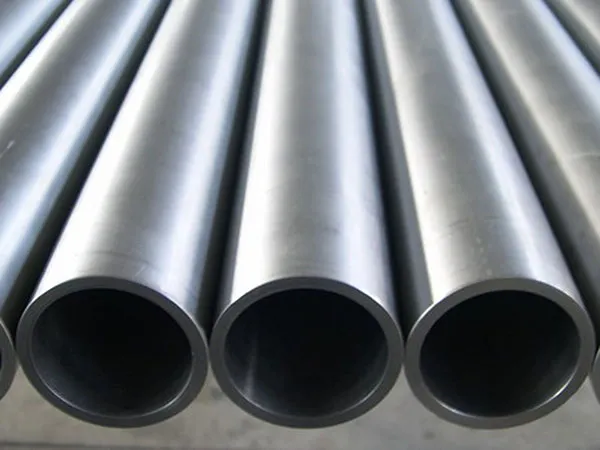
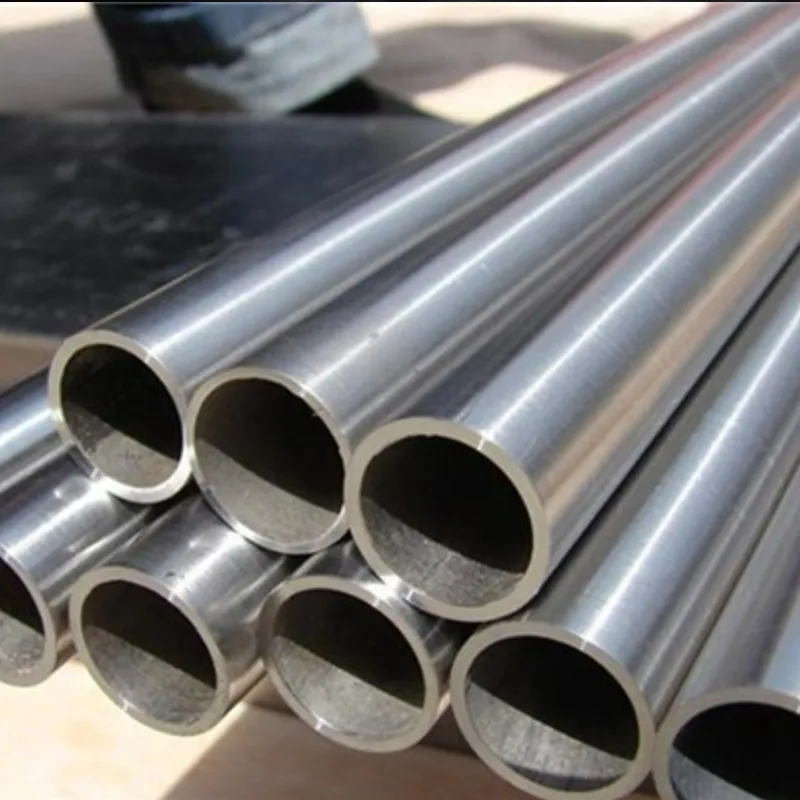
Womic Steel supplies 2205 duplex stainless steel pipe for oil & gas, chemical processing, offshore, desalination and industrial applications requiring high strength and reliable resistance to chloride-related corrosion.
2205 duplex stainless steel pipe is one of the most widely recognized grades within the duplex stainless steel family. It combines the characteristics of ferritic and austenitic stainless steels, providing a useful balance between mechanical strength, corrosion resistance and fabrication performance.
The grade is frequently considered when conventional austenitic stainless steel does not provide the desired resistance to chloride-containing environments or when higher mechanical strength is beneficial for piping design.
For industrial projects, 2205 is particularly relevant to oil & gas, petrochemical, chemical processing, offshore facilities, water treatment and desalination. These environments can expose piping to chlorides, elevated temperatures, pressure and other conditions that require careful material selection.
However, the performance of 2205 duplex stainless steel pipe depends heavily on metallurgical control. The desired duplex microstructure must be maintained through forming, heat treatment, cooling and welding. Poor control of these processes can affect corrosion resistance, toughness and mechanical properties.
Womic Steel supplies 2205 duplex stainless steel pipe according to applicable standards, dimensions, testing requirements and project specifications.
2205 is a duplex stainless steel grade containing approximately equal proportions of ferritic and austenitic phases when properly processed.
This two-phase structure gives the material a combination of properties that differs from conventional austenitic stainless steels.
Important characteristics include:
The grade may be specified under different designation systems depending on the applicable standard. Buyers should therefore identify the complete material specification rather than relying only on the commercial name “2205.”
One of the main reasons 2205 is selected for industrial piping is the combination of strength and corrosion resistance.
Higher Mechanical Strength
Duplex stainless steels generally provide higher yield strength than common austenitic grades such as 304L and 316L.
This can provide engineering advantages where pressure-containing components need to meet specific mechanical requirements.
Higher strength does not automatically mean that a thinner pipe should be specified. Wall thickness must still be determined according to the applicable design code, pressure, temperature, corrosion allowance and project requirements.
Chloride Resistance
2205 provides stronger resistance to chloride-related localized corrosion than many conventional stainless steels.
This makes it attractive for selected marine, offshore, chemical and water-treatment applications.
Stress Corrosion Cracking
Duplex stainless steels can also provide advantages in environments where chloride stress corrosion cracking is a concern.
Nevertheless, actual suitability depends on temperature, chloride concentration, stress level and other operating conditions.
The performance of 2205 depends strongly on its microstructure.
Ferrite and Austenite
The duplex structure contains both ferrite and austenite. Each phase contributes different characteristics to the overall performance of the alloy.
Maintaining an appropriate phase balance is therefore an important manufacturing objective.
Heat Treatment
Heat treatment can restore a suitable metallurgical condition following hot forming or other manufacturing operations.
The temperature range and treatment procedure should follow the applicable product specification.
Cooling Control
Cooling after heat treatment is particularly important. Unsuitable cooling conditions may promote undesirable phases or disturb the intended ferrite-austenite balance.
Intermetallic Phases
Extended exposure to inappropriate temperature ranges can result in the formation of undesirable secondary phases. These phases can negatively affect toughness and corrosion resistance.
For this reason, manufacturing consistency is particularly important when producing 2205 duplex stainless steel pipe.
The manufacturing route depends on whether the product is seamless or welded.
Seamless 2205 Pipe
Seamless pipe is manufactured from solid billet through heating, piercing, rolling, sizing and heat treatment.
Dimensional control is important because wall thickness variation can affect both fabrication and engineering calculations.
Welded 2205 Pipe
Welded pipe is formed from flat stainless steel material and joined through a controlled welding process.
For welded 2205, welding parameters must be carefully controlled because the thermal cycle can influence phase balance in the weld and heat-affected zone.
Sizing and Finishing
After forming and welding or rolling, the pipe undergoes sizing, straightening and cutting as required.
Final dimensions and surface condition should correspond to the applicable specification.
Welding is one of the most important fabrication considerations for 2205.
Heat Input
Heat input needs to be controlled because the thermal cycle affects phase transformation.
Excessive heat exposure can influence the microstructure, while an unsuitable cooling rate can also create metallurgical problems.
Weld Metal
Appropriate welding procedures and filler materials should be selected according to the material grade and project requirements.
Heat-Affected Zone
The HAZ can experience changes in phase balance during welding. Proper procedure control is therefore important for maintaining the required properties.
Post-Weld Surface Treatment
Welding may create oxidation or heat tint. Where required, cleaning, pickling and passivation can be used to restore a suitable stainless steel surface condition.
For critical applications, welding procedure requirements and inspection levels should be agreed before fabrication.
Quality control should address chemical, mechanical, dimensional and metallurgical characteristics.
Chemical Composition
Chemical analysis confirms that the pipe meets the specified 2205 chemistry.
Chromium, nickel, molybdenum and nitrogen are particularly important alloying elements in duplex stainless steel.
Mechanical Testing
Tensile strength, yield strength and elongation are important because high mechanical strength is a key reason for selecting duplex stainless steel.
Dimensional Inspection
Outside diameter, wall thickness, length, straightness and other dimensions should be checked according to the applicable specification.
Microstructural Examination
Where required, metallographic examination can provide information about the ferrite-austenite structure and help identify undesirable metallurgical conditions.
PMI and NDT
PMI can verify alloy identification, while applicable non-destructive testing can evaluate pipe integrity without damaging the product.
Hydrostatic testing may also be required depending on the product standard and purchase specification.
Oil & Gas
2205 can be considered for process and utility piping where high strength and resistance to chloride-related corrosion are important.
Offshore Engineering
Offshore systems may expose piping to seawater, chlorides and demanding mechanical conditions. 2205 can provide a useful combination of properties for selected applications.
Chemical Processing
Chemical plants may require duplex stainless steel where conventional grades do not provide sufficient resistance to the actual process environment.
Desalination
Desalination equipment operates in chloride-rich environments, making corrosion resistance an important material-selection factor.
Water Treatment
2205 can be used in selected water-treatment systems where its combination of strength and corrosion resistance provides an advantage.
Material selection often involves comparing 2205 with grades such as 304L and 316L.
304L offers good general corrosion resistance and excellent weldability, making it suitable for many moderate industrial environments.
316L contains molybdenum and generally provides better resistance to chloride-related localized corrosion than 304L.
2205 provides a further combination of higher mechanical strength and strong chloride resistance, but it also requires more careful metallurgical and welding control.
Therefore, 2205 should not simply be selected because it has higher strength. The decision should consider:
The most suitable grade is the one that meets the complete engineering requirements.
A complete inquiry should ideally identify:
For offshore, seawater or chemical applications, buyers should also provide the operating medium, temperature, pressure and corrosion environment where possible.
2205 duplex stainless steel pipe provides a strong combination of mechanical strength and corrosion resistance, making it an important material for demanding industrial piping applications. Its performance is closely connected to the duplex microstructure, which means that heat treatment, cooling and welding must be carefully controlled.
For buyers, selecting 2205 should involve more than confirming the grade and dimensions. Chemical composition, mechanical properties, metallurgical condition, surface treatment, testing and traceability should all be considered as part of the procurement process.
Womic Steel supplies 2205 duplex stainless steel pipe according to applicable standards and agreed project requirements.
For a quotation, please provide the grade, OD, wall thickness, length, quantity, applicable standard, testing requirements and delivery term (EXW/FOB/CIF). For CIF orders, please also provide the destination port.