Womic Stainless Steel Co., Ltd

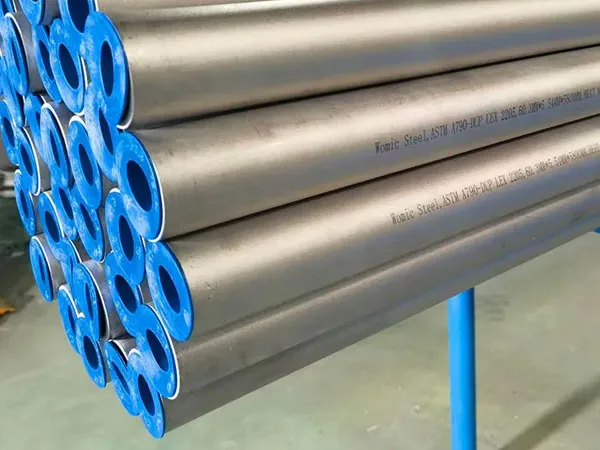
Womic Steel supplies 321H Stainless Steel Pipe for high-temperature chemical processing, petrochemical, power generation and industrial piping applications requiring stable performance and corrosion resistance.
Industrial piping systems operating at elevated temperatures require materials that can maintain suitable mechanical and corrosion-resistant performance over extended periods. In these applications, material selection involves more than simply choosing a stainless steel grade with general corrosion resistance. Long-term exposure to elevated temperatures can influence microstructure, mechanical properties and corrosion behavior.
321H Stainless Steel Pipe is a high-carbon version of stabilized Type 321 stainless steel. The grade is associated with applications where elevated-temperature performance is important, particularly in process equipment and piping exposed to prolonged heating.
The stabilization of Type 321 stainless steel is achieved through the addition of titanium. This material design helps address chromium carbide precipitation associated with certain thermal exposures. The higher carbon level of 321H is intended to provide improved high-temperature strength compared with the standard 321 grade.
For buyers, however, specifying 321H Stainless Steel Pipe requires careful attention to the complete material designation, manufacturing method, dimensions, heat treatment and inspection requirements. A correct quotation should be based on the actual project specification rather than on the material name alone.
Womic Steel supplies stainless steel pipe for industrial and project applications. For 321H requirements, Womic Steel can review the required dimensions, quantity, manufacturing type, testing and delivery conditions before preparing a project-specific quotation.
321H is a stabilized austenitic stainless steel grade based on Type 321, with a controlled higher carbon range intended to provide improved strength at elevated temperatures.
The addition of titanium is an important characteristic of the 321 family. Titanium has an affinity for carbon and helps stabilize the material against certain forms of chromium carbide precipitation during thermal exposure.
The main characteristics considered when selecting 321H Stainless Steel Pipe include:
The exact chemical composition and mechanical requirements should always be confirmed against the material specification stated in the purchase order.
It is also important to distinguish 321H from similar stainless steel grades. Although 321, 321H and other high-temperature stainless steels can appear similar in general applications, their chemical and mechanical requirements are not necessarily interchangeable.
The metallurgy of 321H is closely related to its intended high-temperature service.
Chromium Carbide Precipitation
When certain austenitic stainless steels are exposed to elevated temperatures for extended periods, chromium and carbon can interact to form chromium carbides.
If chromium is depleted locally around grain boundaries, the material may become more susceptible to certain forms of intergranular corrosion under appropriate conditions.
This phenomenon is an important consideration when selecting stainless steel for applications involving prolonged thermal exposure.
Role of Titanium
321 stainless steel is stabilized with titanium. Titanium preferentially combines with carbon, reducing the amount of carbon available for chromium carbide formation.
This stabilization mechanism is one of the defining characteristics of the 321 family and helps make the grade suitable for selected elevated-temperature applications.
Why 321H Is Different
The “H” designation indicates a higher carbon version intended to provide improved high-temperature strength.
For equipment exposed to elevated temperatures, strength retention can be an important engineering consideration. The exact operating temperature, pressure and duration of exposure should therefore be evaluated when selecting between standard and high-temperature material grades.
The appropriate grade should always be selected according to the engineering design and applicable material specification.
321H Stainless Steel Pipe can be manufactured in seamless or welded forms depending on the required size, specification and application.
Seamless 321H Stainless Steel Pipe
Seamless pipe is manufactured without a longitudinal welded seam. The production process generally starts with a suitable stainless steel billet, followed by piercing, hot working, sizing and other controlled manufacturing operations.
Heat treatment and cooling are important parts of the manufacturing process because the final metallurgical condition must meet the applicable requirements.
Seamless pipe may be selected for applications where the project specification requires seamless construction or where the combination of dimensions and service conditions makes it appropriate.
Welded 321H Stainless Steel Pipe
Welded pipe is produced by forming stainless steel material into a tubular shape and joining the longitudinal seam through a controlled welding process.
For 321H, welding procedure control is particularly relevant because the material is intended for demanding temperature conditions. Welding parameters, filler selection and post-weld treatment should follow the applicable engineering requirements.
The weld region may also require non-destructive examination depending on the product specification and project inspection plan.
The decision between seamless and welded pipe should therefore be based on the applicable standard, project requirements, dimensions and service conditions.
Manufacturing control is essential when producing 321H Stainless Steel Pipe for high-temperature applications.
The production process can involve:
Heat Treatment
Heat treatment helps establish the required metallurgical condition and mechanical properties of the finished pipe.
For austenitic stainless steel, temperature control and cooling conditions need to be managed carefully during production. The applicable product specification determines the required treatment and acceptance criteria.
Welding Control
For welded pipe, the welding process must be controlled to produce a consistent and sound longitudinal seam.
Because 321H is intended for elevated-temperature service, welding procedure requirements should be considered together with the final application.
Dimensional Control
The finished pipe must meet the specified outside diameter, wall thickness and length requirements.
Dimensional accuracy is particularly important when pipes are being incorporated into prefabricated process systems or connected to valves, fittings and other equipment.
Quality control should cover material identity, chemical composition, mechanical performance, product integrity and dimensions.
Chemical Composition
Chemical analysis verifies that the material corresponds to the specified 321H grade.
Particular attention should be paid to the alloying elements that distinguish the grade, including chromium, nickel, titanium and carbon.
The chemical results should be traceable to the relevant heat or material identification.
Mechanical Testing
Mechanical testing is used to verify that the pipe meets the mechanical requirements of the applicable specification.
Typical properties considered include tensile strength, yield strength and elongation.
For 321H, high-temperature applications make the material's mechanical characteristics particularly relevant to engineering design.
Hydrostatic Testing
Hydrostatic testing can be performed according to the applicable pipe specification to evaluate pressure integrity.
The required test pressure and acceptance criteria should follow the applicable standard and project requirements.
Non-Destructive Examination
NDT may be required depending on the manufacturing method and project specification.
For welded 321H pipe, examination of the longitudinal weld can provide additional information about weld integrity. The required NDT method and extent should be confirmed before production.
Documentation is an essential part of industrial stainless steel pipe procurement.
A project documentation package may include:
Material Test Certificates
The Material Test Certificate provides documented information about the material and test results associated with the supplied pipe.
For 321H Stainless Steel Pipe, the certificate should clearly identify the specified grade and relevant material information.
Heat-number traceability allows the buyer to connect the physical pipe with its manufacturing and testing records.
Project Inspection
Industrial projects may have additional inspection requirements beyond the basic product specification.
Customers may request third-party inspection, additional PMI verification, specific documentation formats or additional testing.
These requirements should be communicated before production so that they can be incorporated into the manufacturing and inspection process.
The combination of austenitic corrosion resistance and elevated-temperature strength makes 321H relevant to several industrial applications.
Petrochemical
Petrochemical facilities contain process piping and equipment exposed to elevated temperatures and various chemical environments. 321H may be considered where its high-temperature characteristics match the process requirements.
Chemical Processing
Chemical processing systems can involve both corrosive media and elevated operating temperatures. Material selection must consider chemical concentration, temperature and exposure time.
Power Generation
Power-generation facilities contain piping systems operating under elevated-temperature conditions. Stainless steel grades designed for higher-temperature service can be considered for appropriate applications.
Heat Exchangers and Process Equipment
Heat-transfer equipment can experience continuous thermal cycling and elevated operating temperatures. 321H may be used where the material's properties are appropriate for the specific equipment design.
Industrial Furnaces and High-Temperature Systems
Certain industrial heating systems require stainless steel components capable of operating at elevated temperatures. 321H can be considered for selected piping and process applications where its properties meet the engineering requirements.
In all cases, material selection should be based on actual temperature, pressure, process medium and applicable design requirements.
A complete inquiry should ideally identify:
For high-temperature applications, buyers should also provide the intended operating temperature and service conditions whenever possible. These details can help suppliers understand why 321H has been specified and whether any additional technical requirements need to be considered.
For project orders, it is also useful to confirm whether an approved manufacturer list, third-party inspection, special marking or specific packing procedure applies.
Womic Steel can review the 321H Stainless Steel Pipe specification, dimensions and quantity and prepare a quotation according to the agreed technical and commercial requirements.
321H Stainless Steel Pipe is designed for applications where austenitic stainless steel corrosion resistance needs to be combined with improved high-temperature strength. Its titanium-stabilized metallurgy and higher carbon designation distinguish it from standard 321 stainless steel and make correct grade identification important during procurement.
Successful purchasing requires more than specifying the pipe size. Buyers should clearly define the material grade, applicable standard, manufacturing method, dimensions, heat treatment, testing, documentation and delivery conditions.
For projects involving elevated temperatures, providing the actual service environment can also help ensure that the specified material is evaluated in the correct engineering context.
Womic Steel supplies stainless steel pipe for industrial and project applications and can review 321H Stainless Steel Pipe requirements based on the customer's technical specification. Send us your required grade, size, wall thickness and quantity, and we can check the suitable supply option and quotation for your project.