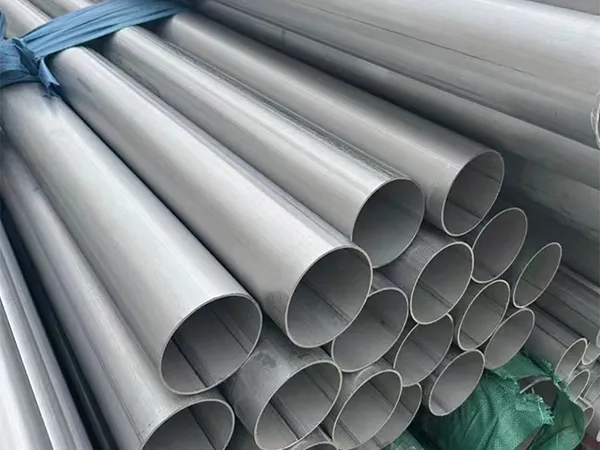
Womic Stainless Steel Co., Ltd

Heat treatment is one of the most critical processes in the manufacturing of stainless steel pipes. During production stages such as hot rolling, cold drawing, forming, welding, and sizing, stainless steel materials undergo mechanical deformation and thermal exposure that may significantly alter their internal microstructure. These changes can introduce residual stress, carbide precipitation, grain growth, and uneven distribution of alloying elements, all of which may negatively affect the corrosion resistance and mechanical performance of stainless steel pipes.
For this reason, controlled heat treatment processes are essential in the production of high-quality stainless steel pipes. Heat treatment restores the optimal metallurgical structure of the material and ensures that stainless steel pipes meet the required mechanical properties, corrosion resistance levels, and dimensional stability specified by international standards.
Industries such asoil and gas transportation, petrochemical processing, marine engineering, chemical plants, nuclear power generation, heat exchanger manufacturing, and high-pressure piping systemsrely heavily on properly heat treated stainless steel pipes. Without appropriate heat treatment, stainless steel pipes may suffer from reduced corrosion resistance, decreased ductility, or premature failure in demanding service environments.
At Womic Steel, advanced heat treatment technologies and precision-controlled furnace systems are used to ensure that stainless steel pipes achieve uniform microstructure, optimized mechanical properties, and excellent long-term reliability.
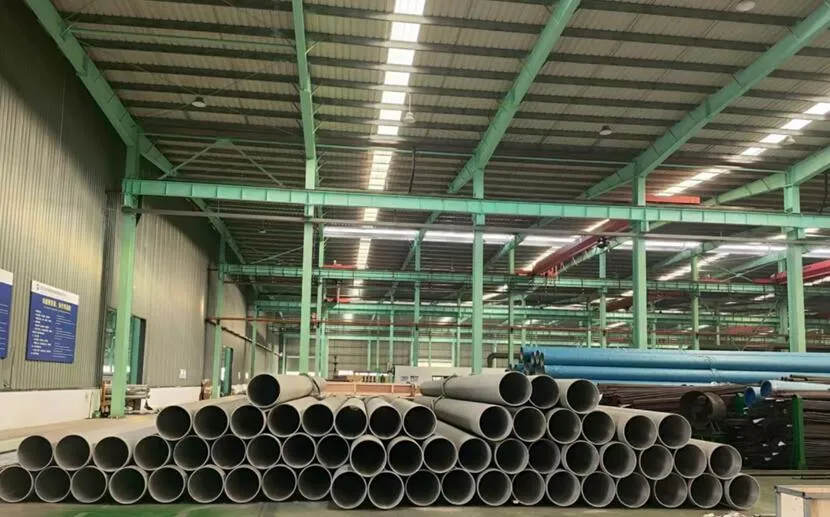
Understanding the metallurgical principles behind stainless steel heat treatment is essential for achieving the desired material performance.
Stainless steels contain key alloying elements such aschromium, nickel, molybdenum, nitrogen, titanium, and niobium. Chromium is particularly important because it forms a thin passive oxide film on the surface of stainless steel, which provides the material with its well-known corrosion resistance.
However, during certain manufacturing conditions, chromium may combine with carbon to form chromium carbides at grain boundaries. This phenomenon, known assensitization, reduces the chromium concentration near the grain boundaries and may significantly reduce corrosion resistance.
Heat treatment processes such assolution annealingare designed to dissolve these chromium carbides back into the matrix, restoring uniform chromium distribution and improving corrosion resistance.
In addition to carbide dissolution, heat treatment also helps refine grain structures, relieve residual stresses, and improve ductility. Careful control of heating temperature, holding time, and cooling rate is required to achieve the optimal metallurgical condition.
Solution annealing is the most important heat treatment process for austenitic stainless steel pipes. This treatment is widely used for stainless steel grades such as304, 304L, 316, 316L, 321, 347H, 310S, and other high-alloy stainless steels.
During the solution annealing process, stainless steel pipes are heated to temperatures typically ranging from1000°C to 1150°C. At these temperatures, chromium carbides dissolve into the austenitic matrix, restoring a homogeneous alloy distribution.
Once the material reaches the desired temperature and is held for an appropriate soaking time, the pipe must be rapidly cooled to prevent carbides from re-precipitating. Water quenching or forced air cooling is commonly used for this purpose.
Solution annealing provides several important benefits for stainless steel pipes. It restores corrosion resistance, improves ductility, eliminates internal stresses generated during manufacturing, and enhances the overall metallurgical stability of the material.
For stainless steel pipes used in highly corrosive environments such as chemical plants and offshore pipelines, proper solution annealing is essential to ensure long-term service reliability.
During manufacturing processes such as cold drawing, bending, and welding, stainless steel pipes may develop internal stresses. These residual stresses can cause dimensional instability, distortion during service, or even cracking under certain conditions.
Stress relieving heat treatment is used to reduce these internal stresses without significantly altering the material’s microstructure.
In this process, stainless steel pipes are heated to moderate temperatures, typically between450°C and 650°C, and held at this temperature for a specified period before controlled cooling.
Stress relieving is particularly important forwelded stainless steel pipes, precision mechanical tubing, hydraulic piping systems, and structural stainless steel componentswhere dimensional stability is critical.
By reducing internal stresses, stress relieving improves structural integrity and helps prevent unexpected failures during operation.
Certain stainless steel grades are designed with stabilizing elements such as titanium or niobium to prevent carbide precipitation and intergranular corrosion.
Examples includeTP321 stainless steel pipeandTP347 stainless steel pipe. These materials contain alloying elements that preferentially combine with carbon, forming stable carbides that prevent chromium carbide formation.
However, stabilization heat treatment may still be required to ensure that these stabilizing carbides are properly formed and distributed throughout the microstructure.
This process enhances resistance to intergranular corrosion and improves high-temperature stability in environments such aspower plant boilers, refinery heaters, and chemical processing equipment.
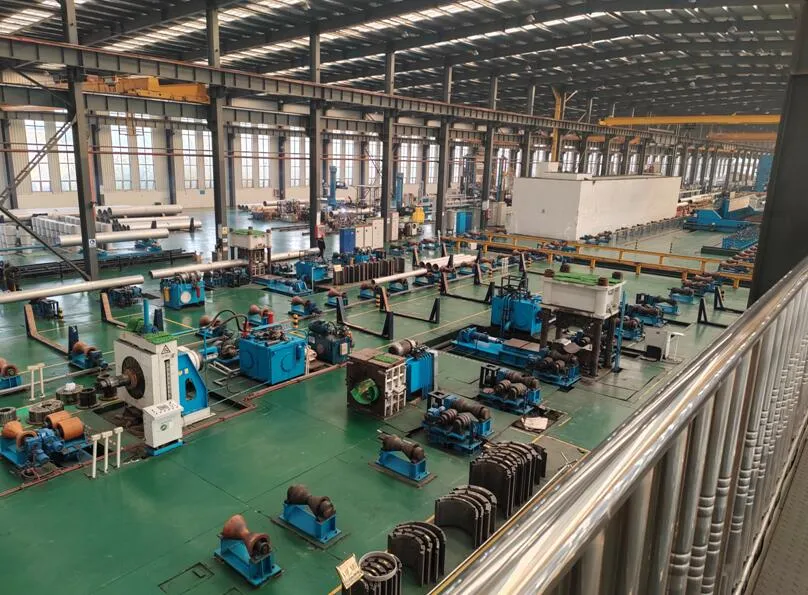
Modern stainless steel pipe manufacturing facilities utilize several types of heat treatment furnaces depending on production volume and pipe size.
Continuous annealing furnaces are commonly used for high production efficiency. These furnaces allow pipes to move continuously through different temperature zones while maintaining precise temperature control.
Batch furnaces may also be used for specialized heat treatment operations where tighter process control is required.
Advanced furnace systems use automated temperature monitoring, atmosphere control, and cooling systems to ensure uniform heat treatment across the entire pipe length.
Heat treatment has a direct impact on the microstructure of stainless steel pipes. Proper control of grain structure is important for achieving the desired mechanical properties.
Fine and uniform grains improve both strength and toughness of stainless steel materials. Excessive grain growth, on the other hand, may reduce mechanical performance and increase susceptibility to cracking.
Careful control of heating temperature and holding time helps maintain optimal grain size in stainless steel pipes.
Metallographic analysis is often used during quality inspection to verify that the microstructure meets specification requirements.
Heat treated stainless steel pipes are used in many industries where corrosion resistance, mechanical strength, and reliability are essential.
Typical applications includechemical processing pipelines, oil and gas transportation systems, heat exchanger tubes, marine piping systems, power plant equipment, and high-pressure industrial piping networks.
In these demanding environments, properly heat treated stainless steel pipes provide long service life and reliable performance under challenging operating conditions.
Womic Steel operates advanced heat treatment facilities designed specifically for stainless steel pipe manufacturing.
The company utilizes modern solution annealing furnaces and automated temperature control systems to ensure consistent heat treatment results. Strict process monitoring ensures that each pipe receives uniform heating and cooling, resulting in optimized mechanical properties and corrosion resistance.
In addition to standard heat treatment procedures, Womic Steel provides customized heat treatment solutions for special project requirements, including high-temperature alloys and corrosion-resistant stainless steel grades.
With strong manufacturing expertise and comprehensive quality control procedures, Womic Steel supplies high-quality stainless steel pipes for industrial projects around the world.