Womic Stainless Steel Co., Ltd

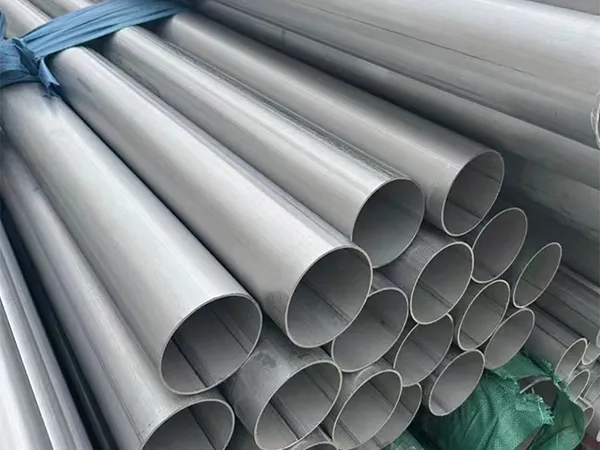
Seamless stainless steel pipes are widely used in industries where high strength, corrosion resistance, and reliability are critical. Unlike welded pipes, seamless pipes are manufactured without a welding seam, which significantly improves structural integrity and pressure resistance.
Because there is no longitudinal weld joint, seamless stainless steel pipes provide superior performance in high-pressure, high-temperature, and corrosive environments. This is why industries such asoil and gas, petrochemical processing, power generation, chemical plants, offshore engineering, and nuclear energyfrequently specify seamless stainless steel pipe materials for critical piping systems.
The manufacturing process of seamless stainless steel pipes is complex and requires advanced equipment, precise process control, and strict quality inspection procedures. From billet selection to final inspection, every step must be carefully controlled to ensure the pipe meets international standards.
At Womic Steel, seamless stainless steel pipes are produced using modern pipe rolling mills, precision cold drawing equipment, and comprehensive testing facilities to guarantee consistent product quality for global industrial customers.
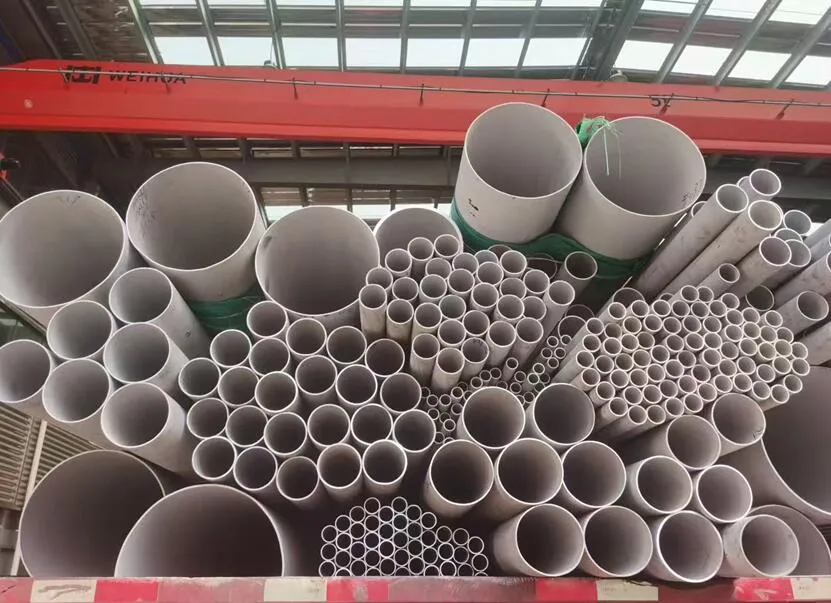
The manufacturing process of seamless stainless steel pipes begins with the selection of high-quality stainless steel billets. These billets serve as the raw material for pipe production and must meet strict chemical composition requirements according to standards such as ASTM, ASME, and EN specifications.
Common stainless steel grades used for seamless pipe production include304, 304L, 316, 316L, 321, 347H, 310S, and other high-alloy stainless steelsdesigned for corrosion resistance and high-temperature performance.
Before entering the production line, billets undergo several inspections including surface examination and chemical composition analysis. Any defects such as cracks, inclusions, or segregation must be removed before further processing.
Proper billet quality is critical because any defects present in the raw material may propagate during the pipe forming process and affect the final pipe performance.
After inspection, stainless steel billets are heated in a high-temperature furnace to prepare them for hot deformation. The heating temperature usually ranges between1100°C and 1250°C, depending on the stainless steel grade and production process requirements.
Precise temperature control is essential during this stage. If the temperature is too low, the billet may not deform properly during piercing. If the temperature is too high, excessive grain growth may occur, which could negatively affect the mechanical properties of the final pipe.
Modern pipe manufacturing facilities use automated furnace control systems to ensure uniform heating of the billets. Proper heating allows the stainless steel material to reach optimal plasticity for the subsequent piercing process.
The rotary piercing process is one of the most critical stages in seamless stainless steel pipe manufacturing. During this stage, the heated billet is pierced to create a hollow shell that will later be rolled into a pipe.
The billet passes between two angled rollers that rotate in the same direction. As the rollers compress the billet, a piercing mandrel penetrates the center of the billet, creating a hollow cavity.
This process transforms the solid billet into a thick-walled hollow tube known as amother hollow pipe.
The quality of the rotary piercing operation directly affects the internal surface quality and structural integrity of the seamless pipe. Proper control of roller angle, mandrel position, and deformation speed is essential to prevent internal defects.
After piercing, the hollow shell undergoes hot rolling to reduce wall thickness and increase pipe length. Several different rolling technologies may be used depending on the production facility.
Common hot rolling processes includemandrel mill rolling, plug mill rolling, and continuous pipe rolling.
During hot rolling, the pipe passes through multiple rolling stands that gradually reduce the wall thickness and refine the pipe dimensions. At the same time, the pipe length increases significantly.
This stage also helps improve the internal structure of the stainless steel by breaking up coarse grains formed during billet heating.
The rolling process must be carefully controlled to maintain uniform wall thickness and avoid ovality in the pipe geometry.
After the primary rolling process, the pipe passes through sizing mills where its final outer diameter is adjusted. This step ensures the pipe meets the specified dimensional tolerances required by international standards.
Sizing mills contain multiple rollers arranged in precise configurations that gently adjust the pipe dimensions without significantly changing wall thickness.
Proper dimensional control during this stage is essential to ensure that the pipes meet customer requirements for fit, installation, and performance.
Heat treatment plays a critical role in determining the final mechanical properties of seamless stainless steel pipes.
Depending on the stainless steel grade, pipes may undergosolution annealing, normalizing, or stress-relief heat treatment.
Solution annealing is commonly used for austenitic stainless steel pipes such as304, 316, and 321. During this process, the pipe is heated to high temperatures and then rapidly cooled to dissolve carbides and restore corrosion resistance.
Proper heat treatment improves ductility, toughness, and corrosion resistance while ensuring the pipe meets the mechanical property requirements of relevant standards.
During hot rolling and heat treatment, oxide scale forms on the surface of stainless steel pipes. This oxide layer must be removed to restore the pipe’s corrosion resistance and improve its surface appearance.
Pickling is commonly used for this purpose. The pipe surface is treated with acid solutions that dissolve oxide scale and impurities.
After pickling, the pipes may undergo additional cleaning and passivation processes to enhance corrosion resistance.
These surface treatment steps are particularly important for stainless steel pipes used in chemical processing, food processing, and pharmaceutical industries.
Quality inspection is an essential part of seamless stainless steel pipe manufacturing. Various testing methods are used to ensure that pipes meet required standards and specifications.
Common non-destructive testing methods includeultrasonic testing (UT), eddy current testing (ECT), and hydrostatic pressure testing.
Ultrasonic testing is used to detect internal defects such as inclusions, cracks, or laminations. Eddy current testing is used to detect surface defects and ensure consistent material quality.
Hydrostatic testing verifies the pressure resistance of the pipe by filling it with water and applying internal pressure.
These inspection procedures help ensure that only pipes meeting strict quality standards are delivered to customers.
In addition to non-destructive testing, stainless steel pipes must undergo dimensional inspection and mechanical testing.
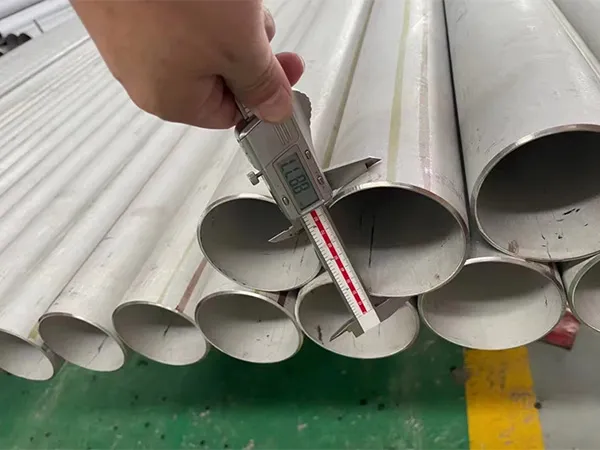
Dimensional inspections verify that the pipe outer diameter, wall thickness, length, and straightness meet specification requirements.
Mechanical tests may include tensile testing, hardness testing, and impact testing depending on the applicable standard and customer requirements.
These tests confirm that the pipe material meets the specified mechanical property limits such as yield strength and tensile strength.
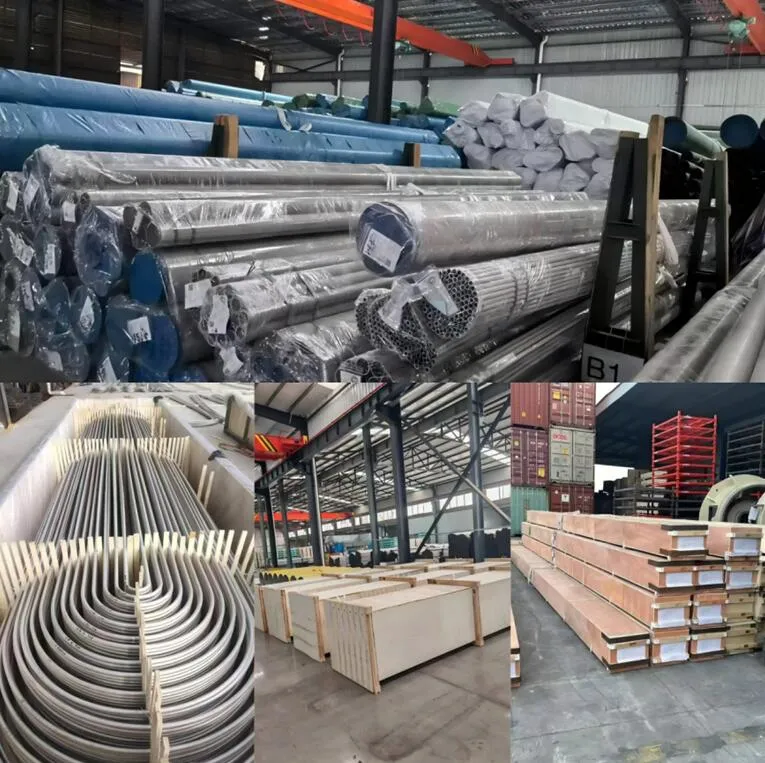
After all inspections are completed, seamless stainless steel pipes are prepared for shipment. Proper packaging is important to prevent mechanical damage and contamination during transportation.
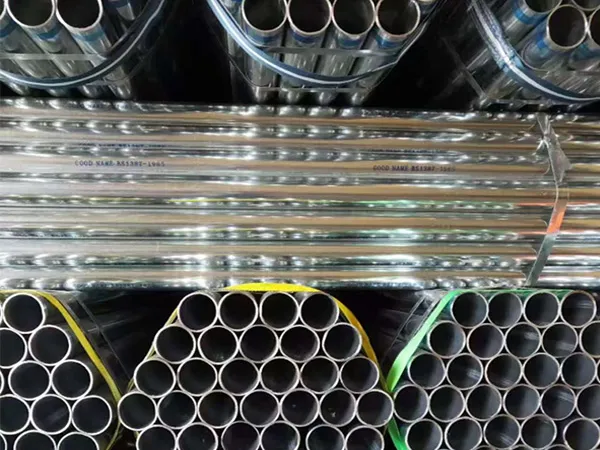
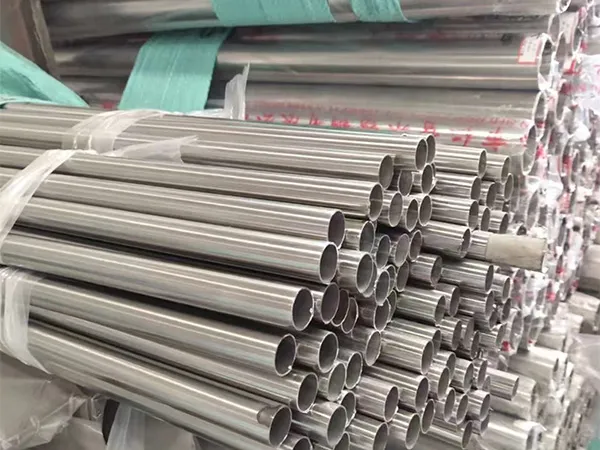
Pipes are typically bundled using steel straps and protected with plastic end caps. Additional protective wrapping may be applied to prevent moisture exposure during ocean transportation.
For international shipments, stainless steel pipes are often loaded into containers or transported as break-bulk cargo depending on pipe size and quantity.
At Womic Steel, logistics teams carefully plan packaging and transportation to ensure safe delivery to global customers.
Womic Steel is an experienced manufacturer of seamless stainless steel pipes with strong production capacity and strict quality management systems.
The company operates advanced pipe manufacturing equipment including hot rolling mills, cold drawing machines, and automated heat treatment furnaces. These facilities enable the production of stainless steel pipes with a wide range of sizes and specifications.
Comprehensive testing equipment ensures that every pipe meets international standards such as ASTM, ASME, API, and EN specifications.
Womic Steel also offers customized production services to meet specific project requirements, including special dimensions, stainless steel grades, and testing procedures.
With strong technical capabilities and global logistics experience, Womic Steel supplies high-quality seamless stainless steel pipes for industrial projects around the world.
Customized services. Rapid production. Global reach. We ensure your specific needs are fulfilled with precision and top-tier quality.
Website: www.womicstainless.com
Email:info@womicstainless.com
Tel/WhatsApp/WeChat:Victor: +86-15575100681 or Jack: +86-18390957568