Womic Stainless Steel Co., Ltd

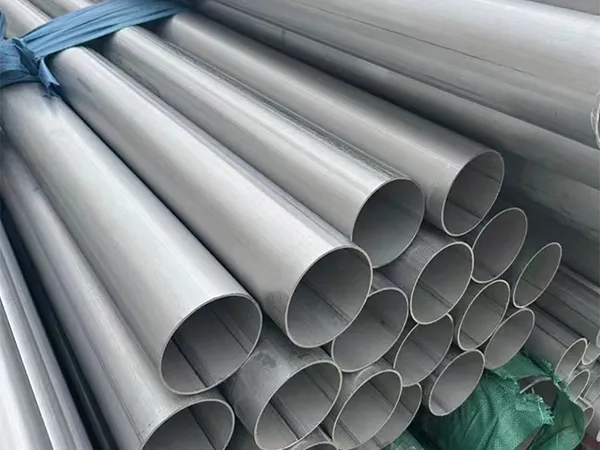
Stainless steel pipes can be produced using several different manufacturing processes depending on the required mechanical properties, dimensional accuracy, and industrial applications. Among the most commonly used production methods arehot rolled stainless steel pipesandcold drawn stainless steel pipes.
Both manufacturing processes are widely used in the stainless steel pipe industry, but they produce pipes with different characteristics in terms of dimensional tolerance, surface quality, mechanical properties, and application suitability.
Hot rolling is generally used for producing larger diameter pipes with standard dimensional tolerances and high production efficiency. Cold drawing, on the other hand, is used when higher dimensional precision, smoother surface finishes, and improved mechanical properties are required.
Understanding the differences between cold drawn stainless steel pipes and hot rolled stainless steel pipes is essential for engineers, designers, and procurement specialists when selecting the appropriate pipe type for specific industrial projects.
At Womic Steel, both hot rolled and cold drawn stainless steel pipes are manufactured using advanced production equipment and strict quality control systems to ensure reliable performance in demanding industrial environments.
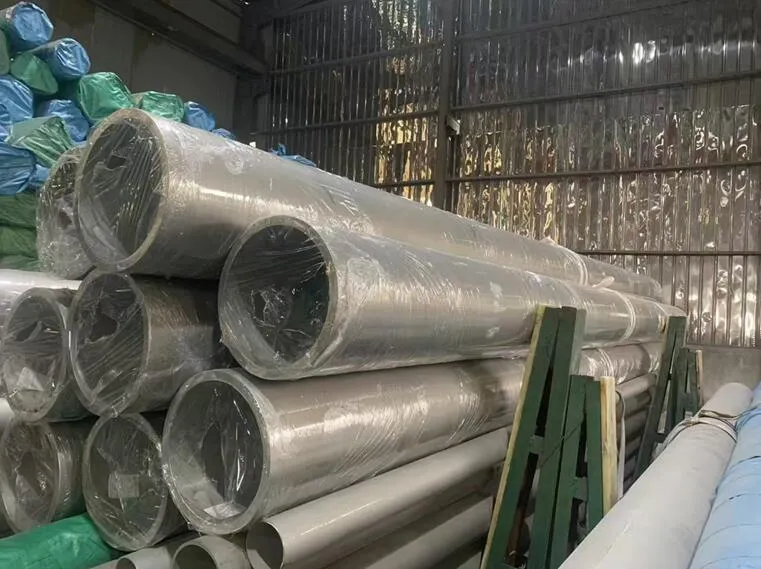
Hot rolled stainless steel pipes are produced at high temperatures where the material becomes highly plastic and easier to deform. The process begins with solid stainless steel billets that are heated to temperatures typically between1100°C and 1250°C.
Once the billet reaches the required temperature, it undergoes a rotary piercing process to create a hollow tube. The hollow shell is then passed through a series of hot rolling mills where rollers gradually reduce the wall thickness and increase the pipe length.
Hot rolling allows large deformation of the material while maintaining relatively low forming forces. This makes it suitable for producing pipes with larger diameters and thicker walls.
After the hot rolling stage, the pipes are cooled and may undergo additional finishing processes such as heat treatment, straightening, and surface cleaning.
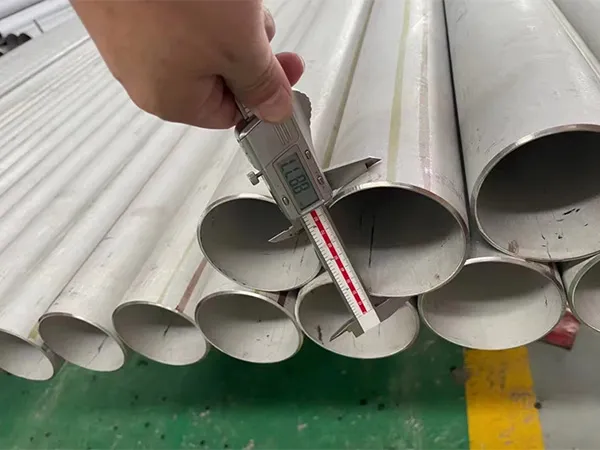
Hot rolled stainless steel pipes typically have slightly larger dimensional tolerances compared with cold finished pipes, but they are widely used in industrial piping systems where extremely tight tolerances are not required.
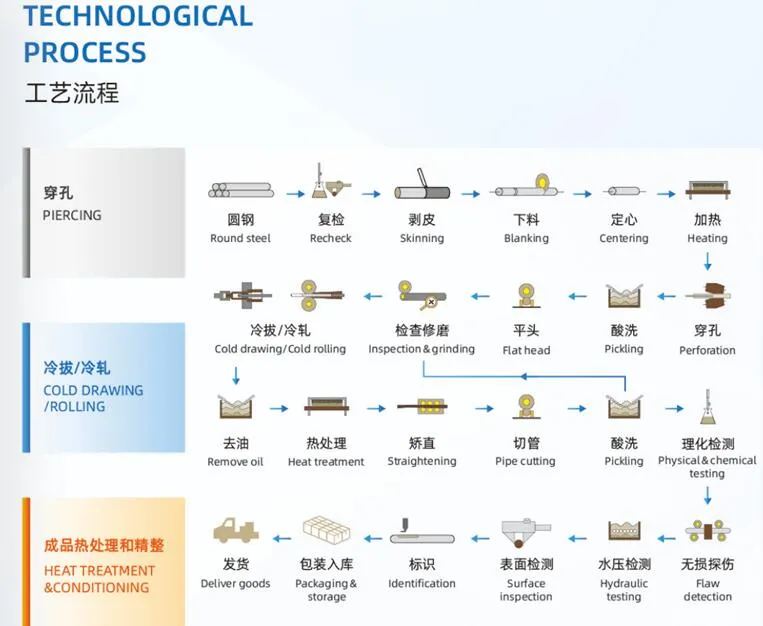
Cold drawn stainless steel pipes are produced by pulling hot rolled pipes through precision dies at room temperature. This process reduces the pipe diameter and wall thickness while improving dimensional accuracy and surface finish.
The cold drawing process usually involves multiple drawing stages. After each stage, the pipe may undergo intermediate heat treatment to restore ductility before further drawing operations.
Cold drawing significantly improves the dimensional precision of the pipe. It also enhances mechanical properties due to strain hardening of the material.
Because stainless steel alloys exhibit strong work hardening characteristics, cold drawing requires specialized equipment and careful process control to prevent cracking or deformation defects.
Cold drawn stainless steel pipes are typically used in applications requiring high dimensional accuracy, such as precision mechanical components, hydraulic cylinders, heat exchanger tubes, and instrumentation tubing.
One of the most important differences between hot rolled and cold drawn stainless steel pipes is dimensional accuracy.
Hot rolled pipes generally have wider tolerances in outer diameter and wall thickness because the forming process occurs at high temperatures where the material expands and contracts during cooling.
Cold drawn pipes, however, are produced through precision dies that allow much tighter dimensional control. The cold forming process eliminates many of the dimensional variations associated with hot rolling.
Because of this improved precision, cold drawn stainless steel pipes are often selected for applications where exact pipe dimensions are critical for system performance or assembly.
For example, heat exchanger tubing, precision mechanical components, and hydraulic equipment frequently require cold drawn pipes to ensure proper fit and alignment.
Surface quality is another important factor that differentiates hot rolled and cold drawn stainless steel pipes.
Hot rolled pipes typically have a rougher surface finish due to the high temperature deformation process. Oxide scale may form on the surface during heating and rolling, which must later be removed through pickling or surface treatment processes.
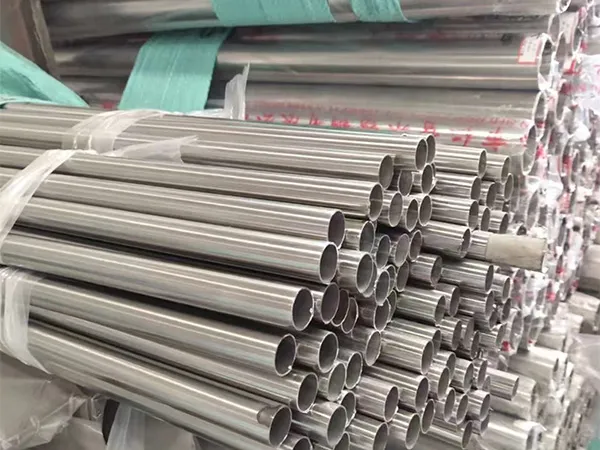
Cold drawn pipes, in contrast, have much smoother surface finishes because the drawing process occurs at room temperature using precision dies. The cold forming operation reduces surface irregularities and produces a more uniform surface texture.
Improved surface quality is particularly important in industries such as food processing, pharmaceutical manufacturing, and high-purity chemical systems where contamination must be minimized.
The manufacturing method also affects the mechanical properties of stainless steel pipes.
Hot rolled pipes typically have lower strength but higher ductility because the high-temperature forming process allows the material to maintain a relatively soft microstructure.
Cold drawn pipes experience strain hardening during the drawing process, which increases their yield strength and tensile strength. However, this strengthening effect may reduce ductility if not properly controlled.
To maintain a balance between strength and ductility, intermediate heat treatment may be applied during the cold drawing process to restore the material’s microstructure.
These mechanical property differences influence the selection of pipe types for various industrial applications.
Hot rolled stainless steel pipes are commonly used in general industrial piping systems where large pipe sizes and high production efficiency are required.
Typical applications include oil and gas pipelines, petrochemical processing systems, structural piping, and industrial fluid transportation networks.
Cold drawn stainless steel pipes are used in applications that require higher dimensional precision and improved mechanical properties. These include hydraulic equipment, precision machinery components, heat exchanger tubes, and instrumentation piping systems.
Because cold drawing provides tighter tolerances and better surface finishes, it is often preferred in industries where accuracy and cleanliness are essential.
Manufacturing costs also differ between hot rolled and cold drawn stainless steel pipes.
Hot rolling is generally more economical because it involves fewer processing steps and higher production speeds. Large quantities of pipes can be produced efficiently using hot rolling mills.
Cold drawing requires additional equipment, multiple drawing stages, and sometimes intermediate heat treatment. These additional processing steps increase production costs compared with hot rolled pipes.
However, the improved dimensional accuracy and mechanical properties of cold drawn pipes often justify the higher manufacturing cost in precision applications.
Choosing between hot rolled and cold drawn stainless steel pipes depends on several factors including dimensional tolerance requirements, mechanical property requirements, and application conditions.
For general industrial piping systems where large diameters and cost efficiency are important, hot rolled stainless steel pipes are often the preferred choice.
For precision engineering applications requiring tighter tolerances, improved surface quality, and enhanced mechanical properties, cold drawn stainless steel pipes provide better performance.
Engineers and procurement specialists should evaluate these factors carefully when selecting stainless steel pipes for specific projects.
Womic Steel is a professional manufacturer of stainless steel pipes with extensive experience in both hot rolled and cold drawn pipe production.
The company operates advanced pipe manufacturing lines equipped with modern rolling mills, cold drawing machines, and heat treatment facilities. These production capabilities allow Womic Steel to manufacture stainless steel pipes with a wide range of dimensions and specifications.
Strict quality control procedures ensure that all pipes meet international standards such as ASTM, ASME, and EN specifications.
Womic Steel offers customized pipe production services to meet specific project requirements, including special sizes, wall thicknesses, and stainless steel grades.
Through reliable manufacturing capability and strong global logistics support, Womic Steel supplies high-quality stainless steel pipes to customers in industries including energy, petrochemical processing, marine engineering, and industrial infrastructure development.
Customized services. Rapid production. Global reach. We ensure your specific needs are fulfilled with precision and top-tier quality.
Website: www.womicstainless.com
Email:info@womicstainless.com
Tel/WhatsApp/WeChat:Victor: +86-15575100681 or Jack: +86-18390957568