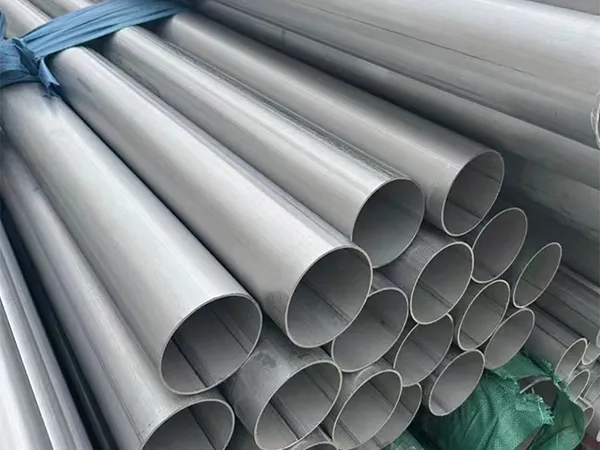
Womic Stainless Steel Co., Ltd

EN 10217-7 is a European standard that specifies technical delivery conditions for welded stainless steel pipes intended for pressure purposes. The specification is issued by the European Committee for Standardization and is widely applied across Europe and international engineering projects that follow EN piping standards.
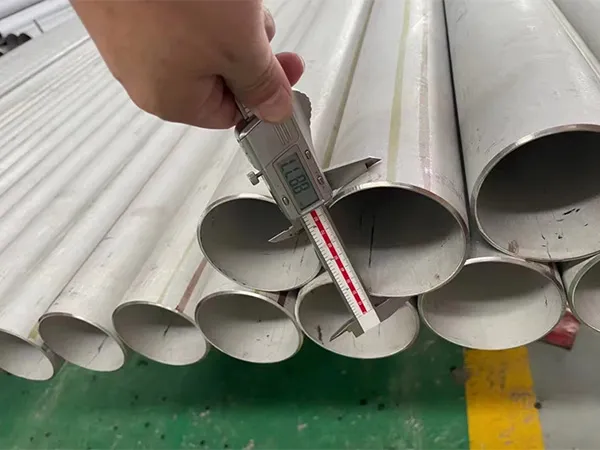
Unlike seamless pipe specifications such as EN 10216-5, EN 10217-7 focuses specifically on welded stainless steel pipes. These pipes are manufactured by forming stainless steel strip or plate into tubular shapes and joining the edges through welding processes such as TIG, laser welding, or plasma welding.
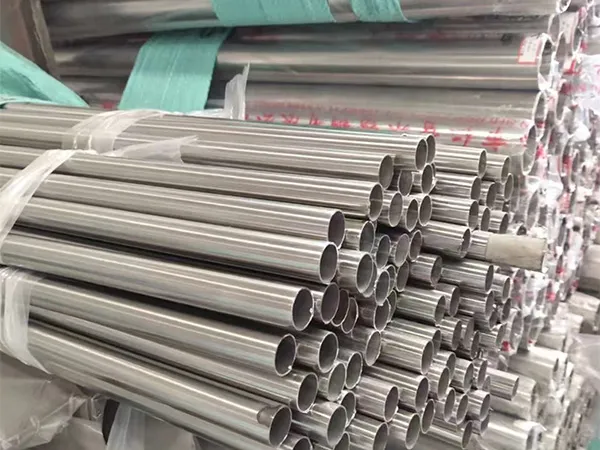
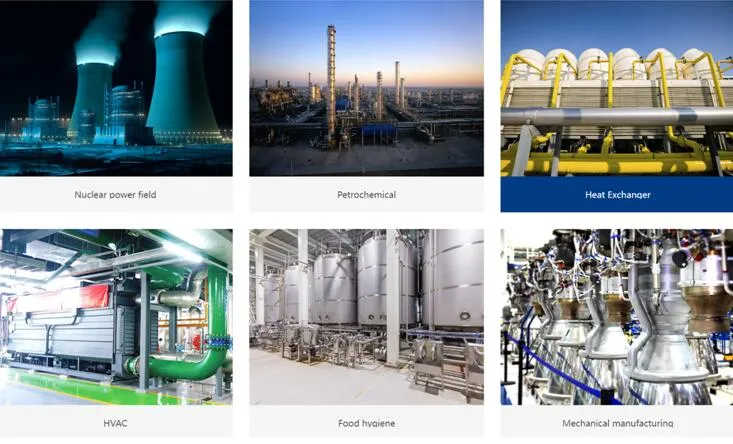
EN 10217-7 stainless steel pipes are commonly used in industrial systems where corrosion resistance, pressure resistance, and dimensional stability are required. These welded pipes are widely utilized in petrochemical plants, heat exchanger systems, food processing pipelines, water treatment facilities, and pressure piping systems.
Because welded stainless steel pipes offer cost efficiency, high production capacity, and wide dimensional flexibility, EN 10217-7 pipes are often selected for large infrastructure projects and industrial pipelines where seamless pipes may not be necessary.
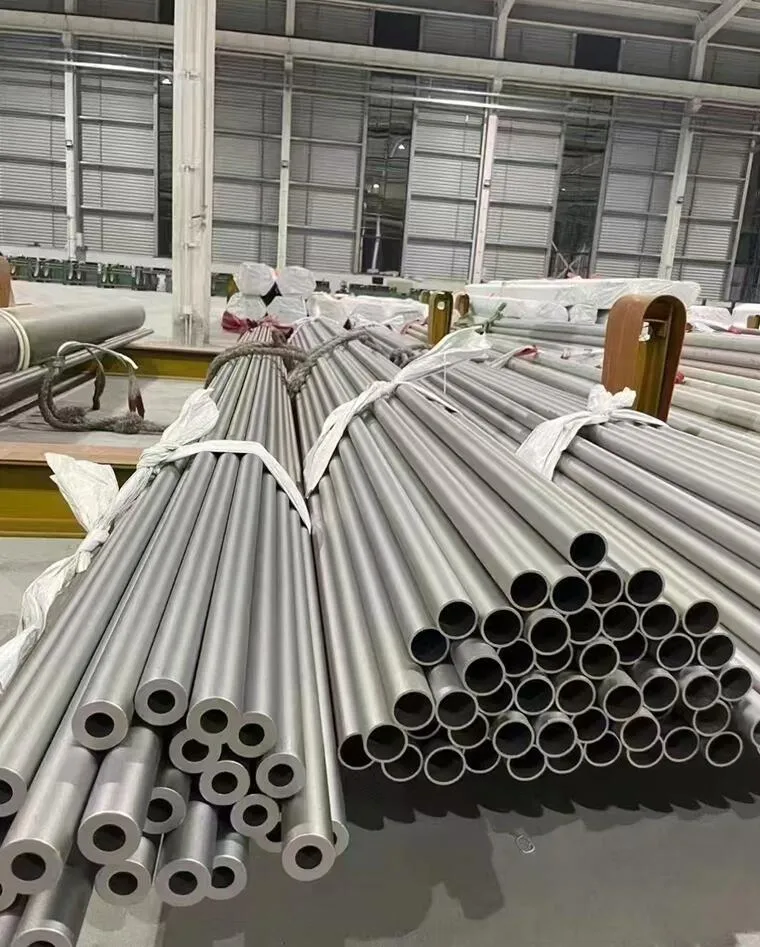
The EN 10217-7 standard specifies requirements for welded circular stainless steel tubes used for pressure applications. The standard includes detailed provisions covering material grades, manufacturing processes, mechanical properties, chemical composition limits, inspection methods, and delivery conditions.
EN 10217-7 stainless steel pipes are intended for use in pressure equipment designed according to European pressure regulations. As a result, strict quality control and traceability requirements are mandatory.
The scope of EN 10217-7 includes:
Austenitic stainless steel welded pipes
Austenitic-ferritic (duplex) stainless steel welded pipes
Pipes supplied in solution annealed condition
Pipes suitable for high corrosion resistance environments
The standard also specifies different testing categories depending on the level of inspection required by the purchaser or project specification.
Welded stainless steel pipes under EN 10217-7 are produced using advanced forming and welding technologies designed to ensure structural integrity and consistent pipe quality.
The typical production process includes:
Stainless steel strip or plate preparation
Roll forming into cylindrical pipe shape
Longitudinal welding using TIG, plasma, or laser welding
Weld seam heat treatment when required
Solution annealing heat treatment
Surface finishing including pickling and passivation
Non-destructive testing of weld seam
Modern welding technologies allow EN 10217-7 pipes to achieve weld seam quality comparable to base metal performance. High precision welding also ensures minimal distortion and excellent dimensional accuracy.
Compared with seamless stainless steel pipes, welded pipes can be produced in larger diameters and thinner wall thicknesses, making them suitable for many industrial applications.
The EN 10217-7 standard includes a wide range of stainless steel grades used for welded pipes. These materials are selected based on corrosion resistance, strength, temperature resistance, and weldability.
Common grades include:
|
EN Grade |
Material Number |
Equivalent ASTM Grade |
|
X5CrNi18-10 |
1.4301 |
304 |
|
X2CrNi19-11 |
1.4306 |
304L |
|
X5CrNiMo17-12-2 |
1.4401 |
316 |
|
X2CrNiMo17-12-2 |
1.4404 |
316L |
|
X6CrNiTi18-10 |
1.4541 |
321 |
|
X6CrNiNb18-10 |
1.4550 |
347 |
|
X2CrNiMoN22-5-3 |
1.4462 |
Duplex 2205 |
Austenitic stainless steels such as 304L and 316L are widely used in pipelines requiring excellent corrosion resistance and good weldability.
Duplex stainless steel grades such as 1.4462 provide higher strength and improved resistance to chloride stress corrosion cracking.
Chemical composition is a critical factor that determines corrosion resistance and mechanical performance in stainless steel pipes.
Below is a comparison of several commonly used stainless steel materials in EN 10217-7 welded pipes.
|
Grade |
Cr (%) |
Ni (%) |
Mo (%) |
N (%) |
C (%) |
|
1.4301 |
17.5–19.5 |
8–10.5 |
— |
— |
≤0.07 |
|
1.4306 |
18–20 |
10–12 |
— |
— |
≤0.03 |
|
1.4404 |
16.5–18.5 |
10–13 |
2–2.5 |
— |
≤0.03 |
|
1.4462 |
21–23 |
4.5–6.5 |
2.5–3.5 |
0.10–0.22 |
≤0.03 |
Higher chromium content improves oxidation resistance.
Nickel increases toughness and ductility.
Molybdenum enhances resistance to pitting corrosion, especially in chloride environments.
Nitrogen strengthens duplex stainless steels and improves resistance to localized corrosion.
These alloying elements make EN 10217-7 pipes suitable for aggressive industrial environments.
Mechanical performance is essential for pipes used in pressure applications. EN 10217-7 specifies minimum mechanical properties to ensure safety and reliability.
Typical values include:
|
Grade |
Yield Strength (MPa) |
Tensile Strength (MPa) |
Elongation (%) |
|
1.4301 |
≥190 |
500–700 |
≥40 |
|
1.4306 |
≥170 |
450–650 |
≥40 |
|
1.4404 |
≥170 |
485–680 |
≥40 |
|
1.4462 |
≥450 |
620–880 |
≥25 |
Duplex stainless steels such as 1.4462 offer significantly higher yield strength compared to austenitic grades, which allows thinner wall thickness and lighter piping systems in certain applications.
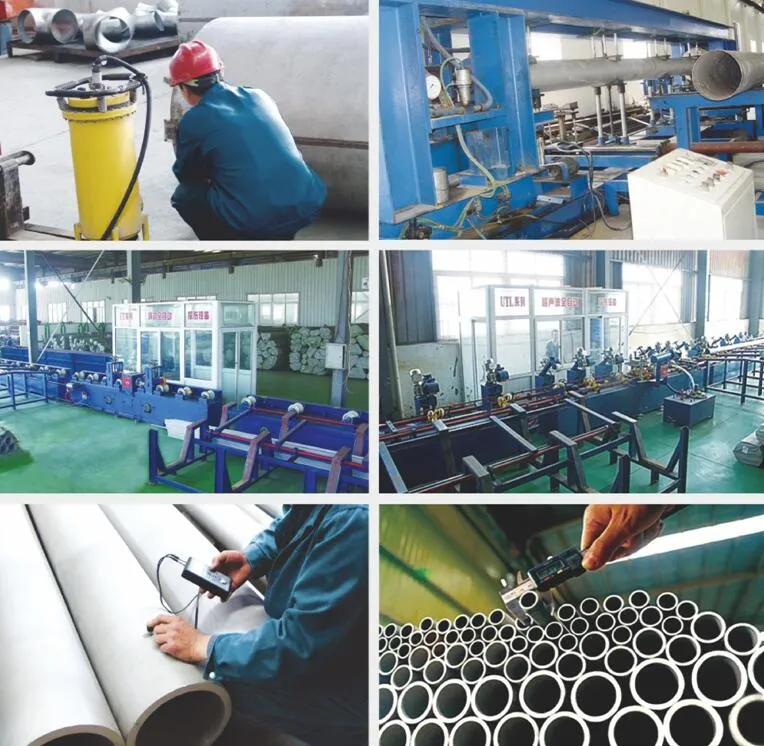
To ensure reliability in pressure systems, EN 10217-7 welded stainless steel pipes must undergo strict inspection and testing procedures.
Typical inspection requirements include:
Chemical composition analysis
Mechanical property testing
Hydrostatic pressure testing
Non-destructive examination of weld seam
Ultrasonic testing or eddy current testing
Visual inspection and dimensional verification
The weld seam is a critical area that receives special attention during inspection to ensure there are no defects that could compromise pipe performance.
Testing procedures are conducted according to relevant European testing standards.
Both EN 10217-7 and EN 10216-5 standards apply to stainless steel pipes used for pressure purposes, but the manufacturing processes differ.
Key differences include:
|
Feature |
EN 10217-7 |
EN 10216-5 |
|
Manufacturing |
Welded |
Seamless |
|
Raw Material |
Strip or plate |
Solid billet |
|
Diameter Range |
Wider large diameters |
Usually smaller to medium |
|
Cost |
More economical |
Higher cost |
|
Applications |
General pressure piping |
Critical pressure systems |
Welded pipes under EN 10217-7 are widely used in pipelines, heat exchangers, and industrial systems where cost efficiency and dimensional flexibility are important.
Seamless pipes under EN 10216-5 are often preferred for high-pressure or high-temperature environments where maximum structural integrity is required.
EN 10217-7 welded stainless steel pipes are widely used in many industries that require corrosion-resistant and pressure-resistant piping systems.
Typical applications include:
Petrochemical processing facilities transporting corrosive chemicals.
Heat exchanger systems used in industrial process plants.
Food and beverage processing pipelines requiring hygienic stainless steel materials.
Water treatment systems where corrosion resistance is critical.
Energy infrastructure including thermal power plants and renewable energy systems.
Because welded pipes can be produced efficiently in large quantities, they are often selected for large-scale pipeline networks.
Womic Steel is a professional manufacturer specializing in stainless steel pipes for global industrial markets. The company produces high-quality welded stainless steel pipes that comply with international standards including EN 10217-7.
With advanced pipe forming lines and precision welding technology, Womic Steel manufactures welded stainless steel pipes with excellent dimensional accuracy, reliable weld quality, and superior corrosion resistance.
The company supplies a wide range of stainless steel grades including 304, 304L, 316, 316L, 321, 347, and duplex stainless steel 2205. These materials are widely used in petrochemical plants, offshore engineering, chemical processing industries, and energy infrastructure projects.
Womic Steel production facilities are equipped with modern welding equipment, heat treatment furnaces, non-destructive testing systems, and advanced inspection laboratories. Each pipe undergoes comprehensive quality control including chemical composition analysis, mechanical testing, weld inspection, and dimensional verification.
With strong manufacturing capacity and international project experience, Womic Steel provides stainless steel piping solutions for demanding engineering applications worldwide.
Customized services. Rapid production. Global reach. We ensure your specific needs are fulfilled with precision and top-tier quality.
Website: www.womicstainless.com
Email:info@womicstainless.com
Tel/WhatsApp/WeChat:Victor: +86-15575100681 or Jack: +86-18390957568