Womic Stainless Steel Co., Ltd

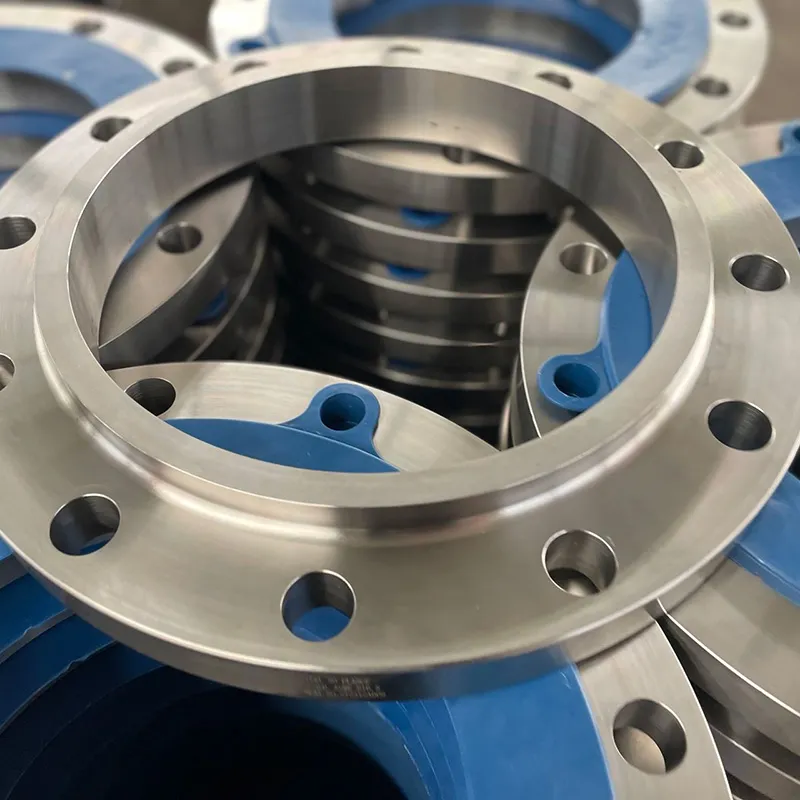
Exceptional Pitting and Crevice Corrosion Resistance: PRE ≥ 45 (typically 45-50) due to high chromium (20-23%), molybdenum (8-10%), and niobium (3.15-4.15%) content, providing superior resistance in seawater, brackish water, and aggressive chemical media – the highest among commercial nickel alloys for seawater service.
Ultra-High Strength: Yield strength ≥ 415 MPa in annealed condition; cold worked and aged options available for even higher strength requirements (YS up to 860 MPa), approximately 2.5 times that of 316L and comparable to super duplex.
Outstanding Seawater Compatibility: No crevice corrosion or pitting, even in stagnant seawater or high-velocity conditions (up to 20 m/s), significantly outperforming super duplex 2507 in long-term seawater exposure.
Superior Chloride Stress Corrosion Cracking Resistance: High nickel content (≥58%) provides outstanding resistance to chloride-induced SCC and sulfide-induced SSCC, out-performing all stainless steel and duplex grades.
Excellent High-Temperature Strength and Oxidation Resistance: Maintains excellent mechanical properties up to 980°C (1800°F) with outstanding creep resistance, oxidation resistance, and carburization resistance.
Niobium Stabilization – No Sensitization: Niobium addition (3.15-4.15%) stabilizes the alloy against intergranular corrosion and sensitization, eliminating the need for post-weld heat treatment.
NACE MR0175 / ISO 15156 Compliant: Fully qualified for sour service applications with the highest allowable H₂S partial pressures, documented HIC and SSC test reports available.
Excellent Resistance to Seawater Biofouling: Superior performance in marine environments with excellent resistance to biofouling, reducing maintenance requirements.
High Resistance to Erosion and Corrosion Fatigue: Outstanding resistance to high-velocity seawater, slurry, and erosion-corrosion applications, making it ideal for pump and valve flanges.
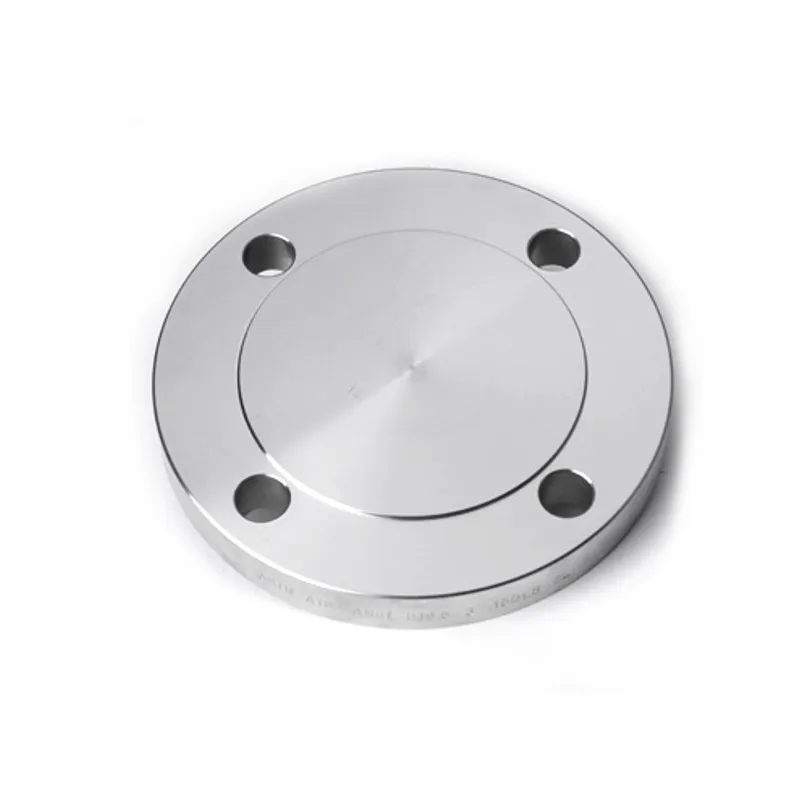
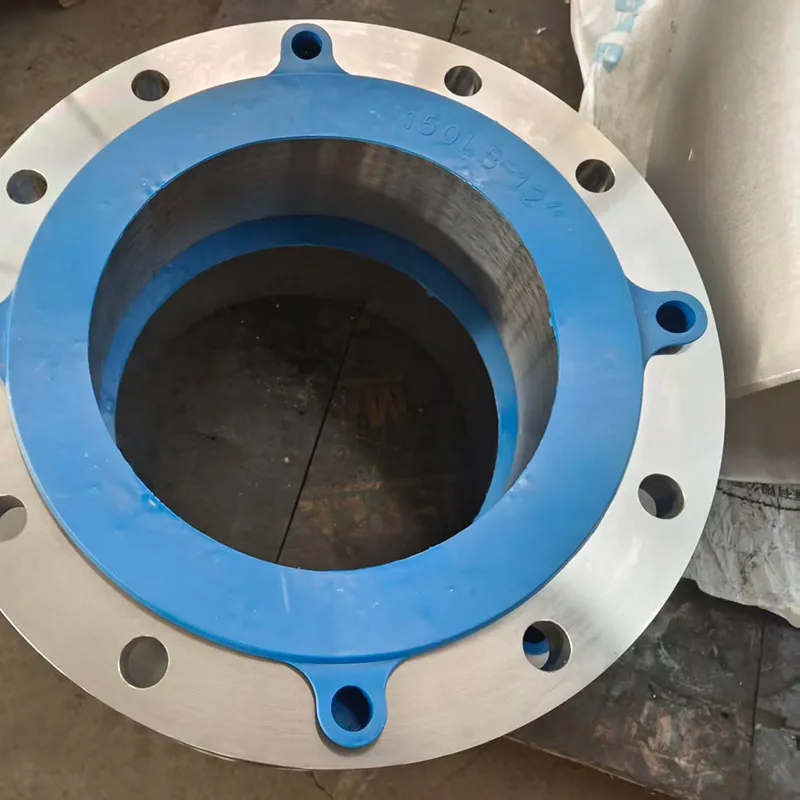
Full Range of Types: Weld neck (WN), slip-on (SO), blind (BL), socket weld (SW), threaded (TH), lap joint (LJ), plate flanges, and orifice flanges.
Pressure Ratings: Available in Class 150, 300, 600, 900, 1500, and 2500 (PN6 to PN400 in metric equivalents).
Excellent Weldability: Offers excellent weldability with matching filler metals (ERNiCrMo-3 or ERNiCrMo-4). No preheat or post-weld heat treatment required.
Broad Temperature Range: Maintains excellent properties from cryogenic (-196°C) to high temperature (980°C), suitable for LNG and thermal oxidizer applications.
International Certifications: Flanges can be certified by ABS, BV, DNV, LR, GL, RINA, CCS, KR, and NK, and comply with NORSOK M-650, NACE MR0175, API 6A, ASME, and EN standards.
|
Standard |
Description |
Corresponding Alloy 625 Grade |
|
ASME B16.5 |
Pipe flanges and flanged fittings (≤24″) |
ASTM B564 UNS N06625 |
|
ASME B16.47 |
Large diameter steel flanges (26″–60″) Series A/B |
ASTM B564 UNS N06625 |
|
EN 1092-1 |
European standard flanges |
2.4856 (NiCr22Mo9Nb) |
|
JIS B2220 |
Japanese standard steel pipe flanges |
NW6625 |
|
GB/T 9112 |
Chinese national standard flanges |
NS625 |
|
MSS SP-44 |
Steel pipeline flanges |
N06625 |
|
NORSOK M-650 |
Offshore material qualification |
Alloy 625 |
|
API 6A |
Wellhead and Christmas tree flanges |
UNS N06625 |
|
API 17E |
Subsea umbilicals specification |
UNS N06625 |
|
ISO 13628-5 |
Subsea umbilicals – recommended practice |
UNS N06625 |
|
NACE MR0175 / ISO 15156 |
Sour service compliance (highest allowable limits) |
Alloy 625 (annealed) |
These standards ensure that our Alloy 625 stainless steel flanges meet global requirements for chemical composition, mechanical properties, dimensional tolerances, and pressure-temperature ratings for extreme corrosive and high-temperature service.
|
Element |
Ni |
Cr |
Fe |
Mo |
Nb+Ta |
C |
Mn |
P |
S |
Si |
Al |
Ti |
Co |
|
Alloy 625 |
≥58.0 |
20.0–23.0 |
≤5.0 |
8.0–10.0 |
3.15–4.15 |
≤0.10 |
≤0.5 |
≤0.015 |
≤0.015 |
≤0.5 |
≤0.4 |
≤0.4 |
≤1.0 |
Alloy 625 (UNS N06625) is a nickel-chromium-molybdenum alloy with niobium stabilization. The high molybdenum content (8-10%) and niobium (3.15-4.15%) provide exceptional pitting resistance (PRE ≥ 45), the highest among nickel alloys for seawater service. Unlike precipitation-hardenable alloys like Inconel 718, Alloy 625 is solid solution strengthened with niobium stabilization, offering excellent weldability without post-weld heat treatment while maintaining outstanding high-temperature strength.
Comparison of PREN (Pitting Resistance Equivalent) Values:
|
Grade |
Nickel (%) |
PRE |
Seawater Suitability |
High-Temperature Capability |
Relative Cost |
|
316/316L |
10–14 |
24–26 |
Limited |
400°C |
Low |
|
Duplex 2205 |
4.5–6.5 |
34–35 |
Good |
300°C |
Medium |
|
Super Duplex 2507 |
6–8 |
42–45 |
Excellent |
300°C |
High |
|
Alloy 825 |
38–46 |
38–42 |
Excellent |
540°C |
Very High |
|
Alloy 625 |
≥58 |
≥45 |
Outstanding |
980°C |
Premium |
|
Property |
Unit |
Alloy 625 (Annealed) |
Alloy 625 (Cold Worked) |
Alloy 625 (Aged - Premium) |
|
Tensile Strength |
MPa |
≥825 |
≥900 |
≥1000 |
|
Yield Strength (0.2% offset) |
MPa |
≥415 |
≥620 |
≥760 |
|
Elongation |
% |
≥30 |
≥20 |
≥15 |
|
Hardness (typical) |
HRC |
≤25 |
25–35 |
30–38 |
|
Density |
g/cm³ |
8.44 |
8.44 |
8.44 |
|
Melting Range |
°C |
1290–1350 |
1290–1350 |
1290–1350 |
|
Thermal Conductivity (20°C) |
W/m·K |
9.8 |
9.8 |
9.8 |
|
Coefficient of Thermal Expansion (20–100°C) |
μm/m·K |
12.8 |
12.8 |
12.8 |
|
Modulus of Elasticity (20°C) |
GPa |
205 |
205 |
205 |
High-Temperature Tensile Properties (Annealed Condition, Typical Values):
|
Temperature (°C) |
Tensile Strength (MPa) |
Yield Strength (MPa) |
Elongation (%) |
|
20 |
900–1000 |
450–550 |
35–45 |
|
200 |
850–950 |
400–500 |
35–45 |
|
400 |
800–900 |
380–480 |
35–45 |
|
500 |
750–850 |
370–470 |
35–45 |
|
600 |
700–800 |
360–460 |
35–45 |
|
700 |
600–700 |
300–380 |
40–50 |
|
800 |
450–550 |
200–280 |
45–55 |
|
900 |
300–400 |
120–180 |
50–60 |
|
980 |
200–280 |
80–120 |
55–65 |
Creep Rupture Strength (Annealed Condition, Typical Values):
|
Temperature (°C) |
1000 Hour Stress (MPa) |
10,000 Hour Stress (MPa) |
100,000 Hour Stress (MPa) |
|
500 |
500–600 |
400–500 |
300–400 |
|
600 |
300–400 |
200–300 |
150–200 |
|
700 |
150–200 |
100–150 |
60–80 |
|
800 |
60–80 |
35–45 |
20–25 |
NACE MR0175 / ISO
15156 Compliance:
Alloy 625 is fully qualified for sour service applications up to the highest
limits specified in NACE MR0175/ISO 15156 for nickel-based alloys. The alloy
exhibits exceptional resistance to sulfide stress cracking (SSC) and hydrogen
induced cracking (HIC) in H₂S-containing environments. Maximum sour service
temperature: 232°C (450°F).
Maximum Recommended Service Temperatures:
|
Service Type |
Maximum Temperature |
|
Continuous Service (Seawater/Chloride) |
260°C (500°F) |
|
Continuous Service (Oxidizing Atmosphere) |
980°C (1800°F) |
|
Continuous Service (Reducing Atmosphere) |
870°C (1600°F) |
|
Sour Service (NACE MR0175) |
232°C (450°F) |
|
Intermittent Service |
1038°C (1900°F) |
|
Cryogenic Service |
-196°C (-321°F) |
Critical Note: Alloy 625 is a solid solution strengthened alloy and does not respond to conventional precipitation hardening like Inconel 718. Cold working is the primary method to increase strength beyond the annealed condition. The alloy must be water quenched after annealing to prevent the precipitation of embrittling phases. For maximum strength in high-pressure subsea applications, cold worked Alloy 625 (YS ≥ 620 MPa) is recommended.
|
Class |
Rating (psig) @ 100°F |
Rating (psig) @ 300°F |
Rating (psig) @ 500°F |
Rating (psig) @ 700°F |
Rating (psig) @ 800°F |
|
150 |
275 |
230 |
200 |
175 |
160 |
|
300 |
720 |
600 |
520 |
460 |
420 |
|
600 |
1440 |
1200 |
1040 |
920 |
840 |
|
900 |
2160 |
1800 |
1560 |
1380 |
1260 |
|
1500 |
3600 |
3000 |
2600 |
2300 |
2100 |
|
2500 |
6000 |
5000 |
4330 |
3830 |
3500 |
Reference: Based on ASME B16.5 for nickel alloys. For higher temperatures up to 980°C, pressure ratings must be significantly derated; consult ASME Section VIII or project specifications.
|
Flange Type |
Common Faces |
Pressure Classes |
Manufacturing Method |
Typical Alloy 625 Applications |
|
Weld Neck (WN) |
RF, RTJ, FF |
150–2500 |
Forged + Machined |
Deepwater subsea manifolds, HP/HT sour gas |
|
Slip-On (SO) |
RF, FF |
150–600 |
Forged + Machined |
Seawater pump connections, low pressure |
|
Blind (BL) |
RF, RTJ, FF |
150–2500 |
Forged + Machined |
Subsea pipeline closures, vessel manways |
|
Socket Weld (SW) |
RF, FF |
150–1500 |
Forged + Machined |
Small bore chemical injection, umbilical |
|
Threaded (TH) |
RF, FF |
150–600 |
Forged + Machined |
Non-welded seawater connections |
|
Lap Joint (LJ) |
Flat face |
150–600 |
Forged + Machined |
Systems requiring frequent dismantling |
|
Plate Flange |
Flat face |
150 |
Plate cutting + Machining |
Low-pressure seawater intake |
|
Orifice Flange |
RF, RTJ |
300–2500 |
Forged + Machined |
HP/HT subsea flow measurement |
|
Parameter |
Weld Neck (WN) |
Slip-On (SO) |
Blind (BL) |
Lap Joint (LJ) |
Socket Weld (SW) |
|
Nominal Size (DN/NPS) |
1/2″ – 60″ |
1/2″ – 24″ |
1/2″ – 60″ |
1/2″ – 24″ |
1/2″ – 4″ |
|
Pressure Class |
150 – 2500 |
150 – 600 |
150 – 2500 |
150 – 600 |
150 – 1500 |
|
Facing Types |
RF, RTJ, FF, T&G, M&F |
RF, FF |
RF, RTJ, FF |
Flat face |
RF, FF |
|
Hub Types |
Long taper, short taper |
Straight |
N/A |
Studded |
Straight |
Standard Dimensions: ASME B16.5 for sizes up to 24″, and ASME B16.47 Series A/B for large diameters up to 60″. EN 1092-1 dimensions available upon request.
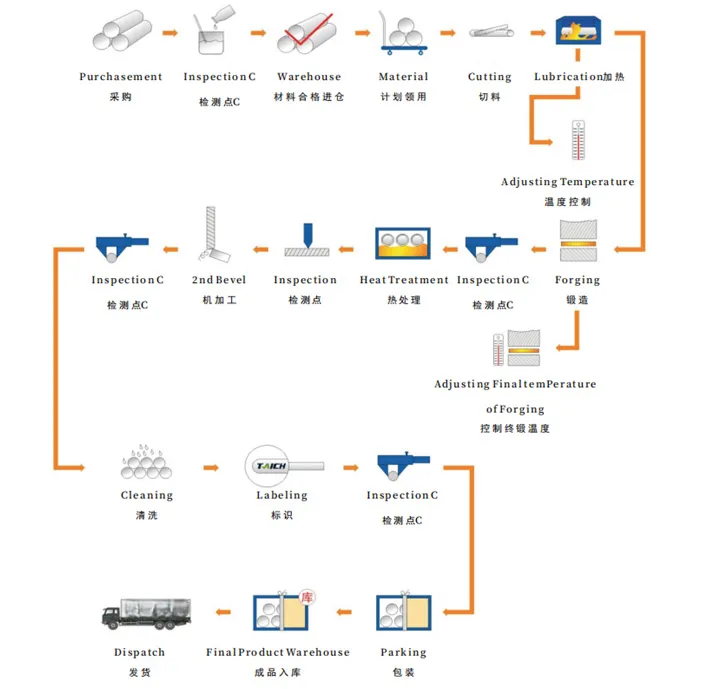
Raw Material Selection: High-quality Alloy 625 (UNS N06625) nickel alloy billets from certified premium mills (Special Metals, VDM Metals, Haynes International) with certified chemical composition (Ni ≥58%, Cr 20-23%, Mo 8-10%, Nb 3.15-4.15% verification) and traceability. Material is VIM-VAR (Vacuum Induction Melted – Vacuum Arc Remelted) for optimal cleanliness.
Cutting & Heating: Material is cut to precise weight using band saws, then induction-heated to forging temperature (1150–1200°C). Temperature control is critical for nickel alloys.
Forging: Hot forged using hydraulic presses (3000–8000 tons) with strict temperature control. Nickel alloys require careful reduction rates to maintain forgeability and prevent cracking.
Heat Treatment – Solution Annealing: Heat treatment at 1095–1205°C followed by water quenching to dissolve carbides and restore properties.
Cold Working (Optional): For high-strength subsea applications, additional cold working (forging or drawing) to achieve higher yield strength (≥620 MPa).
Machining: CNC lathes and milling machines produce precise dimensions, bolt holes, and facing surfaces. Special tooling and slower cutting speeds required for nickel alloys.
Surface Finishing: Raised face serration, flat facing, or RTJ groove machining per ASME B16.5 requirements.
Marking: Laser engraving or stamping with grade (N06625/Alloy 625), size (NPS), class, heat number, heat treatment condition, manufacturer identification, and standard.
Inspection & Testing: Dimensional check, PMI, hardness test, NDT, and corrosion testing as required.
Surface Treatment: Pickling and passivation using specialized pickling acids optimized for high-molybdenum nickel alloys; thorough rinsing required.
|
Surface Finish |
Description |
Roughness (μinch) |
Typical Alloy 625 Application |
|
Raised Face (RF) |
Standard serrated concentric or spiral finish |
125–250 |
Seawater piping, subsea manifolds |
|
Flat Face (FF) |
Full face contact, smooth or serrated |
125–250 |
Flat-faced equipment connections |
|
Ring Type Joint (RTJ) |
Grooved for oval or octagonal ring gasket |
63 max |
High-pressure subsea, HP/HT sour gas |
|
Tongue & Groove (T&G) |
Matched tongue and groove facing |
125 min |
Deepwater subsea connections |
|
Male & Female (M&F) |
Matched male/female facing |
125 min |
Subsea equipment flange connections |
|
Pickled & Passivated |
Chemically cleaned oxide-free surface |
As machined |
All Alloy 625 flange applications |
|
Electropolished |
Ultra-smooth, mirror-like surface |
≤20 |
High-purity, subsea instrumentation |
|
Bright Annealed (BA) |
Mirror-like surface (small sizes only) |
≤20 |
High-purity subsea applications |
Each Alloy 625 flange face is inspected for surface roughness, concentricity, and absence of defects.
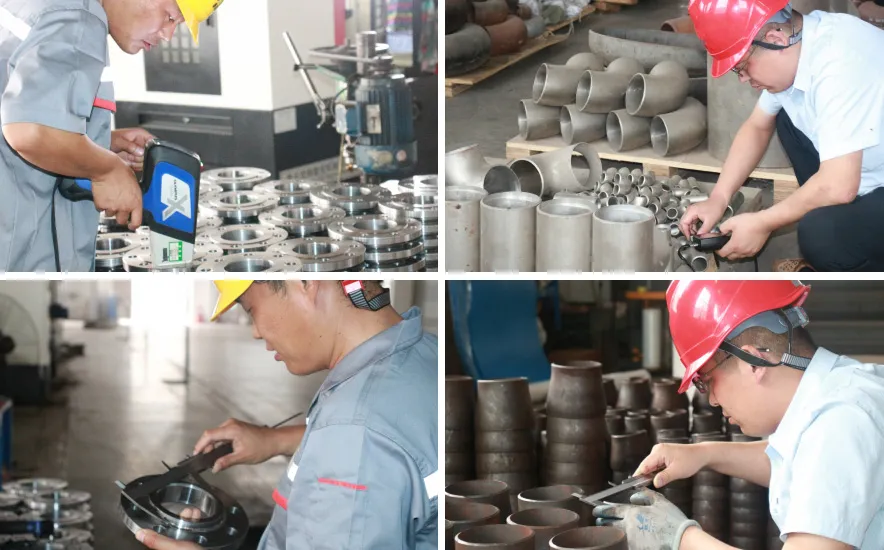
Chemical Analysis: PMI 100% verification using handheld XRF spectrometer for Ni, Cr, Mo, Nb (niobium verification critical for stabilization).
Mechanical Testing: Tensile strength (≥825 MPa), yield strength (≥415 MPa or higher if cold worked), elongation (≥30% for annealed, ≥20% for cold worked), hardness.
Intergranular Corrosion Test: ASTM G28 – validates resistance to intergranular corrosion (mandatory for stabilized grades).
Pitting Corrosion Test: ASTM G48 – ferric chloride pitting test for seawater service validation.
Dimensional Inspection: OD, ID, bolt circle, bolt hole alignment, thickness, flatness using calibrated gauges and CMM.
Thread Inspection: NPT thread verification using GO/NO-GO gauges per ANSI B1.20.1.
NDT – Liquid Penetrant Testing (PT): 100% for surface defects.
NDT – Ultrasonic Testing (UT): For internal flaws upon request.
NDT – Radiographic Testing (RT): For critical subsea flanges upon request.
Sour Service Qualification (upon request): HIC per NACE TM0284, SSC per NACE TM0177.
Third-Party Inspection: SGS, BV, DNV, TUV, LR, or ABS on customer request.
|
Parameter |
Size Range |
Permitted Tolerance |
|
Outside Diameter (OD) |
≤4″ (DN100) |
±1.6 mm |
|
Outside Diameter (OD) |
4″–8″ (DN100–DN200) |
±2.4 mm |
|
Outside Diameter (OD) |
≥10″ (DN250) |
±3.2 mm |
|
Bolt Circle Diameter |
All sizes |
±0.8 mm |
|
Bolt Hole Spacing |
Adjacent holes |
±0.5 mm |
|
Flange Thickness |
All sizes |
+3.0 mm / -0.0 mm |
|
Hub Diameter |
≤4″ |
±1.6 mm |
|
Hub Diameter |
≥6″ |
±2.4 mm |
|
RF Surface Roughness |
All sizes |
125–250 μinch |
|
RF Height |
All sizes |
1.6 mm ±0.8 mm |
Deepwater Subsea Oil & Gas: Subsea manifold termination flanges, umbilical termination assemblies (UTA), subsea distribution unit flanges, pipeline end termination (PLET) flanges, jumpers, Christmas tree flange connections, wellhead connectors, choke and kill line flanges (NACE MR0175 compliant, API 6A certified, API 17E compliant, ISO 13628-5 certified, ABS/BV/DNV/LR certified).
Seawater Systems (High Performance): High-pressure seawater injection pump flanges, deepwater seawater lift system flanges, firewater system flanges for offshore platforms, high-velocity seawater intake flanges, seawater reverse osmosis (SWRO) flange connections.
Subsea Umbilicals: Chemical injection flange connections, hydraulic control line flanges, electrical umbilical termination flanges, MEG injection line flanges, subsea control system flange connections.
Aerospace & Defense: Aircraft hydraulic system flanges, fuel manifold flanges, aerospace test stand flanges, rocket engine propellant line flanges, missile launch system flange connections.
Thermal Oxidizers & High-Temperature Ducting: Thermal oxidizer inlet/outlet flanges, high-temperature process heater flanges, incinerator flue gas flanges, high-temperature ductwork flanges (up to 980°C).
Chemical Processing (Aggressive): Hydrochloric acid (HCl) injection flanges, high-pressure acid reactor flanges, chlor-alkali heat exchanger flanges, vinyl chloride monomer (VCM) processing flanges, mixed acid service flange connections.
Offshore Platforms (Critical Service): Topsides HP process piping flanges, produced water system flanges, chemical injection skid flanges, high-pressure gas dehydration flanges, glycol regeneration unit flanges (NORSOK M-650 certified).
LNG & Cryogenic Service: LNG plant flanges, cryogenic transfer line flanges, liquefaction facility flange connections (maintains toughness down to -196°C).
Nuclear Power: Reactor instrumentation connection flanges, nuclear waste treatment flanges, high-temperature coolant system flanges.
Desalination (High-Pressure): High-pressure RO feed line flanges, energy recovery device flange connections, brine discharge flanges.
Power Generation: Supercritical boiler flanges, high-temperature steam line flanges, gas turbine fuel system flange connections.
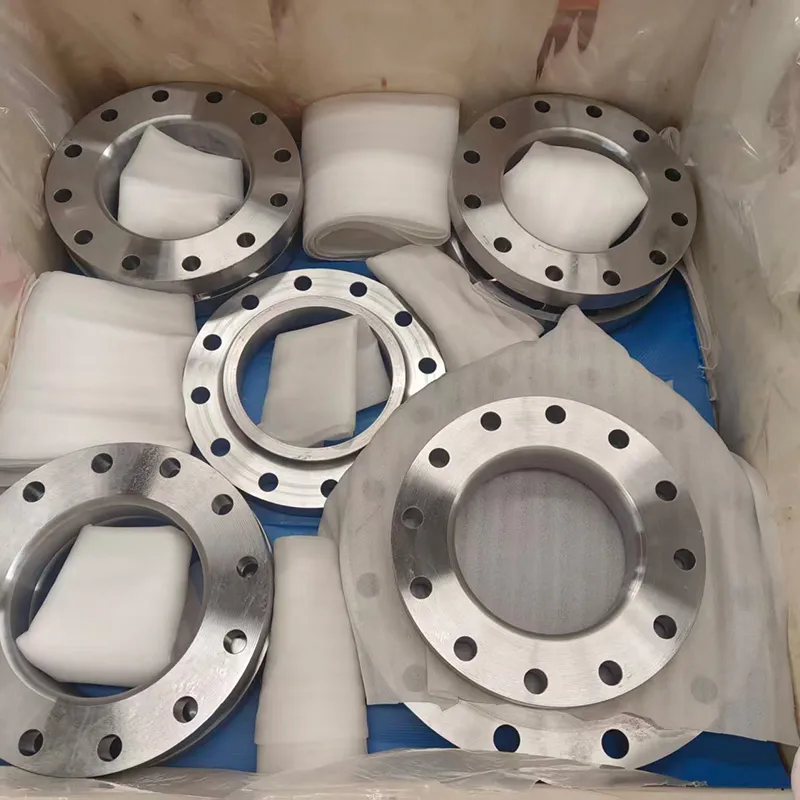
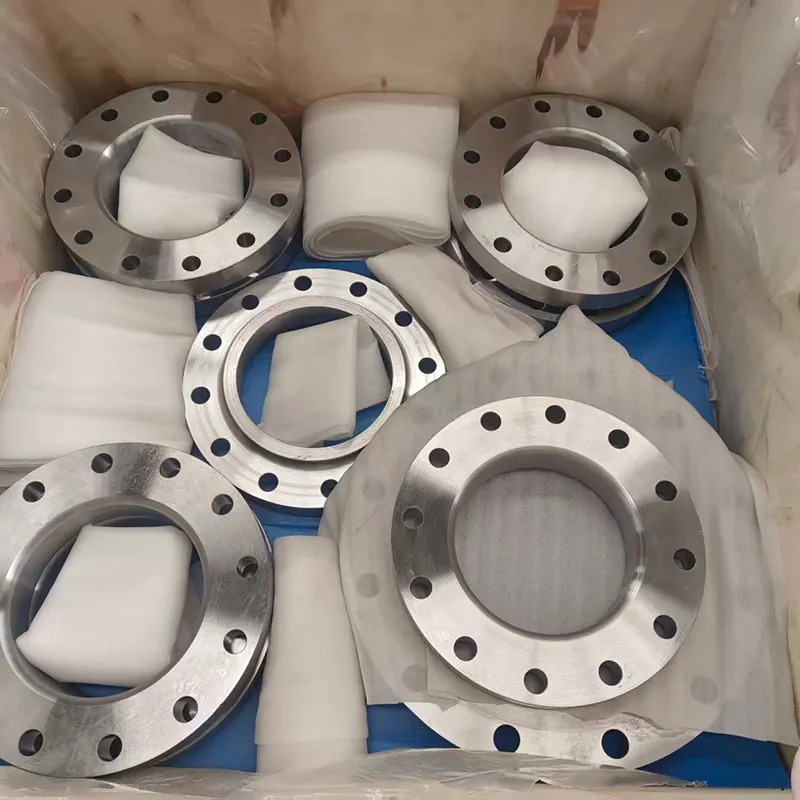
Small flanges (≤4″): Heavy-duty cartons with
moisture barrier paper on pallets, individual plastic bagging for high-purity
flanges.
Medium flanges (6″–12″): Wooden
crates with foam padding dividers, each flange wrapped in VCI paper.
Large flanges (≥14″): Individual
wooden crates or steel-framed pallets with foam padding.
All shipments:
VCI paper interleaving between flanges
Plastic end caps for bore protection
Bolt hole protectors for RTJ facings
Individual tagging: Grade (Alloy 625/N06625), size, class, heat number, heat treatment condition (annealed/cold worked/aged), heat treatment records reference, standard, PO number
Waterproof shipping marks for export containers
Moisture barrier wrapping for sea freight
Womic Steel's Delivery Strengths:
Ready stock: Class 150 and 300 Alloy 625 flanges in sizes 1/2″–12″ – dispatch within 24–48 hours.
Direct cooperation with global shipowners for the most competitive freight rates.
Professional loading by in-house teams using non-metallic slings and padded supports.
Complete documentation package including EN 10204 3.1 MTR, PMI reports, IGC test reports (ASTM G28), NACE certificates, heat treatment charts, and mechanical test reports.
Continuous cargo tracking and after-sales follow-up with destination agent support.
1. What is the
difference between Alloy 625 and Alloy 825 for flange applications?
Alloy 625 has higher molybdenum (8-10% vs 2.5-3.5%), higher PRE (≥45 vs 38-42),
higher strength (YS ≥415 MPa vs ≥240 MPa), and significantly better seawater
pitting resistance. Alloy 825 is more cost-effective for sulfuric/phosphoric
acid service. For deepwater subsea and seawater applications, Alloy 625 is the
preferred material.
2. Why choose Alloy
625 over Super Duplex 2507 for seawater flanges?
Alloy 625 offers superior performance in stagnant seawater (no crevice
corrosion), higher temperature capability (980°C vs 300°C), and excellent
performance in mixed acid environments. For applications requiring long-term
submergence or high temperatures, Alloy 625 is preferred. For most topside
seawater cooling where temperature is controlled, Super Duplex 2507 is more
cost-effective.
3. Is Alloy 625
resistant to hydrochloric acid (HCl)?
Yes, Alloy 625 has good resistance to dilute HCl and is used in HCl service.
For concentrated HCl at elevated temperatures, Hastelloy C276 is recommended.
4. Can Alloy 625
flanges be welded to 316L piping?
Yes, using ERNiCrMo-3 filler metal. The transition should be designed to manage
galvanic corrosion potential in seawater. Welding procedures must be qualified.
5. What strength
levels are available for Alloy 625 flanges?
Three conditions: Annealed (YS ≥415 MPa), Cold Worked (YS ≥620 MPa), and
Aged/Premium (YS ≥760 MPa). For deepwater HP/HT flanges, cold worked or aged
conditions are recommended.
6. Are Alloy 625
flanges suitable for subsea umbilical terminations?
Yes. Alloy 625 is the industry standard material for subsea umbilical
termination assemblies (UTAs), chemical injection flanges, and hydraulic
control line connections (API 17E, ISO 13628-5 compliant).
7. What facing is
recommended for high-pressure subsea flanges?
Ring Type Joint (RTJ) facing with octagonal ring gasket is standard for
high-pressure subsea service (Class 1500-2500) to ensure leak-tight sealing
under extreme pressure cycling.
8. Can you supply
Alloy 625 flanges with NORSOK M-650 documentation?
Yes. We maintain NORSOK M-650 qualified raw material suppliers and can supply
complete documentation packages for offshore and subsea projects.
9. What is the
maximum hydrogen sulfide (H₂S) partial pressure for Alloy 625 flanges?
Alloy 625 can tolerate H₂S partial pressures up to the highest limits specified
in NACE MR0175/ISO 15156 for nickel-based alloys. Contact our technical team
for specific sour service requirements.
10. Are Alloy 625
flanges available in EN 1092-1 dimensions?
Yes. We can manufacture Alloy 625 flanges to EN 1092-1 Type 01, 02, 05, 11, 12
with PN6 to PN400 pressure ratings. Please specify your requirement.
Complete Product Range: Weld neck, slip-on, blind, socket weld, threaded, lap joint, and plate flanges – one-stop sourcing for deepwater subsea and extreme seawater projects.
Strict Quality Control: ISO 9001:2015, PED 2014/68/EU, and API Q1 certified facilities.
Premium Mill Sources: Special Metals, VDM Metals, Haynes International certified raw materials – 100% traceable with VIM-VAR melt.
NORSOK M-650 Qualified: Complete documentation packages available for offshore and subsea projects.
NACE MR0175 / ISO 15156 Compliant: Highest H₂S partial pressure tolerance, with HIC/SSC test reports on request.
API 17E & ISO 13628-5 Compliant: Suitable for subsea umbilical termination assemblies.
Advanced Forging & Machining: 3000–8000 ton hydraulic presses and CNC machining centers.
Full Traceability: Heat number stamped on each flange – traceable back to original mill certificate.
Multiple Strength Conditions: Annealed, cold worked, or aged – choose the right strength for your application.
Corrosion Testing: In-house ASTM G28 intergranular and ASTM G48 pitting corrosion testing capability.
Flexible Customization: Special facing types (RTJ, T&G, M&F), custom bolt drilling, and non-standard sizes available.
Marine & Offshore Certified: ABS, BV, DNV, LR, GL, RINA, CCS, KR, NK certification available.
Deepwater Subsea Experience: Proven supply record for deepwater subsea projects worldwide.
Global Delivery: Exported to major subsea projects globally – Gulf of Mexico, North Sea, Brazil, West Africa, SE Asia.
Tel / WhatsApp:
Victor: +86 15575100681
Jack: +86 18390957568
E-mail: info@womicstainless.com
Website: www.womicsteel.com
Contact Womic Steel today for a competitive quote on Alloy 625 stainless steel flanges. We offer certified quality, NORSOK M-650 documentation, NACE MR0175 compliance, API 17E certification, cold worked high-strength options, fast production lead times, and reliable global delivery to keep your deepwater subsea and extreme seawater projects running smoothly.
Stock Examples (Class 150 WN RF – Alloy 625, Annealed):
|
NPS |
DN |
Schedule |
Class |
Condition |
|
1/2″ |
15 |
Sch40S |
150 |
Annealed |
|
1″ |
25 |
Sch40S |
150 |
Annealed |
|
2″ |
50 |
Sch80S |
150 |
Annealed |
|
4″ |
100 |
Sch40S |
150 |
Annealed |
|
6″ |
150 |
Sch40S |
150 |
Annealed |
|
8″ |
200 |
Sch80S |
150 |
Annealed |
Stock Examples (Class 300 WN RF – Alloy 625, Cold Worked for Subsea):
|
NPS |
DN |
Schedule |
Class |
Condition |
|
1/2″ |
15 |
Sch80S |
300 |
Cold Worked |
|
1″ |
25 |
Sch40S |
300 |
Cold Worked |
|
2″ |
50 |
Sch80S |
300 |
Cold Worked |
|
4″ |
100 |
Sch40S |
300 |
Cold Worked |
Stock Examples (Class 600 and above – RTJ facing – Alloy 625, Cold Worked):
|
NPS |
DN |
Class |
Facing |
Condition |
|
2″ |
50 |
600 |
RTJ |
Cold Worked |
|
4″ |
100 |
900 |
RTJ |
Cold Worked |
|
6″ |
150 |
1500 |
RTJ |
Cold Worked |
Common Stock Examples for Subsea Umbilical Termination (Alloy 625, Cold Worked, RTJ):
|
NPS |
DN |
Class |
Facing |
Condition |
Application |
|
2″ |
50 |
600 |
RTJ |
Cold Worked |
UTA flange |
|
4″ |
100 |
600 |
RTJ |
Cold Worked |
Subsea distribution |
|
6″ |
150 |
900 |
RTJ |
Cold Worked |
PLET flange |
Related Keywords (Alloy 625 Flanges):
ASME B16.5 Alloy 625 weld neck flange, Inconel 625 slip on flange Class 150, UNS N06625 blind flange RTJ, socket weld flange 6000LB Alloy 625, threaded flange NPT Alloy 625, lap joint flange stub end Alloy 625, EN 1092-1 2.4856 plate flange, NACE MR0175 Alloy 625 weld neck flange, API 6A Alloy 625 flange, API 17E Alloy 625 flange, ISO 13628-5 Alloy 625 flange, ASTM B564 UNS N06625 flange, deepwater subsea Alloy 625 RTJ flange, HP/HT sour gas Alloy 625 blind flange, seawater resistant Alloy 625 flange, high strength cold worked Alloy 625 flange, PRE 45 Alloy 625 flange, subsea umbilical termination assembly flange, chemical injection Alloy 625 flange, subsea manifold Alloy 625 weld neck flange, Christmas tree Alloy 625 flange, wellhead connector Alloy 625 flange, seawater lift pump Alloy 625 flange, aerospace hydraulic Alloy 625 flange, thermal oxidizer Alloy 625 flange, 625 vs 825 flange, 625 vs 2507 seawater comparison, 625 cold worked vs annealed flange, niobium stabilized nickel alloy flange, NORSOK M-650 Alloy 625 flange, ABS certified Alloy 625 flange, DNV approved Alloy 625 flange, BV approved Inconel 625 flange.