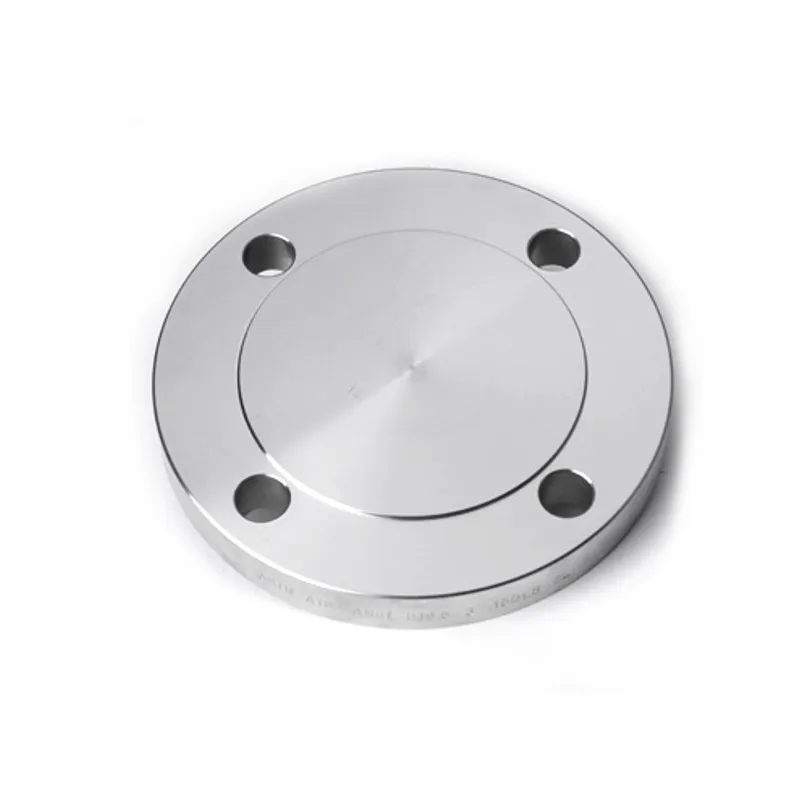
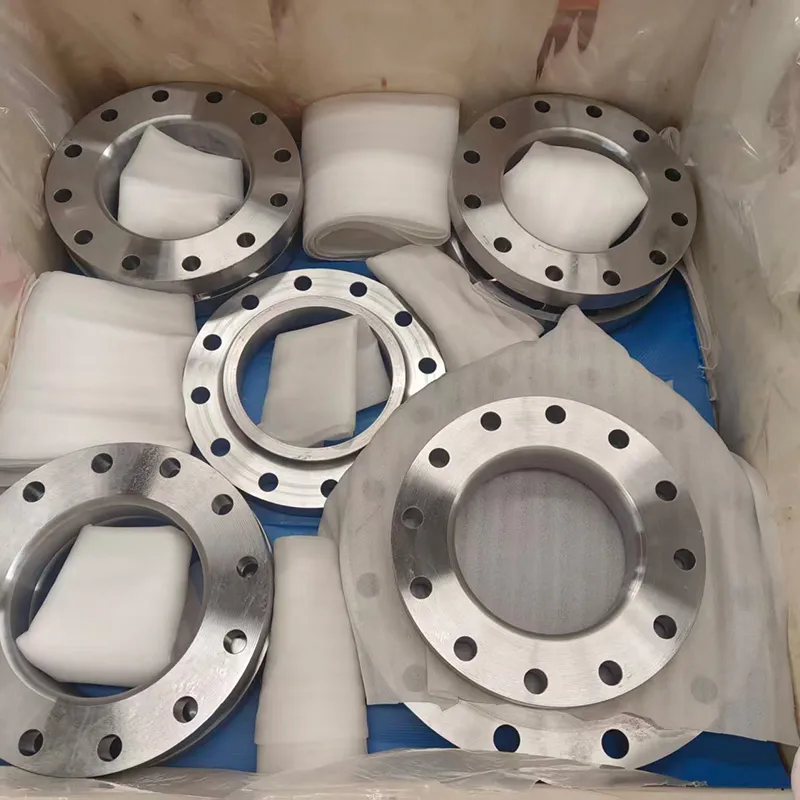
Womic Stainless Steel Co., Ltd

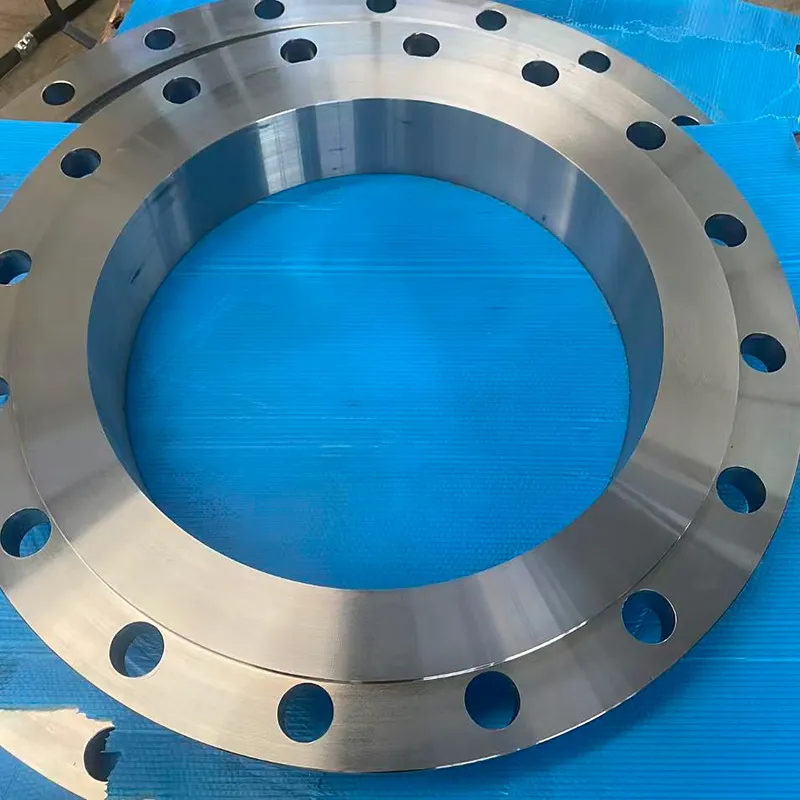
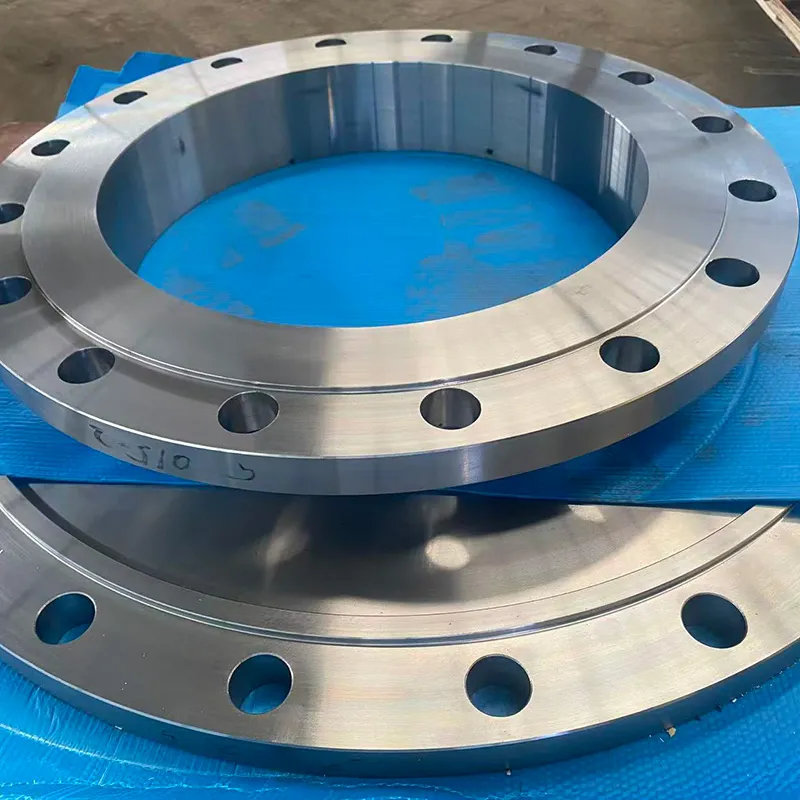
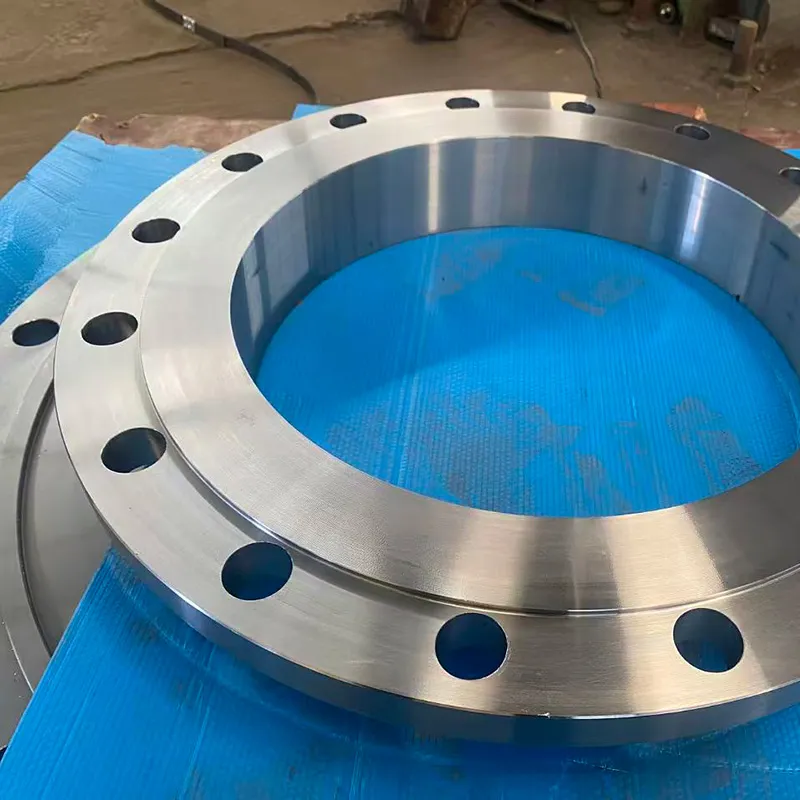
Exceptional Caustic Alkali Resistance: Outstanding resistance to sodium hydroxide (NaOH), potassium hydroxide (KOH), and other caustic solutions across all concentrations and temperatures, making Alloy 200/201 the premier material for caustic evaporators and concentrators.
Excellent Resistance to Reducing Environments: Superior performance in reducing acids (deaerated hydrochloric, sulfuric, phosphoric) and neutral/alkaline salt solutions, significantly outperforming stainless steels.
Good Resistance to Organic Acids and Food Products: Excellent resistance to fatty acids, fruit juices, brine, and food processing environments, with no risk of product contamination – ideal for sanitary flange applications.
High Thermal and Electrical Conductivity: Superior thermal conductivity compared to stainless steel (approximately 20-25% higher) and excellent electrical conductivity, making Alloy 200/201 flanges suitable for heat transfer and grounding applications.
Low Carbon Version for High-Temperature Service: Alloy 201 (C ≤0.02%) prevents graphitization and carbon precipitation at elevated temperatures, maintaining ductility and corrosion resistance up to 315°C (600°F) where Alloy 200 may become embrittled.
Excellent Formability and Weldability: Commercially pure nickel offers excellent cold formability and good weldability with matching filler metals, simplifying flange fabrication and field welding.
Non-Magnetic to Weakly Magnetic Properties: Alloy 200/201 exhibits low magnetic permeability, suitable for electronic and instrumentation applications where magnetic interference must be minimized.
Good Mechanical Properties at Low Temperatures: Retains excellent ductility and impact strength down to cryogenic temperatures (-196°C / -321°F), suitable for LNG and low-temperature chemical service.
Full Range of Types: Weld neck (WN), slip-on (SO), blind (BL), socket weld (SW), threaded (TH), lap joint (LJ), plate flanges, and orifice flanges.
Pressure Ratings: Available in Class 150, 300, 600, 900, 1500, and 2500 (PN6 to PN400 in metric equivalents).
International Certifications: Flanges can be certified by ABS, BV, DNV, LR, GL, RINA, CCS, KR, and NK, and comply with ASME, PED, EN, and JIS standards.
|
Standard |
Description |
Corresponding Grade |
|
ASME B16.5 |
Pipe flanges and flanged fittings (≤24″) |
ASTM B564 UNS N02200/N02201 |
|
ASME B16.47 |
Large diameter steel flanges (26″–60″) Series A/B |
ASTM B564 UNS N02200/N02201 |
|
ASTM B564 |
Forged nickel alloy flanges |
UNS N02200 (Alloy 200) / N02201 (Alloy 201) |
|
EN 1092-1 |
European standard flanges |
2.4066 (Alloy 200) / 2.4068 (Alloy 201) |
|
JIS B2220 |
Japanese standard steel pipe flanges |
NW2200 (Alloy 200) / NW2201 (Alloy 201) |
|
GB/T 9112 |
Chinese national standard flanges |
N6 (Alloy 200) / N6 (Alloy 201) |
|
MSS SP-44 |
Steel pipeline flanges |
N02200 / N02201 |
|
DIN 17751 |
German nickel alloy flanges |
Ni 99.2 (2.4066) / Ni 99.2 (2.4068) |
These standards ensure that our Alloy 200/201 commercially pure nickel flanges meet global requirements for chemical composition, mechanical properties, dimensional tolerances, and pressure-temperature ratings for caustic and alkaline service.
|
Element |
Ni (min) |
Fe (max) |
C (max) |
Mn (max) |
Si (max) |
Cu (max) |
S (max) |
Others |
|
Alloy 200 |
≥99.0% |
≤0.40% |
≤0.15% |
≤0.35% |
≤0.35% |
≤0.25% |
≤0.010% |
— |
|
Alloy 201 |
≥99.0% |
≤0.40% |
≤0.02% |
≤0.35% |
≤0.35% |
≤0.25% |
≤0.010% |
— |
Alloy 200 (UNS N02200) is commercially pure wrought nickel (99.0% minimum) with controlled iron, manganese, silicon, and copper content. The high nickel content provides exceptional resistance to caustic alkalis and reducing environments. Alloy 201 is identical in composition except for much lower carbon content (≤0.02% vs ≤0.15%), which prevents graphitization and embrittlement at elevated temperatures above 315°C (600°F). For flange applications involving high temperatures (above 300°C), Alloy 201 is strongly recommended.
Comparison of Alloy 200 vs Alloy 201 for Flange Applications:
|
Property |
Alloy 200 (N02200) |
Alloy 201 (N02201) |
|
Carbon Content |
≤0.15% |
≤0.02% (much lower) |
|
Maximum Service Temp |
315°C (600°F) |
315°C (600°F) – same |
|
Resistance to Embrittlement at 300°C+ |
May graphitize |
Excellent (no graphitization) |
|
Recommended for >300°C Service |
Not recommended |
Recommended |
|
Corrosion Resistance |
Excellent |
Excellent (identical) |
|
Weldability |
Good |
Excellent |
|
Cost |
Lower (higher carbon) |
Slightly higher (low carbon) |
|
Property |
Unit |
Alloy 200 (Annealed) |
Alloy 201 (Annealed) |
|
Tensile Strength |
MPa |
≥380 |
≥340 |
|
Yield Strength (0.2% offset) |
MPa |
≥100 |
≥70 |
|
Elongation |
% |
≥40 |
≥40 |
|
Hardness (Brinell) |
HBW |
≤110 |
≤110 |
|
Density |
g/cm³ |
8.89 |
8.89 |
|
Melting Range |
°C |
1435–1446 |
1435–1446 |
|
Thermal Conductivity (20°C) |
W/m·K |
70.2 |
70.2 |
|
Coefficient of Thermal Expansion (20–100°C) |
μm/m·K |
13.3 |
13.3 |
|
Modulus of Elasticity (20°C) |
GPa |
207 |
207 |
|
Electrical Resistivity (20°C) |
μΩ·m |
0.096 |
0.096 |
|
Magnetic Permeability |
μ (at 200 Oe) |
<1.005 |
<1.005 |
High-Temperature Tensile Properties (Typical Values):
|
Temperature (°C) |
Tensile Strength (MPa) |
Yield Strength (MPa) |
|
20 |
400–500 |
100–150 |
|
100 |
380–480 |
90–140 |
|
200 |
350–450 |
85–130 |
|
300 |
320–420 |
80–120 |
|
400 |
280–380 |
75–110 |
|
500 |
240–340 |
70–100 |
Maximum Recommended Service Temperatures:
|
Service Type |
Alloy 200 |
Alloy 201 |
|
Continuous Service (Caustic/Corrosive) |
315°C (600°F) |
315°C (600°F) |
|
Continuous Service (Non-Corrosive) |
315°C (600°F) |
315°C (600°F) |
|
Intermittent Service |
350°C (662°F) |
370°C (698°F) |
|
Cryogenic Service |
-196°C (-321°F) |
-196°C (-321°F) |
Critical Note: Alloy 200 may become embrittled due to graphitization when exposed to temperatures between 315–650°C (600–1200°F) for prolonged periods. For flange applications involving service temperatures above 315°C, Alloy 201 (low carbon) is mandatory to prevent embrittlement. Alloy 201 maintains excellent ductility and corrosion resistance at elevated temperatures.
Comparison of Temperature Limitations:
|
Temperature |
Alloy 200 |
Alloy 201 |
Recommendation |
|
Below 300°C (572°F) |
Excellent |
Excellent |
Either grade acceptable |
|
300–350°C (572–662°F) |
Risk of graphitization |
Excellent |
Use Alloy 201 |
|
Above 350°C (662°F) |
Not recommended |
Limited use |
Consider other nickel alloys |
Heat Treatment
Condition:
Alloy 200/201 flanges are normally supplied in the annealed condition (heat
treated at 700–900°C) followed by rapid cooling (water quenching or rapid air
cooling). This heat treatment relieves internal stresses from forging and
machining, restores optimum ductility, and ensures maximum corrosion
resistance. The low carbon content of Alloy 201 makes it particularly suitable
for as-welded applications without post-weld heat treatment.
Delivery Condition: Flanges normally supplied in annealed and pickled condition, providing a clean, smooth surface and excellent corrosion resistance. Upon request, bright annealed (BA) finish can be provided for electronic and high-purity applications.
|
Class |
Rating (psig) @ 100°F |
Rating (psig) @ 300°F |
Rating (psig) @ 500°F |
Rating (psig) @ 700°F |
Rating (psig) @ 800°F |
|
150 |
230 |
200 |
175 |
150 |
140 |
|
300 |
610 |
530 |
460 |
390 |
370 |
|
600 |
1220 |
1060 |
920 |
780 |
740 |
|
900 |
1830 |
1590 |
1380 |
1170 |
1110 |
|
1500 |
3050 |
2650 |
2300 |
1950 |
1850 |
|
2500 |
5080 |
4420 |
3830 |
3250 |
3080 |
*Reference: Based on ASME B16.5 for nickel alloys (Group 2.1). For Alloy 201, ratings are identical. Maximum service temperature limited to 315°C (600°F) for pressure-containing applications due to graphitization concerns.*
|
Flange Type |
Common Faces |
Pressure Classes |
Manufacturing Method |
Typical Alloy 200/201 Applications |
|
Weld Neck (WN) |
RF, RTJ, FF |
150–2500 |
Forged + Machined |
Caustic evaporators, high-pressure NaOH |
|
Slip-On (SO) |
RF, FF |
150–600 |
Forged + Machined |
Food processing, low-pressure caustic |
|
Blind (BL) |
RF, RTJ, FF |
150–2500 |
Forged + Machined |
Caustic storage tank manways, vessel closures |
|
Socket Weld (SW) |
RF, FF |
150–1500 |
Forged + Machined |
Small bore chemical injection, instrumentation |
|
Threaded (TH) |
RF, FF |
150–600 |
Forged + Machined |
Non-welded caustic connections |
|
Lap Joint (LJ) |
Flat face |
150–600 |
Forged + Machined |
Systems requiring frequent dismantling |
|
Plate Flange |
Flat face |
150 |
Plate cutting + Machining |
Low-pressure caustic lines |
|
Orifice Flange |
RF, RTJ |
300–2500 |
Forged + Machined |
Flow measurement in NaOH service |
|
Parameter |
Weld Neck (WN) |
Slip-On (SO) |
Blind (BL) |
Lap Joint (LJ) |
Socket Weld (SW) |
|
Nominal Size (DN/NPS) |
1/2″ – 60″ |
1/2″ – 24″ |
1/2″ – 60″ |
1/2″ – 24″ |
1/2″ – 4″ |
|
Pressure Class |
150 – 2500 |
150 – 600 |
150 – 2500 |
150 – 600 |
150 – 1500 |
|
Facing Types |
RF, RTJ, FF, T&G, M&F |
RF, FF |
RF, RTJ, FF |
Flat face |
RF, FF |
|
Hub Types |
Long taper, short taper |
Straight |
N/A |
Studded |
Straight |
Standard Dimensions: ASME B16.5 for sizes up to 24″, and ASME B16.47 Series A/B for large diameters up to 60″. EN 1092-1, JIS B2220, and GB/T 9112 dimensions available upon request.
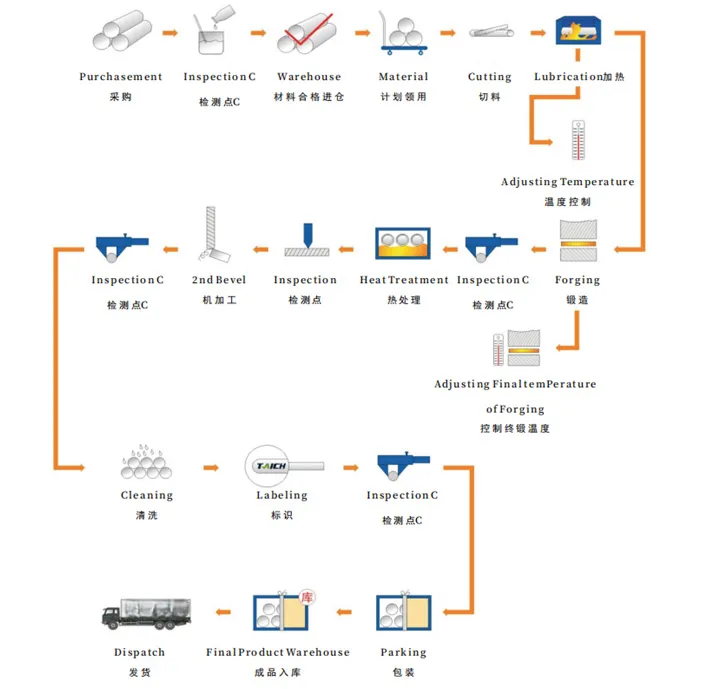
Raw Material Selection: High-quality Alloy 200/201 commercially pure nickel billets from certified mills (Special Metals, VDM Metals) with certified chemical composition (Ni ≥99.0%, carbon verification critical for Alloy 201) and traceability.
Cutting & Heating: Material is cut to precise weight using band saws, then induction-heated to forging temperature (1100–1200°C). Pure nickel has excellent forgeability at proper temperatures.
Forging: Hot forged using hydraulic presses (3000–8000 tons) with controlled reduction rates. Pure nickel is relatively soft and forges easily.
Heat Treatment – Annealing: Heat treatment at 700–900°C followed by rapid cooling (water quenching) to relieve stresses and optimize ductility.
Machining: CNC lathes and milling machines produce precise dimensions, bolt holes, and facing surfaces. Pure nickel is somewhat gummy; proper tooling and cooling required.
Surface Finishing: Raised face serration, flat facing, or RTJ groove machining per ASME B16.5 requirements.
Marking: Laser engraving or stamping with grade (Alloy 200/UNS N02200 or Alloy 201/UNS N02201), size (NPS), class, heat number, manufacturer identification, and standard.
Inspection & Testing: Dimensional check, PMI, hardness test, and NDT as required.
Surface Treatment: Pickling and passivation using specialized pickling acids optimized for pure nickel; thorough rinsing required.
|
Surface Finish |
Description |
Roughness (μinch) |
Typical Application |
|
Raised Face (RF) |
Standard serrated concentric or spiral finish |
125–250 |
Caustic piping, general process |
|
Flat Face (FF) |
Full face contact, smooth or serrated |
125–250 |
Flat-faced equipment connections |
|
Ring Type Joint (RTJ) |
Grooved for oval or octagonal ring gasket |
63 max |
High-pressure caustic service |
|
Tongue & Groove (T&G) |
Matched tongue and groove facing |
125 min |
Critical alkaline service connections |
|
Male & Female (M&F) |
Matched male/female facing |
125 min |
Vessel connections |
|
Pickled & Passivated |
Chemically cleaned oxide-free surface |
As machined |
All Alloy 200/201 flange applications |
|
Bright Annealed (BA) |
Mirror-like surface |
≤20 |
Electronic components, high-purity |
|
Electropolished |
Ultra-smooth surface |
≤20 |
Semiconductor, ultra-high-purity |
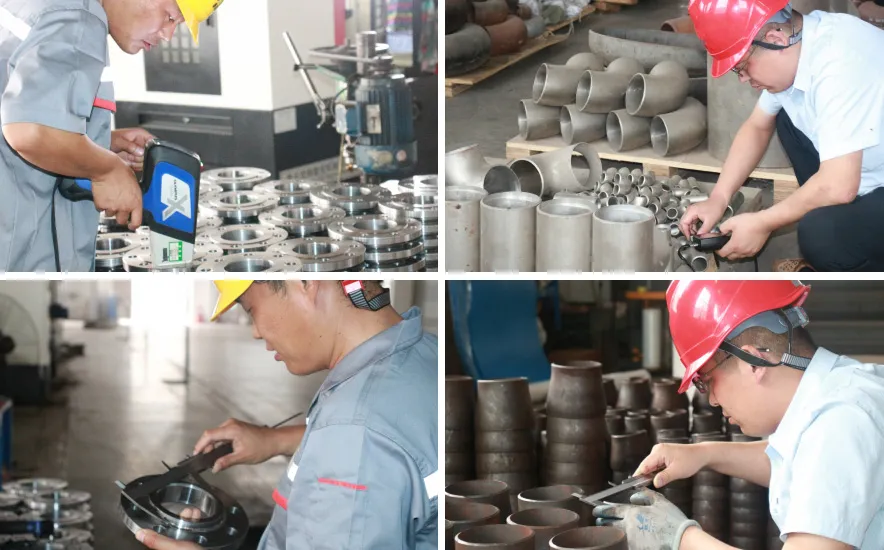
Each Alloy 200/201 flange face is inspected for surface roughness, concentricity, and absence of defects.
Chemical Analysis: PMI 100% verification using handheld XRF spectrometer for Ni (≥99.0% min), C (carbon verification critical for Alloy 201).
Mechanical Testing: Tensile strength (≥380 MPa for Alloy 200, ≥340 MPa for Alloy 201), yield strength, elongation (≥40%), hardness (≤110 HBW).
Dimensional Inspection: OD, ID, bolt circle, bolt hole alignment, thickness, flatness using calibrated gauges and CMM.
Thread Inspection: NPT thread verification using GO/NO-GO gauges per ANSI B1.20.1.
NDT – Liquid Penetrant Testing (PT): 100% for surface defects.
NDT – Ultrasonic Testing (UT): For internal flaws upon request.
Intergranular Corrosion Test: ASTM G28 – upon request for Alloy 201 (low carbon verification).
Third-Party Inspection: SGS, BV, DNV, TUV, LR, or ABS on customer request.
|
Parameter |
Size Range |
Permitted Tolerance |
|
Outside Diameter (OD) |
≤4″ (DN100) |
±1.6 mm |
|
Outside Diameter (OD) |
4″–8″ (DN100–DN200) |
±2.4 mm |
|
Outside Diameter (OD) |
≥10″ (DN250) |
±3.2 mm |
|
Bolt Circle Diameter |
All sizes |
±0.8 mm |
|
Bolt Hole Spacing |
Adjacent holes |
±0.5 mm |
|
Flange Thickness |
All sizes |
+3.0 mm / -0.0 mm |
|
Hub Diameter |
≤4″ |
±1.6 mm |
|
Hub Diameter |
≥6″ |
±2.4 mm |
|
RF Surface Roughness |
All sizes |
125–250 μinch |
|
RF Height |
All sizes |
1.6 mm ±0.8 mm |
Chemical Processing (Caustic/Alkaline): Sodium hydroxide (NaOH) evaporator flanges, caustic concentrator connections, potassium hydroxide (KOH) handling flanges, chlorine-caustic production equipment flanges, chlor-alkali plant flanges.
Food & Beverage Processing: Food processing equipment flanges, dairy pasteurizer connections, brewery piping flanges, fruit juice handling systems, edible oil processing flanges, brine cooling system flanges (excellent resistance to fatty acids and fruit acids).
Pharmaceutical: High-purity pharmaceutical reactor flanges, sterile caustic transfer lines, cleaning-in-place (CIP) system flanges, biopharmaceutical equipment connections.
Fluorine & Chlorine Handling: Fluorine generation and reaction vessel flanges, dry chlorine handling flanges (up to 550°C), hydrogen chloride (dry) service flanges, fluorocarbon processing flanges.
Electronics & Electrical: Electronic component flanges, battery manufacturing equipment flanges, electroplating system flanges, electrical grounding flange connections (excellent conductivity), semiconductor processing flanges.
Synthetic Fiber Production: Viscose rayon manufacturing flanges, synthetic fiber reactor connections, soap manufacturing equipment flanges.
Petrochemical (Limited): Phenol storage and transportation flanges (assures product purity), organic chemical processing flanges, hydrocarbon chlorination reactor flanges (benzene, methane, ethane).
Marine Engineering: Seawater cooling flanges (limited – Alloy 200/201 is not the primary choice for seawater; Monel 400 is preferred), chemical tanker caustic cargo flanges (classification society certified).
Cryogenic Service: LNG plant flanges, liquid nitrogen handling flanges, low-temperature chemical processing flanges (maintains ductility to -196°C).
Aerospace & Missile: Aerospace component flanges, missile system hydraulic flanges, jet engine auxiliary systems.
Small flanges (≤4″): Heavy-duty cartons with
moisture barrier paper on pallets, individual plastic bagging for high-purity
flanges.
Medium flanges (6″–12″): Wooden
crates with foam padding dividers, each flange wrapped in VCI paper.
Large flanges (≥14″): Individual
wooden crates or steel-framed pallets with foam padding.
All shipments:
VCI paper interleaving between flanges
Plastic end caps for bore protection
Bolt hole protectors for RTJ facings
Individual tagging: Grade (Alloy 200/N02200 or Alloy 201/N02201), size, class, heat number, manufacturer identification, standard, PO number
Waterproof shipping marks for export containers
Moisture barrier wrapping for sea freight
Womic Steel's Delivery Strengths:
Ready stock: Class 150 and 300 Alloy 200/201 flanges in sizes 1/2″–12″ – dispatch within 24–48 hours.
Direct cooperation with global shipowners for the most competitive freight rates.
Professional loading by in-house teams using padded slings.
Complete documentation package including EN 10204 3.1 MTR, PMI reports, carbon verification (low carbon for Alloy 201), heat treatment charts, and mechanical test reports.
Continuous cargo tracking and after-sales follow-up.
1. What is the
difference between Alloy 200 and Alloy 201 flanges?
The key difference is carbon content. Alloy 200 has ≤0.15% carbon, while Alloy
201 has ≤0.02% carbon. For flange service above 315°C (600°F), Alloy 201 is
required to prevent graphitization and embrittlement. For service below 300°C,
both grades are acceptable with Alloy 200 being slightly more economical.
2. When should I
specify Alloy 201 instead of Alloy 200 for flanges?
Specify Alloy 201 when:
l Service temperature exceeds 300°C (572°F)
l Frequent thermal cycling is expected
l Welded flanges will be in service at elevated temperatures
l Extended service life at 250–315°C is required
3. Are Alloy 200/201
flanges suitable for hydrochloric acid (HCl) service?
Alloy 200/201 has good resistance to deaerated HCl (reducing conditions) but poor resistance to
aerated HCl (oxidizing conditions). For aerated or concentrated HCl service,
Hastelloy C276 is recommended.
4. What is the
maximum temperature for Alloy 201 flanges?
Maximum continuous service temperature is 315°C (600°F). Above this
temperature, mechanical properties degrade rapidly and other nickel alloys
should be considered.
5. Can Alloy 200/201
flanges be used in seawater?
Alloy 200/201 is not the preferred material for seawater service. While it has
fair resistance, Monel 400 or super duplex 2507 offer significantly better
seawater corrosion resistance. Alloy 200/201 is primarily specified for
caustic/alkaline service, not seawater.
6. Do Alloy 200/201
flanges require post-weld heat treatment (PWHT)?
Generally, no. Alloy 200 can be welded without PWHT for most applications.
However, for Alloy 200 in service above 300°C, PWHT may be beneficial to
relieve welding stresses. Alloy 201 (low carbon) does not require PWHT as it is
not susceptible to graphitization.
7. What facing is
recommended for caustic service flanges?
Raised face (RF) with serrated finish (125–250 μinch) using PTFE envelope
gasket or spiral wound gasket with PTFE filler is recommended for caustic service
to ensure leak-tight sealing in aggressive alkaline conditions.
8. Can you supply
Alloy 200/201 flanges with EN 1092-1 dimensions?
Yes. We can manufacture Alloy 200/201 flanges to EN 1092-1 Type 01, 02, 05, 11,
12 with PN6 to PN400 pressure ratings. Please specify your standard.
9. What is the
typical lead time for Alloy 200/201 flanges?
Stock sizes (1/2″–12″, Class 150/300 WN RF): 2–4 days. Non-stock or special
facings: 3–4 weeks. Large diameter B16.47 flanges (≥26″): 4–6 weeks depending
on thickness.
10. Are Alloy 200/201
flanges magnetic?
Alloy 200/201 is essentially non-magnetic with magnetic permeability <1.005
at 200 Oersteds. This property makes them suitable for electronic and
instrumentation applications where magnetic interference must be avoided. At
cryogenic temperatures, they remain non-magnetic.
Complete Product Range: Weld neck, slip-on, blind, socket weld, threaded, lap joint, and plate flanges – one-stop sourcing for caustic and alkaline service projects.
Strict Quality Control: ISO 9001:2015, PED 2014/68/EU, and API Q1 certified facilities.
Premium Mill Sources: Special Metals, VDM Metals certified raw materials – 100% traceable.
Carbon Content Control: For Alloy 201, carbon verified ≤0.02% on each MTR to guarantee high-temperature performance.
Pure Nickel Expertise: Specialized knowledge in commercially pure nickel forging, heat treatment, and corrosion resistance.
Advanced Forging & Machining: 3000–8000 ton hydraulic presses and CNC machining centers.
Full Traceability: Heat number stamped on each flange – traceable back to original mill certificate.
Flexible Customization: Special facing types (RTJ, T&G, M&F), custom bolt drilling, and non-standard sizes available.
Food & Pharmaceutical Grade: Suitable for sanitary applications requiring high purity and non-contamination.
Global Delivery: Exported to major caustic plants, food processing facilities, and electronics manufacturers worldwide.
Tel / WhatsApp:
Victor: +86 15575100681
Jack: +86 18390957568
E-mail: info@womicstainless.com
Website: www.womicsteel.com
Contact Womic Steel today for a competitive quote on Alloy 200/201 stainless steel flanges. We offer certified quality, low carbon verification (Alloy 201), fast production lead times, and reliable global delivery to keep your caustic, food processing, and electronic projects running smoothly.
Stock Examples (Class 150 WN RF – Alloy 200/201, Annealed):
|
NPS |
DN |
Schedule |
Class |
Grade |
|
1/2″ |
15 |
Sch40S |
150 |
Alloy 200/201 |
|
1″ |
25 |
Sch40S |
150 |
Alloy 200/201 |
|
2″ |
50 |
Sch40S |
150 |
Alloy 200/201 |
|
3″ |
80 |
Sch40S |
150 |
Alloy 200/201 |
|
4″ |
100 |
Sch40S |
150 |
Alloy 200/201 |
|
6″ |
150 |
Sch40S |
150 |
Alloy 200/201 |
|
8″ |
200 |
Sch40S |
150 |
Alloy 200/201 |
|
10″ |
250 |
Sch40S |
150 |
Alloy 200/201 |
|
12″ |
300 |
Sch40S |
150 |
Alloy 200/201 |
Stock Examples (Class 300 WN RF – Alloy 200/201, Annealed – Alloy 201 recommended for elevated temperature):
|
NPS |
DN |
Schedule |
Class |
Grade |
|
1/2″ |
15 |
Sch80S |
300 |
Alloy 201 preferred |
|
1″ |
25 |
Sch40S |
300 |
Alloy 201 preferred |
|
2″ |
50 |
Sch80S |
300 |
Alloy 201 preferred |
|
4″ |
100 |
Sch40S |
300 |
Alloy 201 preferred |
|
6″ |
150 |
Sch80S |
300 |
Alloy 201 preferred |
Stock Examples (Caustic Evaporator Service – Alloy 201, Class 300, RF, Elevated Temperature):
|
NPS |
DN |
Class |
Facing |
Grade |
Application |
|
4″ |
100 |
300 |
RF |
Alloy 201 |
Caustic evaporator |
|
6″ |
150 |
300 |
RF |
Alloy 201 |
NaOH concentrator |
|
8″ |
200 |
300 |
RF |
Alloy 201 |
KOH transfer |
|
10″ |
250 |
300 |
RF |
Alloy 201 |
Caustic storage |
|
12″ |
300 |
300 |
RF |
Alloy 201 |
Caustic main header |
Related Keywords (Alloy 200/201 Flanges):
ASME B16.5 Alloy 200 weld neck flange, Alloy 201 slip on flange Class 150, UNS N02200 blind flange, UNS N02201 blind flange RTJ, socket weld flange 6000LB Alloy 200, threaded flange NPT Alloy 201, lap joint flange stub end pure nickel, EN 1092-1 2.4066 plate flange, EN 1092-1 2.4068 plate flange, JIS B2220 NW2200 weld neck flange, JIS B2220 NW2201 slip on flange, ASTM B564 UNS N02200 flange, ASTM B564 UNS N02201 flange, caustic resistant nickel flange, sodium hydroxide NaOH flange, potassium hydroxide KOH flange, commercially pure nickel flange, low carbon nickel flange (0.02% max), high temperature nickel flange Alloy 201, food processing nickel flange, dairy equipment nickel flange, fruit juice handling nickel flange, fatty acid resistant nickel flange, fluorine handling flange, synthetic fiber production flange, viscose rayon flange, soap manufacturing equipment flange, phenol storage flange high purity, electronic component nickel flange, battery manufacturing nickel flange, electroplating system nickel flange, hydrocarbon chlorination flange, Alloy 200 vs Alloy 201 selection guide, nickel flange thermal conductivity 70 W/mK, nickel flange electrical conductivity, non-magnetic nickel flange permeability <1.005, cryogenic nickel flange LNG, nickel flange low temperature ductility, hydrochloric acid deaerated nickel flange, Alloy 200/201 dual certified flange, wrought pure nickel forged flange, Graphitization resistant nickel flange, nickel flange for caustic evaporator, nickel flange for caustic concentrator, nickel flange for chlorine caustic plant.