Womic Stainless Steel Co., Ltd

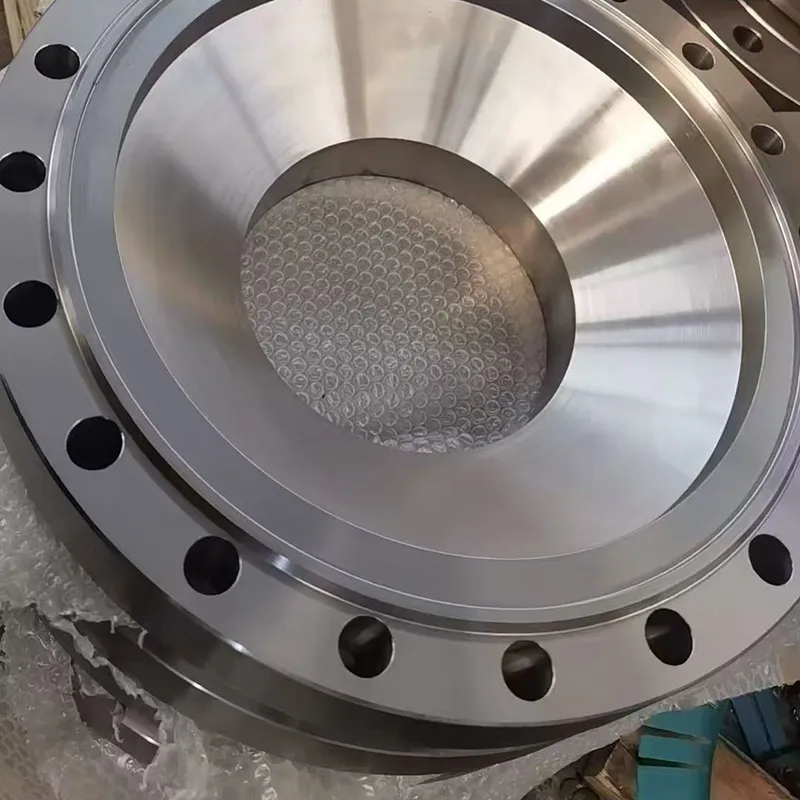
Low-Temperature Impact Toughness: Charpy V-Notch impact tested at -46°C (-50°F) minimum 27J (20 ft-lbf) average, providing reliable service in cold climates and low-temperature applications.
Good Weldability: Low carbon equivalent (CE) and controlled chemistry ensure excellent weldability for low-temperature service.
Cost-Effective Alternative to Stainless: More economical than stainless steel for low-temperature applications not requiring corrosion resistance.
NACE MR0175 / ISO 15156 Compliant: Available with hardness control and impact testing for sour service at low temperatures.
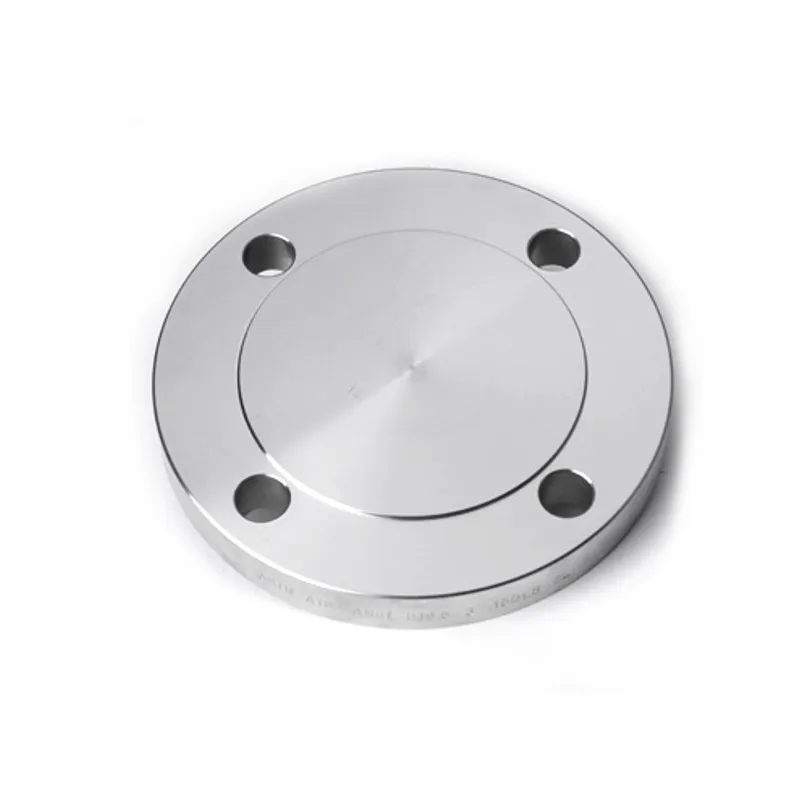
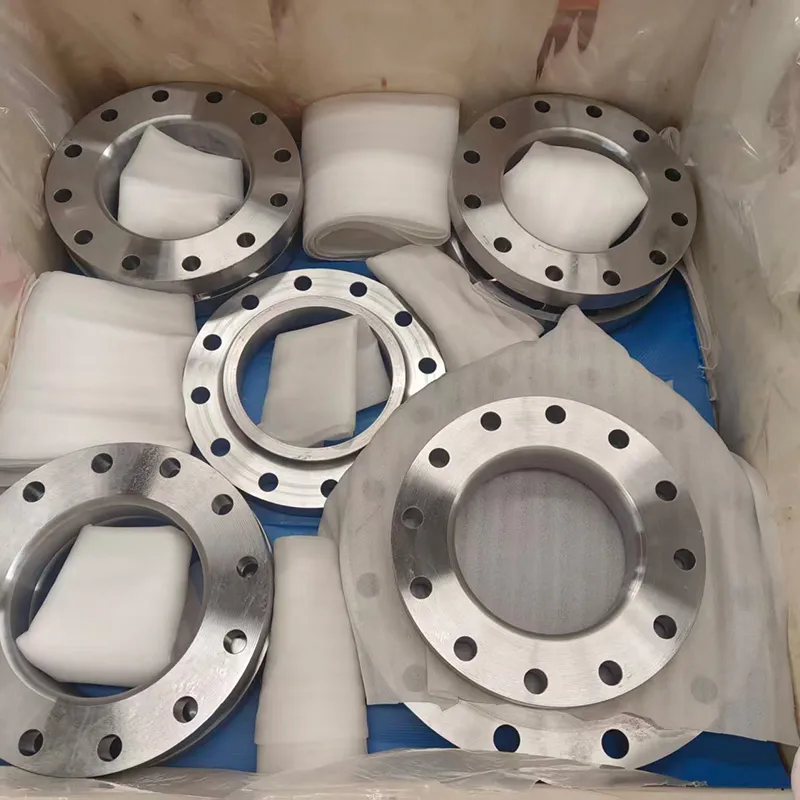
Full Range of Types: Weld neck (WN), slip-on (SO), blind (BL), socket weld (SW), threaded (TH), lap joint (LJ), plate flanges, and orifice flanges.
Pressure Ratings: Available in Class 150, 300, 400, 600, 900, 1500, and 2500 (PN6 to PN400 in metric equivalents).
International Certifications: Flanges can be certified by ABS, BV, DNV, LR, GL, RINA, CCS, KR, and NK for marine and offshore applications.
|
Standard |
Description |
Corresponding Grade |
|
ASME B16.5 |
Pipe flanges and flanged fittings (≤24″) |
ASTM A350 LF2 |
|
ASME B16.47 |
Large diameter steel flanges (26″–60″) Series A/B |
ASTM A350 LF2 |
|
ASME B16.48 |
Steel line blanks (spectacle blinds) |
ASTM A350 LF2 |
|
EN 1092-1 |
European standard flanges |
P355NH |
|
JIS B2220 |
Japanese standard steel pipe flanges |
S25C (impact tested) |
|
GB/T 9112 |
Chinese national standard flanges |
16MnD |
|
MSS SP-44 |
Steel pipeline flanges |
ASTM A350 LF2 |
|
NACE MR0175 / ISO 15156 |
Sour service compliance |
A350 LF2 (with hardness control) |
|
API 6A |
Wellhead and Christmas tree flanges (low temp) |
A350 LF2 (as specified) |
These standards ensure that our A350 LF2 carbon steel flanges meet global requirements for chemical composition, mechanical properties, dimensional tolerances, and pressure-temperature ratings for low-temperature service.
|
Element |
C |
Mn |
P |
S |
Si |
Ni |
Cr |
Mo |
Cu |
V |
|
A350 LF2 |
≤0.22 |
0.60–1.35 |
≤0.025 |
≤0.025 |
0.15–0.30 |
≤0.40 |
≤0.30 |
≤0.12 |
≤0.40 |
≤0.08 |
Note: A350 LF2 has tighter limits on carbon, phosphorus, and sulfur compared to A105, resulting in improved low-temperature impact properties.
|
Property |
Unit |
A350 LF2 (Normalized or N+T) |
|
Tensile Strength |
MPa |
485–655 |
|
Yield Strength (0.2% offset) |
MPa |
≥250 |
|
Elongation |
% |
≥22 |
|
Reduction of Area |
% |
≥30 |
|
Hardness (Brinell, max) |
HBW |
≤197 |
|
Hardness (Rockwell B, max) |
HRB |
≤92 |
|
Impact Energy (Charpy V-Notch @ -46°C) |
J |
≥27 (average), ≥20 (individual) |
High-Temperature Tensile Properties (Typical Values):
|
Temperature (°C) |
Tensile Strength (MPa) |
Yield Strength (MPa) |
|
20 |
500–550 |
260–300 |
|
100 |
480–530 |
240–280 |
|
200 |
460–510 |
220–260 |
|
300 |
430–480 |
200–240 |
|
400 |
400–450 |
180–220 |
Maximum Recommended Service Temperatures:
|
Service Type |
Maximum Temperature |
Minimum Temperature |
|
Continuous Service |
400°C (752°F) |
-46°C (-50°F) |
|
Intermittent Service |
450°C (842°F) |
-46°C (-50°F) |
|
Sour Service (NACE MR0175) |
232°C (450°F) |
-46°C (-50°F) |
Critical Note: A350 LF2 is specifically designed for low-temperature service down to -46°C (-50°F). For service below -46°C, A350 LF3 (3.5% nickel) or A350 LF5 (5% nickel) should be used. For service above 400°C, consider A105 or alloy steel flanges.
Heat Treatment
Condition:
All A350 LF2 flanges are supplied in normalized or normalized and tempered (N+T) condition:
Normalizing: Heat to 845–925°C (1550–1700°F), hold sufficient time, air cool.
Tempering (if specified): Reheat to 595–705°C (1100–1300°F), hold, air cool.
This heat treatment refines the grain structure, relieves internal stresses from forging, and ensures consistent low-temperature impact properties.
Delivery Condition: Flanges normally supplied in normalized (N) condition. Upon request, normalized and tempered (N+T) can be provided for improved toughness.
|
Class |
Rating (psig) @ 100°F |
Rating (psig) @ 200°F |
Rating (psig) @ 300°F |
Rating (psig) @ 400°F |
Rating (psig) @ 500°F |
|
150 |
285 |
285 |
260 |
230 |
200 |
|
300 |
740 |
740 |
680 |
600 |
520 |
|
400 |
985 |
985 |
905 |
800 |
695 |
|
600 |
1480 |
1480 |
1360 |
1200 |
1040 |
|
900 |
2220 |
2220 |
2040 |
1800 |
1560 |
|
1500 |
3705 |
3705 |
3405 |
3000 |
2600 |
|
2500 |
6170 |
6170 |
5670 |
5000 |
4330 |
*Reference: ASME B16.5 – carbon steel Group 1.1. These ratings are similar to A105, but A350 LF2 has superior low-temperature impact properties.*
|
Flange Type |
Common Faces |
Pressure Classes |
Manufacturing Method |
Typical Low-Temperature Applications |
|
Weld Neck (WN) |
RF, RTJ, FF |
150–2500 |
Forged + Machined |
LNG plant piping, low-temperature process |
|
Slip-On (SO) |
RF, FF |
150–600 |
Forged + Machined |
Refrigeration lines, low-pressure cold service |
|
Blind (BL) |
RF, RTJ, FF |
150–2500 |
Forged + Machined |
Low-temperature vessel closures |
|
Socket Weld (SW) |
RF, FF |
150–1500 |
Forged + Machined |
Small bore low-temperature systems |
|
Threaded (TH) |
RF, FF |
150–600 |
Forged + Machined |
Non-welded low-temperature connections |
|
Lap Joint (LJ) |
Flat face |
150–600 |
Forged + Machined |
Systems requiring frequent dismantling |
|
Reducing Flange |
RF, FF |
150–600 |
Forged + Machined |
Pipe size reduction in low-temp service |
|
Long Weld Neck (LWN) |
RF, RTJ, FF |
150–2500 |
Forged + Machined |
Vessel nozzles, low-temperature applications |
|
Orifice Flange |
RF, RTJ |
300–2500 |
Forged + Machined |
Flow measurement in low-temperature lines |
|
Spectacle Blind |
RF, FF |
150–2500 |
Plate cutting + Machining |
Piping isolation, low-temperature service |
|
Parameter |
Weld Neck (WN) |
Slip-On (SO) |
Blind (BL) |
Socket Weld (SW) |
|
Nominal Size (DN/NPS) |
1/2″ – 60″ |
1/2″ – 24″ |
1/2″ – 60″ |
1/2″ – 4″ |
|
Pressure Class |
150 – 2500 |
150 – 600 |
150 – 2500 |
150 – 1500 |
|
Facing Types |
RF, RTJ, FF, T&G, M&F |
RF, FF |
RF, RTJ, FF |
RF, FF |
|
Hub Types |
Long taper, short taper |
Straight |
N/A |
Straight |
Standard Dimensions: ASME B16.5 for sizes up to 24″, and ASME B16.47 Series A/B for large diameters up to 60″. EN 1092-1 dimensions available upon request.
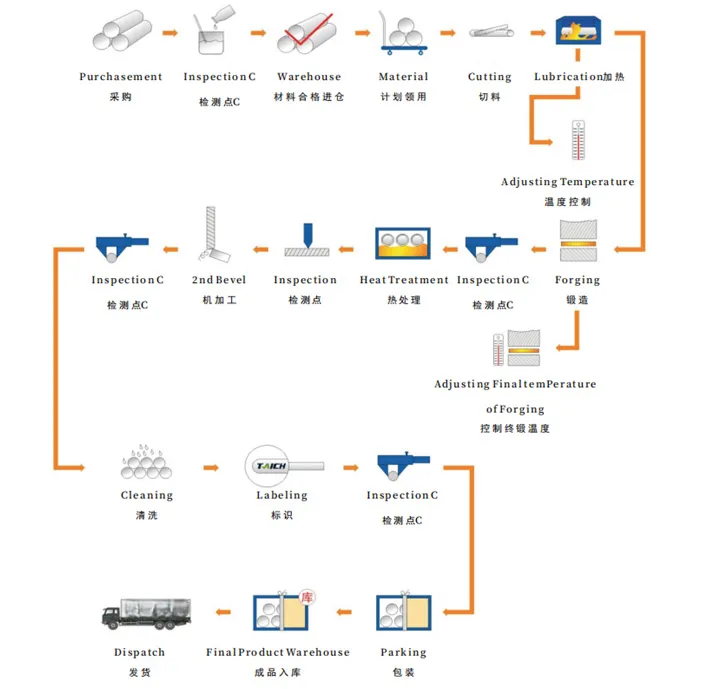
Raw Material Selection: High-quality A350 LF2 carbon steel billets from certified mills with certified chemical composition (low carbon, low sulfur, low phosphorus verification) and traceability.
Cutting & Heating: Material is cut to precise weight using band saws, then induction-heated to forging temperature (1100–1200°C).
Forging: Hot forged using hydraulic presses (3000–8000 tons) or hammer forging to shape the flange blank.
Heat Treatment – Normalizing: Heat treated at 845–925°C followed by air cooling to refine grain structure and achieve low-temperature impact properties.
Tempering (Optional): For enhanced toughness, tempering at 595–705°C followed by air cooling.
Machining: CNC lathes and milling machines produce precise dimensions, bolt holes, and facing surfaces.
Surface Finishing: Raised face serration, flat facing, or RTJ groove machining per ASME B16.5 requirements.
Hardness Control: For NACE/sour service applications, hardness limited to ≤187 HBW.
Marking: Laser engraving or stamping with grade (A350 LF2), size (NPS), class, heat number, heat treatment condition, manufacturer identification, and standard.
Inspection & Testing: Dimensional check, PMI (optional), hardness test, impact testing, and NDT as required.
Surface Treatment: Rust preventive oil coating or phosphate coating for corrosion protection.
|
Surface Finish |
Description |
Roughness (μinch) |
Typical Low-Temperature Application |
|
Raised Face (RF) |
Standard serrated concentric or spiral finish |
125–250 |
LNG plant piping, general low-temperature |
|
Flat Face (FF) |
Full face contact, smooth or serrated |
125–250 |
Flat-faced equipment connections |
|
Ring Type Joint (RTJ) |
Grooved for oval or octagonal ring gasket |
63 max |
High-pressure low-temperature service |
|
Tongue & Groove (T&G) |
Matched tongue and groove facing |
125 min |
Critical low-temperature connections |
|
Male & Female (M&F) |
Matched male/female facing |
125 min |
Vessel nozzles, low-temperature service |
|
Oil Coated |
Rust preventive oil film |
As machined |
Storage and transportation |
|
Phosphate Coated |
Zinc phosphate for corrosion resistance |
As machined |
Outdoor low-temperature storage |
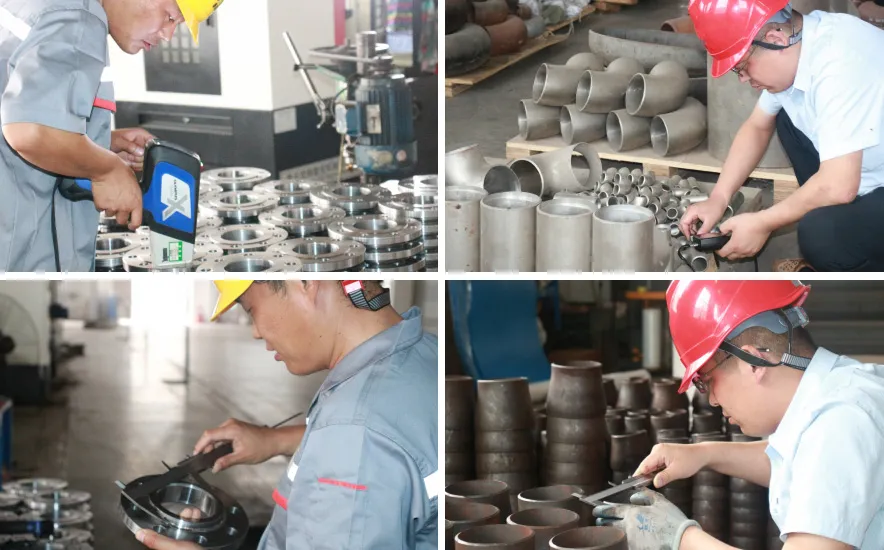
Each A350 LF2 flange face is inspected for surface roughness, concentricity, and absence of defects.
Chemical Analysis: Spectrometer verification or certified mill certificate – low carbon, low sulfur, low phosphorus critical for low-temperature impact properties.
Mechanical Testing: Tensile strength (485–655 MPa), yield strength (≥250 MPa), elongation (≥22%), reduction of area (≥30%).
Impact Testing: Charpy V-Notch at -46°C (-50°F) – 27J average, 20J individual minimum (mandatory for LF2).
Hardness Testing: Brinell (HBW) – ≤197 maximum; for NACE compliance ≤187 HBW.
Dimensional Inspection: OD, ID, bolt circle, bolt hole alignment, thickness, flatness using calibrated gauges and CMM.
Thread Inspection: NPT thread verification using GO/NO-GO gauges per ANSI B1.20.1.
NDT – Liquid Penetrant Testing (PT): Upon customer request for surface defects.
NDT – Ultrasonic Testing (UT): Upon customer request for internal flaws.
NDT – Magnetic Particle Testing (MT): Upon customer request for ferromagnetic surface defects.
Sour Service Qualification (upon request): NACE MR0175 / ISO 15156 compliance with hardness verification and optional HIC/SSC testing.
Third-Party Inspection: SGS, BV, DNV, TUV, LR, ABS on customer request.
|
Parameter |
Size Range |
Permitted Tolerance |
|
Outside Diameter (OD) |
≤4″ (DN100) |
±1.6 mm |
|
Outside Diameter (OD) |
4″–8″ (DN100–DN200) |
±2.4 mm |
|
Outside Diameter (OD) |
≥10″ (DN250) |
±3.2 mm |
|
Bolt Circle Diameter |
All sizes |
±0.8 mm |
|
Bolt Hole Spacing |
Adjacent holes |
±0.5 mm |
|
Bolt Hole Roundness |
All sizes |
±0.5 mm |
|
Flange Thickness |
All sizes |
+3.0 mm / -0.0 mm |
|
Hub Diameter |
≤4″ |
±1.6 mm |
|
Hub Diameter |
≥6″ |
±2.4 mm |
|
RF Surface Roughness |
All sizes |
125–250 μinch |
|
RF Height |
All sizes |
1.6 mm ±0.8 mm |
LNG Plants: Liquefaction process piping flanges, LNG storage tank connections, LNG carrier loading arm flanges, vaporization facility flanges.
Arctic Oil & Gas: Pipelines in cold climates, Arctic offshore platforms, permafrost region facilities, low-temperature wellhead flanges.
Industrial Refrigeration: Ammonia refrigeration system flanges, low-temperature refrigerant lines, cold storage facility piping.
Petrochemical (Low Temperature): Ethylene and propylene plant flanges, cold box piping, low-temperature separation units.
Cryogenic Storage (to -46°C): Liquid nitrogen, liquid oxygen, liquid argon storage tank connections (where -46°C is sufficient).
Gas Processing Plants: Low-temperature gas separation (LTGO), dew point control facilities, NGL recovery plant flanges.
Pipeline Valve Stations: Valve connections in cold regions, block valve station flanges, meter station low-temperature flanges.
Offshore Platforms (Cold Climate): Topside low-temperature piping flanges (ABS/BV/DNV/LR certified for cold regions).
Hydrogen Service (Low Temperature): Low-temperature hydrogen piping (non-sour where applicable).
Power Generation (Cold Climate): Auxiliary cooling systems in cold regions, intake structures.
Small flanges (≤4″): Heavy-duty cartons with
moisture barrier paper on pallets.
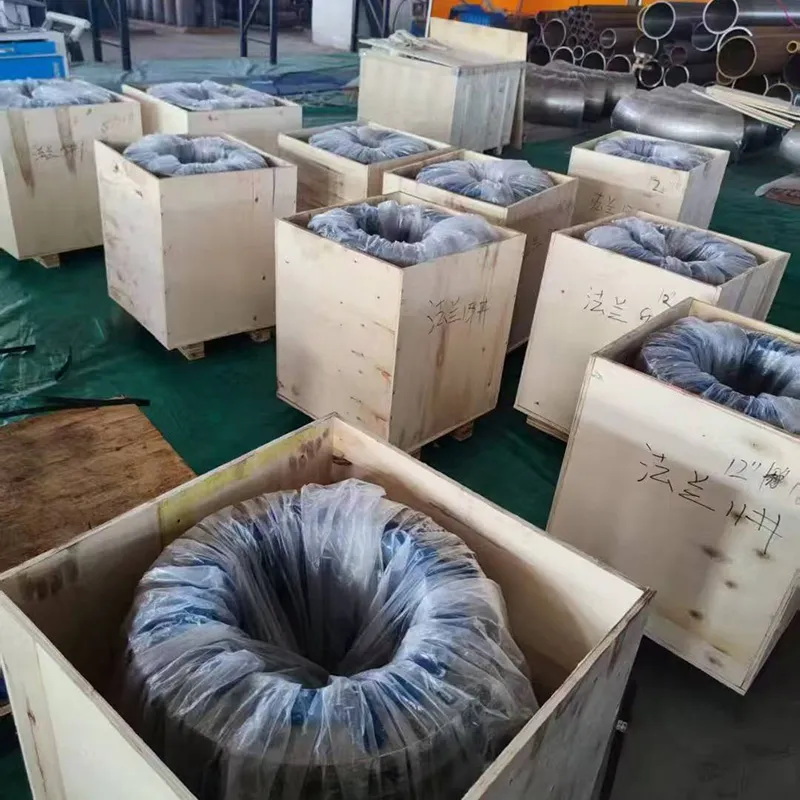
Medium flanges (6″–12″): Wooden
crates with foam padding dividers, each flange wrapped in VCI paper.
Large flanges (≥14″): Individual
wooden crates or steel-framed pallets with foam padding.
All shipments:
VCI paper interleaving between flanges
Plastic end caps for bore protection
Bolt hole protectors for RTJ facings
Rust preventive oil coating applied
Individual tagging: Grade (A350 LF2), size (NPS), class, heat number, heat treatment condition, impact test certification reference, standard, PO number
Waterproof shipping marks for export containers
Moisture barrier wrapping for sea freight
Womic Steel's Delivery Strengths:
Ready stock: Class 150 and 300 A350 LF2 flanges in sizes 1/2″–24″ – dispatch within 24-48 hours.
Direct cooperation with global shipowners for the most competitive freight rates.
Professional loading by in-house teams using padded slings.
Complete documentation package including EN 10204 3.1 MTR, impact test reports at -46°C, heat treatment charts, hardness test reports, and NACE compliance certificates (if required).
Continuous cargo tracking and after-sales follow-up.
1. What is the
difference between A350 LF2 and A105 flanges?
A350 LF2 has tighter chemistry control (lower carbon, phosphorus, sulfur) and
is impact tested at -46°C (-50°F), providing reliable low-temperature
performance. A105 is rated to -29°C (-20°F) and is not impact tested. For
service below -29°C, A350 LF2 is required.
2. What is the
maximum temperature for A350 LF2 flanges?
Maximum continuous service temperature is 400°C (752°F). Above 400°C,
mechanical properties degrade significantly. For high-temperature service, use
A105 or alloy steel flanges.
3. Are A350 LF2
flanges NACE MR0175 compliant?
Yes, with supplementary hardness control (≤187 HBW). A350 LF2 is commonly used
in sour service at low temperatures when properly heat treated and hardness
controlled.
4. How does A350 LF2
compare to A350 LF3?
LF2 has ≤0.40% nickel and is impact tested at -46°C. LF3 has 3.3-3.7% nickel
and is impact tested at -101°C (-150°F). For LNG and cryogenic service below
-46°C, LF3 is required.
5. Can A350 LF2
flanges be used for LNG service?
For LNG storage and transfer at -162°C, A350 LF2 is not suitable. Use A350 LF3
(3.5% nickel) or stainless steel (304/316) for LNG service at -162°C. A350 LF2
is suitable for LNG plant auxiliary piping above -46°C.
6. What facing is
recommended for low-temperature service flanges?
Raised face (RF) with serrated finish (125–250 μinch) using spiral wound gasket
with PTFE filler is recommended for low-temperature service. For high-pressure
low-temperature service (Class 600+), RTJ facing with octagonal ring gasket is
standard.
7. Is post-weld heat
treatment (PWHT) required for A350 LF2 flanges?
PWHT requirements depend on weld joint thickness and service conditions per
ASME B31.3 or Section VIII. Generally, PWHT is required for thicknesses above
19mm (3/4″) for low-temperature service.
8. What is the
typical lead time for A350 LF2 flanges?
Stock sizes (1/2″–24″, Class 150/300 WN RF normalized): 2–4 days. Non-stock or
special facings: 3–4 weeks. NACE MR0175 compliant flanges may add 2–5 days for
hardness verification.
Complete Product Range: Weld neck, slip-on, blind, socket weld, threaded, lap joint, reducing, long weld neck – one-stop sourcing for low-temperature projects.
Strict Quality Control: ISO 9001:2015, PED 2014/68/EU, and API Q1 certified facilities.
Certified Low-Temperature Impact Properties: Charpy V-Notch testing at -46°C with full documentation included as standard.
NACE MR0175 / ISO 15156 Compliant: Full documentation for sour service applications with hardness control.
Full Heat Treatment: Normalizing (or N+T) included – certified with temperature charts.
Advanced Forging & Machining: 3000–8000 ton hydraulic presses and CNC machining centers.
Full Traceability: Heat number stamped on each flange – traceable back to original mill certificate.
Flexible Customization: Special facing types (RTJ, T&G, M&F), custom bolt drilling, and non-standard sizes available.
Marine & Offshore Certified: ABS, BV, DNV, LR, GL, RINA, CCS, KR, NK certification available.
Global Delivery: Exported to major LNG, petrochemical, and Arctic pipeline projects worldwide.
Tel / WhatsApp:
Victor: +86 15575100681
Jack: +86 18390957568
E-mail: info@womicstainless.com
Website: www.womicsteel.com
Contact Womic Steel today for a competitive quote on A350 LF2 carbon steel flanges. We offer certified low-temperature impact properties, NACE MR0175 compliance, normalized heat treatment, fast production lead times, and reliable global delivery to keep your low-temperature and Arctic projects running smoothly.
Stock Examples (Class 150 WN RF – A350 LF2, Normalized):
|
NPS |
DN |
Schedule |
Class |
Condition |
|
1/2″ |
15 |
Sch40 |
150 |
Normalized |
|
1″ |
25 |
Sch40 |
150 |
Normalized |
|
2″ |
50 |
Sch40 |
150 |
Normalized |
|
3″ |
80 |
Sch40 |
150 |
Normalized |
|
4″ |
100 |
Sch40 |
150 |
Normalized |
|
6″ |
150 |
Sch40 |
150 |
Normalized |
|
8″ |
200 |
Sch40 |
150 |
Normalized |
|
10″ |
250 |
Sch40 |
150 |
Normalized |
|
12″ |
300 |
Sch40 |
150 |
Normalized |
|
16″ |
400 |
Sch40 |
150 |
Normalized |
|
20″ |
500 |
Sch40 |
150 |
Normalized |
|
24″ |
600 |
Sch40 |
150 |
Normalized |
Stock Examples (Class 300 WN RF – A350 LF2, Normalized – Low-Temperature Service):
|
NPS |
DN |
Schedule |
Class |
Condition |
|
1/2″ |
15 |
Sch80 |
300 |
Normalized |
|
1″ |
25 |
Sch40 |
300 |
Normalized |
|
2″ |
50 |
Sch80 |
300 |
Normalized |
|
4″ |
100 |
Sch40 |
300 |
Normalized |
|
6″ |
150 |
Sch80 |
300 |
Normalized |
|
8″ |
200 |
Sch40 |
300 |
Normalized |
|
10″ |
250 |
Sch80 |
300 |
Normalized |
|
12″ |
300 |
Sch40 |
300 |
Normalized |
Stock Examples (LNG Auxiliary Piping – A350 LF2, Class 150, RF, Normalized + Impact Tested at -46°C):
|
NPS |
DN |
Class |
Facing |
Condition |
Application |
|
4″ |
100 |
150 |
RF |
Normalized |
LNG auxiliary piping |
|
6″ |
150 |
150 |
RF |
Normalized |
LNG auxiliary piping |
|
8″ |
200 |
150 |
RF |
Normalized |
Cooling water system |
|
10″ |
250 |
150 |
RF |
Normalized |
Low-temperature process |
Related Keywords (A350 LF2 Flanges):
ASME B16.5 A350 LF2 weld neck flange, carbon steel slip on flange Class 150 low temperature, A350 LF2 blind flange RTJ, socket weld flange 3000LB A350 LF2, threaded flange NPT low temperature carbon steel, lap joint flange stub end A350 LF2, EN 1092-1 P355NH plate flange equivalent, JIS B2220 low temperature carbon steel flange, normalized A350 LF2 flange, Charpy impact tested flange -46°C, LNG plant A350 LF2 weld neck flange, Arctic pipeline A350 LF2 blind flange, industrial refrigeration A350 LF2 slip on flange, ammonia refrigeration flange, low temperature service flange Grade LF2, ethylene plant A350 LF2 flange, cold box piping connection, NACE MR0175 A350 LF2 flange, sour service low temperature carbon steel flange, 45K yield strength low temperature flange, normalized and tempered A350 LF2, HF alkylation low temperature flange, A350 LF2 vs A105 low temperature comparison, A350 LF2 flange heat treatment charts, -46°C impact tested flange certification, A350 LF2 long weld neck flange for vessel nozzle, VL2 flange material for low temperature, carbon steel flanges for propane refrigeration.