Womic Stainless Steel Co., Ltd

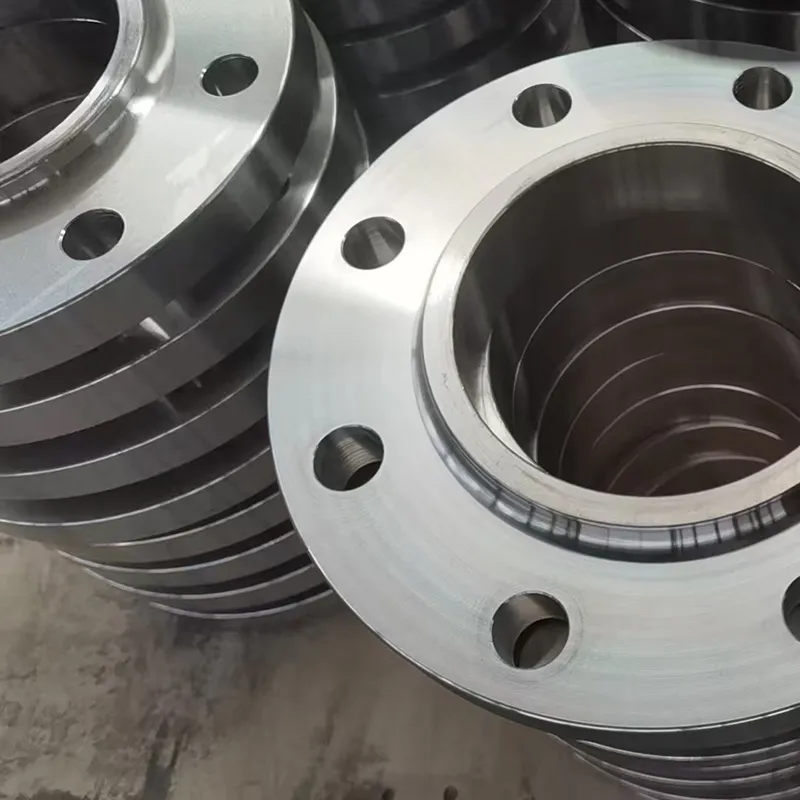
Exceptional High-Temperature Oxidation Resistance: High chromium content (24-26%) provides outstanding resistance to oxidation and scaling up to 1050°C (1922°F) in continuous service, significantly outperforming 304H, 316H, 321H, and 347H grades.
Superior Creep and Rupture Strength: Maintains excellent high-temperature strength and creep resistance up to 1000°C (1832°F), ensuring long-term dimensional stability and reliable bolted joint integrity in extreme heat transfer applications.
Excellent Resistance to Sulfidation and Carburization: High chromium and nickel content provide superior resistance to sulfur attack (sulfidation) and carbon absorption (carburization) in reducing, carburizing, and sulfur-bearing atmospheres commonly found in furnace and kiln service.
Good High-Temperature Ductility: Maintains adequate ductility even after prolonged high-temperature exposure, allowing for flange disassembly and reuse in cyclic service.
Excellent Resistance to Thermal Fatigue: Superior resistance to thermal cycling fatigue, making 310S flanges ideal for intermittent high-temperature service where rapid heating and cooling occurs.
Good Weldability and Fabricability: Austenitic structure offers good weldability with proper procedures, suitable for field welding and repair of flanged connections.
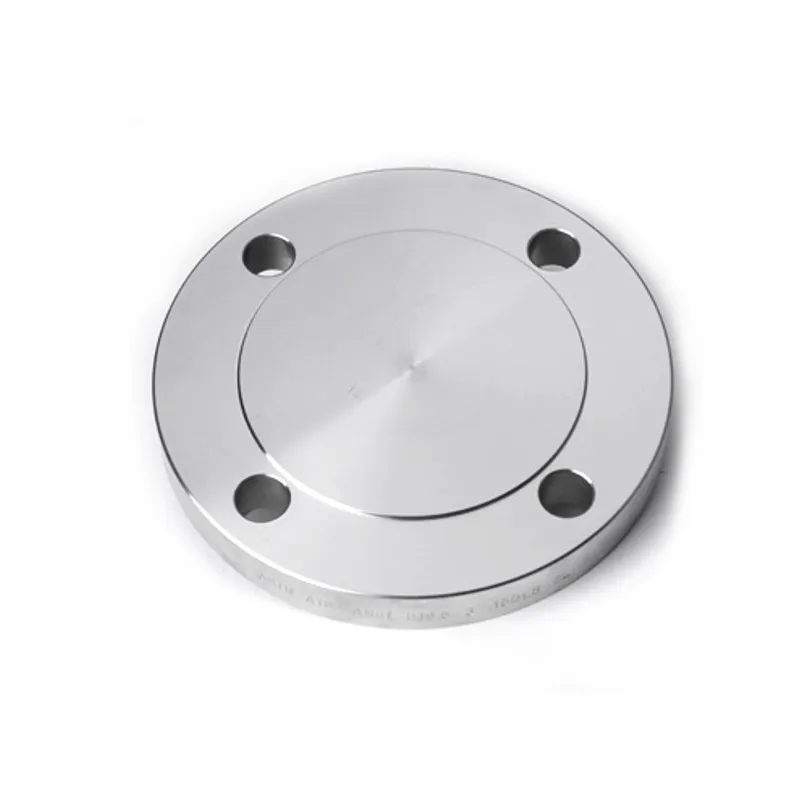
Full Range of Types: Weld neck (WN), slip-on (SO), blind (BL), socket weld (SW), threaded (TH), lap joint (LJ), plate flanges, and orifice flanges.
Pressure Ratings: Available in Class 150, 300, 600, 900, 1500, and 2500 (PN6 to PN400 in metric equivalents). Note: At very high temperatures, pressure ratings are significantly derated.
Resistance to Cyclic Oxidation: Superior performance in alternating oxidizing-reducing atmospheres, common in heat treatment and furnace applications.
International Certifications: Flanges can be certified by ABS, BV, DNV, LR, GL, RINA, CCS, KR, and NK, and comply with ASME, PED, EN, and JIS standards for high-temperature service.
|
Standard |
Description |
Corresponding Grade |
|
ASME B16.5 |
Pipe flanges and flanged fittings (≤24″) |
A182 F310S |
|
ASME B16.47 |
Large diameter steel flanges (26″–60″) Series A/B |
A182 F310S |
|
EN 1092-1 |
European standard flanges |
1.4845 (X8CrNi25-21) |
|
JIS B2220 |
Japanese standard steel pipe flanges |
SUS310STB |
|
GB/T 9112 |
Chinese national standard flanges |
06Cr25Ni20 |
|
MSS SP-44 |
Steel pipeline flanges |
310S |
|
BS 4504 |
British standard flanges |
310S31 |
|
DIN 17458 |
German austenitic stainless tubes |
X8CrNi25-21 |
|
NORSOK M-650 |
Offshore material qualification (limited high-temp) |
Grade 310S |
These standards ensure that our 310S stainless steel flanges meet global requirements for chemical composition, mechanical properties, dimensional tolerances, and pressure-temperature ratings for extreme high-temperature service.
|
Element |
C |
Mn |
P |
S |
Si |
Cr |
Ni |
Mo |
N |
|
310S |
≤0.08 |
≤2.00 |
≤0.045 |
≤0.030 |
≤1.50 |
24.0–26.0 |
19.0–22.0 |
≤0.75 |
— |
310S (UNS S31008) is a high-temperature austenitic stainless steel grade with the highest chromium (24-26%) and nickel (19-22%) content among standard heat-resistant stainless steel flanges. The low carbon version (310S) provides improved weldability and resistance to intergranular corrosion compared to 310 (0.25% max carbon). The high chromium content provides exceptional oxidation resistance up to 1050°C, while the high nickel content provides excellent high-temperature strength, creep resistance, and carburization resistance.
Comparison with Other High-Temperature Stainless Steel Grades:
|
Property |
304H |
321H |
347H |
310S |
|
Chromium (%) |
18–20 |
17–19 |
17–19 |
24–26 |
|
Nickel (%) |
8–11 |
9–12 |
9–13 |
19–22 |
|
Maximum Continuous Service (°C) |
800 |
800 |
870 |
1050 |
|
Maximum Continuous Service (°F) |
1472 |
1472 |
1600 |
1922 |
|
Oxidation Resistance |
Good |
Good |
Good |
Excellent |
|
Sulfidation Resistance |
Poor |
Poor |
Poor |
Excellent |
|
Carburization Resistance |
Poor |
Poor |
Poor |
Excellent |
|
Relative Cost |
Low |
Medium |
Medium |
High |
Comparison of Maximum Service Temperatures:
|
Grade |
Maximum Continuous Service (°C) |
Maximum Intermittent Service (°C) |
Typical Application |
|
304H |
800°C (1472°F) |
850°C (1562°F) |
General high-temperature |
|
309S |
980°C (1800°F) |
1038°C (1900°F) |
Moderate furnace service |
|
310S |
1050°C (1922°F) |
1100°C (2012°F) |
High-temperature furnace |
|
Property |
Unit |
310S (Annealed) |
|
Tensile Strength |
MPa |
≥515 |
|
Yield Strength (0.2% offset) |
MPa |
≥205 |
|
Elongation |
% |
≥35 |
|
Hardness (Brinell) |
HBW |
≤217 |
|
Density |
g/cm³ |
7.98 |
|
Melting Range |
°C |
1400–1450 |
|
Thermal Conductivity (20°C) |
W/m·K |
14.2 |
|
Thermal Conductivity (500°C) |
W/m·K |
18.5 |
|
Thermal Conductivity (1000°C) |
W/m·K |
23.0 |
|
Coefficient of Thermal Expansion (20–100°C) |
μm/m·K |
15.9 |
|
Coefficient of Thermal Expansion (20–1000°C) |
μm/m·K |
18.0 |
|
Specific Heat Capacity (20°C) |
J/kg·K |
500 |
|
Modulus of Elasticity (20°C) |
GPa |
200 |
|
Modulus of Elasticity (800°C) |
GPa |
140 |
High-Temperature Tensile Properties (Typical Values):
|
Temperature (°C) |
Tensile Strength (MPa) |
Yield Strength (MPa) |
|
20 |
580–650 |
250–300 |
|
400 |
480–550 |
180–220 |
|
500 |
460–520 |
170–200 |
|
600 |
440–500 |
160–190 |
|
700 |
400–460 |
150–180 |
|
800 |
300–360 |
120–150 |
|
900 |
200–250 |
80–110 |
|
1000 |
120–160 |
50–70 |
|
1050 |
80–120 |
30–50 |
Creep Rupture Strength (Typical Values):
|
Temperature (°C) |
10,000 Hour Stress (MPa) |
100,000 Hour Stress (MPa) |
|
600 |
120–150 |
90–110 |
|
700 |
70–90 |
50–65 |
|
800 |
35–50 |
20–30 |
|
900 |
15–25 |
8–12 |
|
1000 |
6–10 |
3–5 |
Maximum Recommended Service Temperatures:
|
Service Type |
Maximum Temperature |
Limitation |
|
Continuous Service (Oxidizing Atmosphere) |
1050°C (1922°F) |
Oxidation scaling |
|
Continuous Service (Reducing Atmosphere) |
900°C (1652°F) |
Potential ductility loss |
|
Intermittent Service |
1100°C (2012°F) |
Thermal cycling |
|
Sulfidizing Atmosphere |
800°C (1472°F) |
Sulfur attack |
|
Carburizing Atmosphere |
900°C (1652°F) |
Carbon absorption |
|
Minimum Service Temperature |
-196°C (-321°F) |
Retains toughness |
Critical Note: 310S is not recommended for service in the sensitization temperature range (425–850°C) if welded without post-weld heat treatment, as chromium carbide precipitation can occur. However, the high chromium content (24-26%) provides better resistance to sensitization than lower chromium grades. For service requiring maximum corrosion resistance in the sensitization range, post-weld solution annealing is recommended.
Heat Treatment
Condition:
All 310S flanges are solution
annealed at 1040–1150°C followed by rapid cooling (water
quenching or rapid air cooling). This heat treatment:
Dissolves chromium carbides and restores corrosion resistance.
Relieves internal stresses from forging.
Enhances ductility and high-temperature creep resistance.
Optimizes the microstructure for high-temperature service.
Delivery Condition: Flanges normally supplied in solution annealed and pickled condition, providing a clean, smooth surface and good corrosion resistance. Upon request, bright annealed (BA) finish can be provided for applications requiring ultra-clean surfaces.
|
Class |
100°F (psig) |
500°F (psig) |
800°F (psig) |
900°F (psig) |
1000°F (psig) |
1100°F (psig) |
1200°F (psig) |
|
150 |
275 |
200 |
160 |
140 |
120 |
90 |
60 |
|
300 |
720 |
520 |
430 |
370 |
320 |
240 |
160 |
|
600 |
1440 |
1040 |
860 |
740 |
640 |
480 |
320 |
|
900 |
2160 |
1560 |
1290 |
1110 |
960 |
720 |
480 |
|
1500 |
3600 |
2600 |
2150 |
1850 |
1600 |
1200 |
800 |
|
2500 |
6000 |
4330 |
3580 |
3080 |
2670 |
2000 |
1330 |
*Reference: Based on ASME B16.5 for austenitic stainless steel (Group 1.2). At temperatures above 1000°F (538°C), pressure ratings are significantly reduced. Contact Womic Steel engineering for detailed high-temperature rating tables.*
|
Flange Type |
Common Faces |
Pressure Classes |
Manufacturing Method |
Typical High-Temperature Applications |
|
Weld Neck (WN) |
RF, RTJ, FF |
150–2500 |
Forged + Machined |
High-temperature furnace nozzles, superheater |
|
Slip-On (SO) |
RF, FF |
150–600 |
Forged + Machined |
Low-to-medium pressure high-temperature |
|
Blind (BL) |
RF, RTJ, FF |
150–2500 |
Forged + Machined |
Furnace manways, inspection ports |
|
Socket Weld (SW) |
RF, FF |
150–1500 |
Forged + Machined |
Small bore high-temperature systems |
|
Threaded (TH) |
RF, FF |
150–600 |
Forged + Machined |
Non-welded high-temperature connections |
|
Lap Joint (LJ) |
Flat face |
150–600 |
Forged + Machined |
High-temperature systems with frequent maintenance |
|
Plate Flange |
Flat face |
150 |
Plate cutting + Machining |
Low-pressure high-temperature ducting |
|
Orifice Flange |
RF, RTJ |
300–2500 |
Forged + Machined |
High-temperature flow measurement |
|
Parameter |
Weld Neck (WN) |
Slip-On (SO) |
Blind (BL) |
Lap Joint (LJ) |
Socket Weld (SW) |
|
Nominal Size (DN/NPS) |
1/2″ – 60″ |
1/2″ – 24″ |
1/2″ – 60″ |
1/2″ – 24″ |
1/2″ – 4″ |
|
Pressure Class |
150 – 2500 |
150 – 600 |
150 – 2500 |
150 – 600 |
150 – 1500 |
|
Facing Types |
RF, RTJ, FF, T&G, M&F |
RF, FF |
RF, RTJ, FF |
Flat face |
RF, FF |
|
Hub Types |
Long taper, short taper |
Straight |
N/A |
Studded |
Straight |
Standard Dimensions: ASME B16.5 for sizes up to 24″, and ASME B16.47 Series A/B for large diameters up to 60″. EN 1092-1 dimensions available upon request.
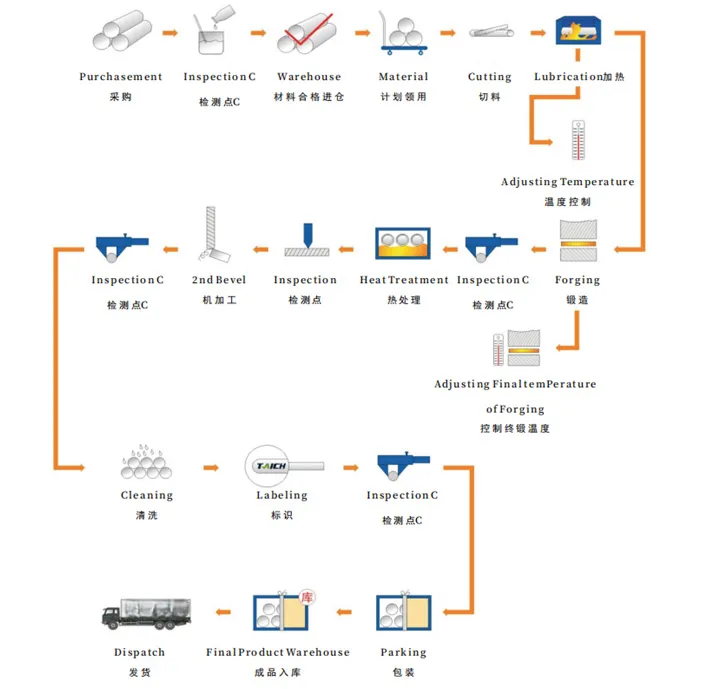
Raw Material Selection: High-quality 310S stainless steel bars or billets from certified mills (Baosteel, TISCO, Outokumpu, Sandvik) with certified chemical composition (Cr 24-26%, Ni 19-22% verification) and traceability.
Cutting & Heating: Material is cut to precise weight using band saws, then induction-heated to forging temperature (1100–1200°C). High alloy content requires careful temperature control.
Forging: Hot forged using hydraulic presses (3000–8000 tons) with strict temperature control. High chromium content requires careful reduction rates.
Heat Treatment – Solution Annealing: Solution annealing at 1040–1150°C to dissolve chromium carbides and restore properties, followed by rapid cooling (water quenching).
Machining: CNC lathes and milling machines produce precise dimensions, bolt holes, and facing surfaces. High alloy content requires appropriate tooling.
Surface Finishing: Raised face serration, flat facing, or RTJ groove machining per ASME B16.5 requirements.
Marking: Laser engraving or stamping with grade (310S/S31008), size (NPS), class, heat number, manufacturer identification, and standard.
Inspection & Testing: Dimensional check, PMI, hardness test, and NDT as required.
Surface Treatment: Pickling and passivation to remove oxide scale and restore corrosion resistance.
|
Surface Finish |
Description |
Roughness (μinch) |
Typical High-Temperature Application |
|
Raised Face (RF) |
Standard serrated concentric or spiral finish |
125–250 |
High-temperature piping, gasket sealing |
|
Flat Face (FF) |
Full face contact, smooth or serrated |
125–250 |
Flat-faced furnace equipment connections |
|
Ring Type Joint (RTJ) |
Grooved for oval or octagonal ring gasket |
63 max |
High-pressure, high-temperature critical service |
|
Tongue & Groove (T&G) |
Matched tongue and groove facing |
125 min |
High-temperature furnace connections |
|
Male & Female (M&F) |
Matched male/female facing |
125 min |
Vessel nozzles |
|
Pickled & Passivated |
Chemically cleaned oxide-free surface |
As machined |
High-temperature service, oxidation removal |
|
Smooth Finish |
Non-serrated flat surface |
63–125 |
Special high-temperature applications |
Each 310S flange face is inspected for surface roughness, concentricity, and absence of defects.
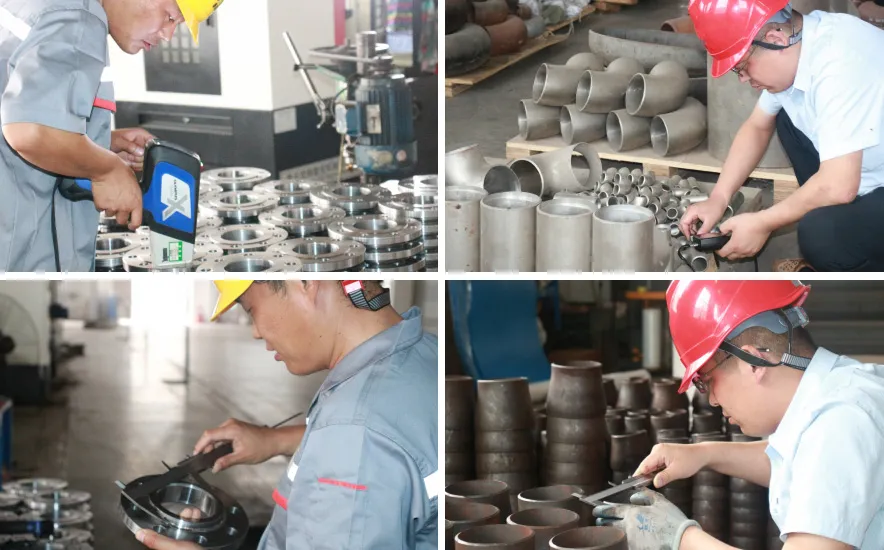
Chemical Analysis: PMI 100% verification using handheld XRF spectrometer for Cr (24-26%), Ni (19-22%).
Mechanical Testing: Tensile strength (≥515 MPa), yield strength (≥205 MPa), elongation (≥35%), hardness (≤217 HBW).
Dimensional Inspection: OD, ID, bolt circle, bolt hole alignment, thickness, flatness using calibrated gauges and CMM.
Thread Inspection: NPT thread verification using GO/NO-GO gauges per ANSI B1.20.1.
NDT – Liquid Penetrant Testing (PT): 100% for surface defects.
NDT – Ultrasonic Testing (UT): For internal flaws upon request.
Intergranular Corrosion Test: ASTM A262 Practice E – upon request.
High-Temperature Tensile Testing: Optional upon customer request.
Third-Party Inspection: SGS, BV, DNV, TUV, LR, or ABS on customer request.
|
Parameter |
Size Range |
Permitted Tolerance |
|
Outside Diameter (OD) |
≤4″ (DN100) |
±1.6 mm |
|
Outside Diameter (OD) |
4″–8″ (DN100–DN200) |
±2.4 mm |
|
Outside Diameter (OD) |
≥10″ (DN250) |
±3.2 mm |
|
Bolt Circle Diameter |
All sizes |
±0.8 mm |
|
Bolt Hole Spacing |
Adjacent holes |
±0.5 mm |
|
Flange Thickness |
All sizes |
+3.0 mm / -0.0 mm |
|
Hub Diameter |
≤4″ |
±1.6 mm |
|
Hub Diameter |
≥6″ |
±2.4 mm |
|
RF Surface Roughness |
All sizes |
125–250 μinch |
|
RF Height |
All sizes |
1.6 mm ±0.8 mm |
Industrial Furnaces: Radiant tube flanged connections, furnace door flanges, recuperator flanges, heat treatment furnace process piping flanges, annealing furnace flanges, carburizing furnace flanges, nitriding furnace flanges, brazing furnace flanges, melting furnace flanges.
Heat Treating Equipment: Annealing furnace flanged connections, normalizing furnace flanges, hardening furnace flanges, tempering furnace flanges, quenching tank connections.
Petrochemical & Refining (High-Temperature): Ethylene cracking furnace outlet flanges, hydrogen reformer flanges, catalytic reformer flanges, pyrolysis furnace flanged connections, steam methane reformer (SMR) flanges, ammonia plant reformer flanges.
Power Generation (High-Temperature): Superheater header flanges, reheater flange connections, boiler nozzle flanges (high-temperature sections), heat recovery steam generator (HRSG) flanges, gas turbine exhaust flanges, combined cycle power plant flanges.
Cement Industry: Clinker cooler flanged connections, preheater cyclones flanges, kiln inlet/outlet flanges, calciner flanges.
Ceramic Industry: Kiln flanged connections, roller hearth furnace flanges, tunnel kiln flanges, periodic kiln flanges, ceramic drying equipment flanges.
Steel Industry: Pickling line furnace flanges, galvanizing line furnaces flanges, continuous annealing line flanges, hydrogen annealing furnaces flanges.
Waste Incineration: Incinerator flanged connections, waste-to-energy plant flanges, flue gas treatment system flanges (high-temperature sections), primary/secondary combustion chamber flanges.
Metal Processing: Powder metal sintering furnace flanges, brazing furnace flanges, forging furnace flanges, rolling mill furnace flanges.
Aerospace: High-temperature test facility flanges, jet engine test stand flanges, rocket engine component flanges.
Glass Industry: Glass melting furnace heat exchanger flanges, recuperator flanges, forehearth flanges, float glass furnace flanges.
Small flanges (≤4″): Heavy-duty cartons with
moisture barrier paper on pallets.
Medium flanges (6″–12″): Wooden
crates with foam padding dividers, each flange wrapped in VCI paper.
Large flanges (≥14″): Individual
wooden crates or steel-framed pallets with foam padding.
All shipments:
VCI paper interleaving between flanges
Plastic end caps for bore protection
Bolt hole protectors for RTJ facings
Individual tagging: Grade (310S/S31008), size, class, heat number, heat treatment condition, standard, PO number
Waterproof shipping marks for export containers
Moisture barrier wrapping for sea freight
Womic Steel's Delivery Strengths:
Ready stock: Class 150 and 300 310S flanges in sizes 1/2″–12″ – dispatch within 24–48 hours.
Direct cooperation with global shipowners for the most competitive freight rates.
Professional loading by in-house teams using padded slings.
Complete documentation package including EN 10204 3.1 MTR, PMI reports, heat treatment charts, and mechanical test reports.
Continuous cargo tracking and after-sales follow-up.
1. What makes 310S
different from 309S for flange applications?
310S has higher chromium (24-26% vs 22-24%) and higher nickel (19-22% vs
12-15%), providing superior oxidation resistance up to 1050°C vs 980°C for
309S. For continuous service above 1000°C, 310S is the preferred grade.
2. What is the
maximum service temperature for 310S flanges?
Continuous service: 1050°C (1922°F) in oxidizing atmospheres. Intermittent
service: 1100°C (2012°F). For service above 1050°C, consider nickel-based
superalloys such as Alloy 600 or 601.
3. Can 310S flanges
be used in sulfidizing atmospheres?
Limited. 310S has better sulfidation resistance than 304/316 grades due to high
Cr and Ni, but for severe sulfidizing service above 800°C, consider Alloy 600
or Hastelloy C276.
4. What is the
maximum allowable working pressure at 1000°C?
At 1000°C (1832°F), pressure ratings are significantly reduced. For Class 150
flanges, the rating drops to approximately 60 psig; for Class 300,
approximately 160 psig. Always consult ASME B16.5 high-temperature derating
tables.
5. Are 310S flanges
resistant to carburization?
Yes, 310S has good carburization resistance due to its high chromium and nickel
content. However, for extreme carburizing service (carbon activity >1.0),
consider Alloy 600 or cast HK-40.
6. What facing is
recommended for high-temperature furnace flanges?
Raised face with serrated finish (125–250 μinch) using ceramic fiber gasket or
spiral wound gasket with high-temperature filler is recommended for furnace
service. For the most severe high-temperature service, RTJ facing with metallic
ring gasket provides the most reliable seal.
7. Do 310S flanges
require post-weld heat treatment?
PWHT is not mandatory for 310S, but if maximum corrosion resistance in the
sensitization range is required, full solution annealing after welding is
recommended.
8. Can you supply
310S flanges with EN 1092-1 dimensions?
Yes. We can manufacture 310S flanges to EN 1092-1 Type 01, 02, 05, 11, 12 with
PN6 to PN400 pressure ratings. Please specify your requirement.
9. What is the
typical lead time for 310S flanges?
Stock sizes (1/2″–12″, Class 150/300 WN RF): 2–4 days. Non-stock or special
facings: 3–5 weeks. Large diameter B16.47 flanges (≥26″): 4–6 weeks depending
on thickness.
10. How does 310S
compare to Alloy 600 for high-temperature service?
Alloy 600 has higher oxidation resistance (up to 1100°C), better carburization
resistance, and higher strength at very high temperatures, but is significantly
more expensive. For most industrial furnace and heat treat applications below
1050°C, 310S provides a cost-effective solution.
Complete Product Range: Weld neck, slip-on, blind, socket weld, threaded, lap joint, and plate flanges – one-stop purchasing for high-temperature applications.
Strict Quality Control: ISO 9001:2015, PED 2014/68/EU, and API Q1 certified facilities.
High-Temperature Grade Expertise: Specialized knowledge in high-alloy (24-26% Cr, 19-22% Ni) heat treatment and high-temperature performance.
Advanced Forging & Machining: 3000–8000 ton hydraulic presses and CNC machining centers.
Full Traceability: Heat number stamped on each flange – traceable back to original mill certificate.
Oxidation Resistance Tested: Chromium and nickel content verified on each heat.
Flexible Customization: Special facing types (RTJ, T&G, M&F), custom bolt drilling, and non-standard sizes available.
Furnace Industry Experience: Proven supply record for heat treat facilities, kilns, and incinerators worldwide.
Global Delivery: Exported to major industrial furnace, heat treat, and petrochemical facilities worldwide.
Tel / WhatsApp:
Victor: +86 15575100681
Jack: +86 18390957568
E-mail: info@womicstainless.com
Website: www.womicsteel.com
Contact Womic Steel today for a competitive quote on 310S stainless steel flanges. We offer certified quality, high-temperature grade verification, fast production lead times, and reliable global delivery to keep your furnace and heat treatment projects running smoothly.
Stock Examples (Class 150 WN RF – 310S, Solution Annealed + Pickled):
|
NPS |
DN |
Schedule |
Class |
Grade |
|
1/2″ |
15 |
Sch40S |
150 |
310S |
|
1″ |
25 |
Sch40S |
150 |
310S |
|
2″ |
50 |
Sch40S |
150 |
310S |
|
3″ |
80 |
Sch40S |
150 |
310S |
|
4″ |
100 |
Sch40S |
150 |
310S |
|
6″ |
150 |
Sch40S |
150 |
310S |
|
8″ |
200 |
Sch40S |
150 |
310S |
|
10″ |
250 |
Sch40S |
150 |
310S |
|
12″ |
300 |
Sch40S |
150 |
310S |
Stock Examples (Class 300 WN RF – 310S, Solution Annealed + Pickled – Elevated Temperature Service):
|
NPS |
DN |
Schedule |
Class |
Grade |
|
1/2″ |
15 |
Sch80S |
300 |
310S |
|
1″ |
25 |
Sch40S |
300 |
310S |
|
2″ |
50 |
Sch80S |
300 |
310S |
|
4″ |
100 |
Sch40S |
300 |
310S |
|
6″ |
150 |
Sch80S |
300 |
310S |
|
8″ |
200 |
Sch40S |
300 |
310S |
|
10″ |
250 |
Sch80S |
300 |
310S |
|
12″ |
300 |
Sch40S |
300 |
310S |
Stock Examples (Furnace Service – 310S, Class 300, RF, High-Temperature):
|
NPS |
DN |
Class |
Facing |
Grade |
Application |
|
4″ |
100 |
300 |
RF |
310S |
Radiant tube flange |
|
6″ |
150 |
300 |
RF |
310S |
Recuperator flange |
|
8″ |
200 |
300 |
RF |
310S |
Furnace door flange |
|
10″ |
250 |
300 |
RF |
310S |
Duct connection |
|
12″ |
300 |
300 |
RF |
310S |
Process heater flange |
Related Keywords (310S Flanges):
ASME B16.5 310S stainless steel weld neck flange, 310S slip on flange Class 150, blind flange 310S RTJ, socket weld flange 6000LB 310S, threaded flange NPT 310S stainless, lap joint flange stub end 310S, EN 1092-1 1.4845 plate flange, JIS B2220 SUS310STB weld neck flange, high temperature 310S orifice flange, large diameter 310S stainless steel flange, forged flange A182 F310S, ASTM A182 F310S weld neck flange, oxidation resistant 310S flange, furnace 310S weld neck flange, radiant tube 310S flange, recuperator 310S flange, heat treat 310S blind flange, kiln 310S flange connection, incinerator 310S flange, superheater 310S header flange, reformer 310S flanged connection, high temperature chemical processing 310S flange, carburization resistant 310S flange, sulfidation resistant 310S flange, thermal fatigue resistant 310S flange, 310S vs 309S flange selection, 310S vs 304H high temperature comparison, chromium 24-26% nickel 19-22% flange, high chromium stainless steel flange, 310S flanged joint for 1000°C service, 310S Class 600 RTJ flange.